
Freeze-Dryers for Mushroom Production
Mushrooms are the wettest thing most food producers will ever put in a freeze-dryer. White button is about 92,5% water on USDA's published figure, so roughly 13 kg of fresh caps leave the chamber as about 1 kg of finished product. Every capacity figure, every price per kilo and every payback number on this page starts there.
The arithmetic still works, because the input is cheap. Cultivated mushroom ran at €2,14 a kilo ex-packaging on the EU's own DG-AGRI series at the start of August 2026, so roughly €26 of raw material sits inside a finished kilo that our published reference puts at €110 business to business. Grade-out costs less than that again, and that is the strongest argument for a freeze-dryer on a mushroom farm.
The second market here is functional mushrooms: lion's mane, reishi, maitake, chaga, cordyceps and turkey tail, sold as powders into the supplement channel. It pays better. It also carries a regulatory burden that ends businesses rather than costing them a margin point, so it gets a full section below rather than a bullet.
Below you will find the yield table by species, the capacity bands with live prices, the two constraints that argue against buying at all, and the novel-food and health-claim rules that decide whether you can lawfully sell what you make.
In short
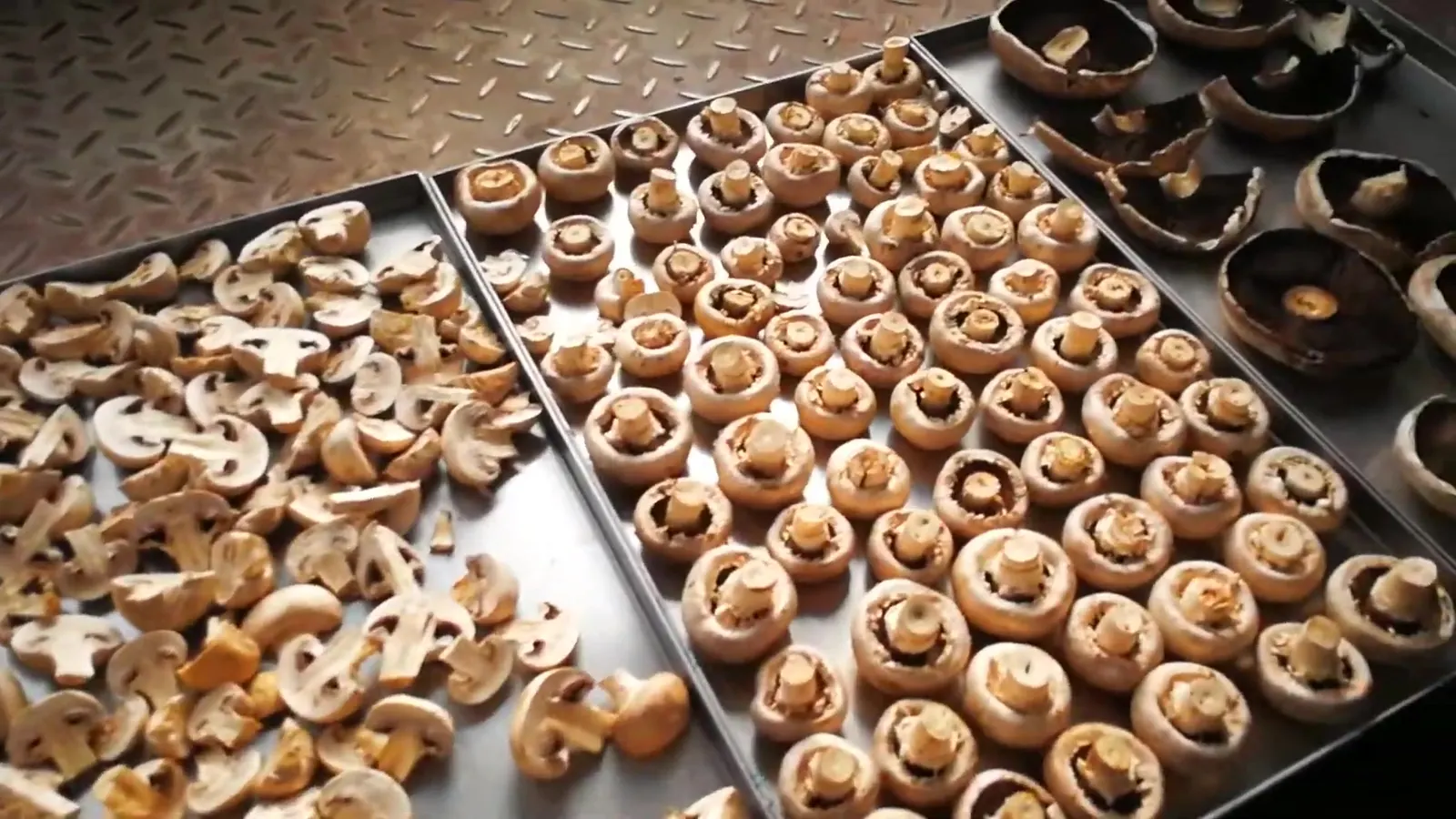
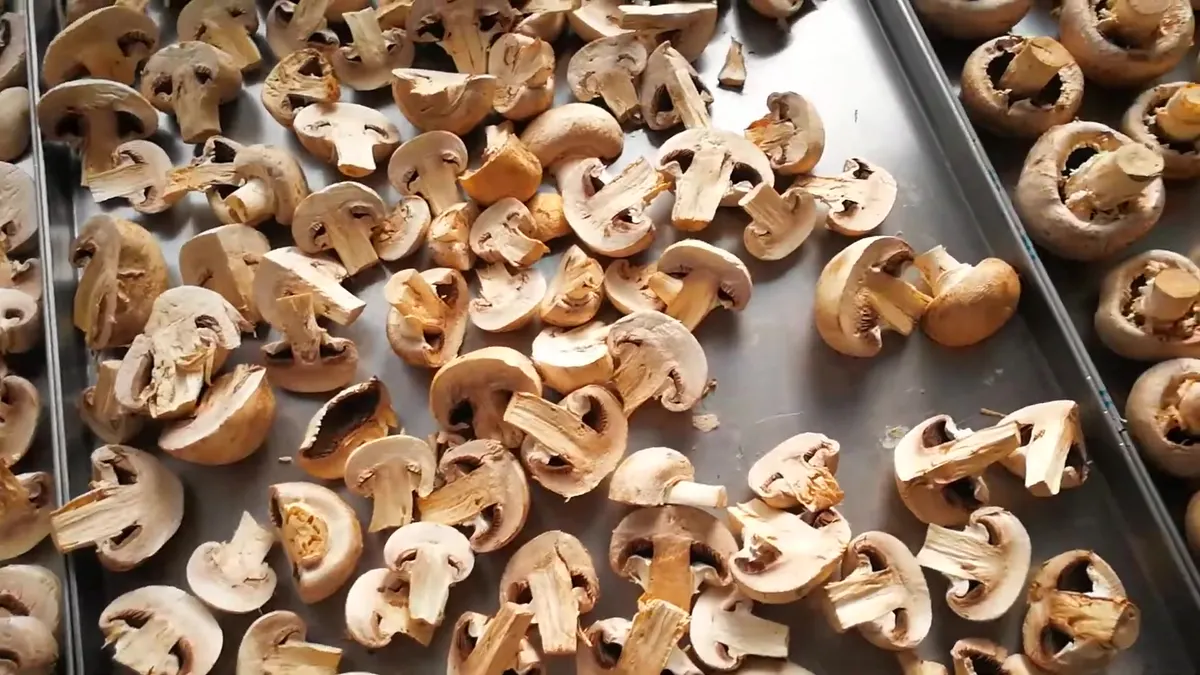
Whole caps and slices, after the cycle
Send us 2 kg. Get measured yield and cycle figures.
Published water content gives you a plan. Your own material gives you a number. Send us 2 kg of the species and the cut you intend to sell, and we will run it, weigh it in and out, and give you the measured yield, the residual moisture and a cycle plan for your load pattern.
The fresh-to-finished ratio on mushrooms is so unfavourable that a 10% error in the assumption moves the whole business case, which is not true of drier materials.
It matters doubly for lion's mane, king oyster and reishi. USDA publishes no water content for any of them, and we will not print an estimate dressed as a figure.
Which freeze-dryer for your scale
Capacity is quoted as fresh load per batch, which means what goes in wet. On mushrooms that distinction is larger than in any other category on this site, so convert to finished weight before you compare anything. Prices are ex-VAT list prices, pulled live from the catalogue.
| Stage | Fresh load per batch | Running cost | From | Representative models |
|---|---|---|---|---|
| Compact commercialR&D, first product, farm shop, single-species trial | Up to 10 kg | 0,9–1,4 kWh/h | €4.950 | |
| Light commercialfirst production line, steady weekly volume | Up to 18 kg | 1,13–2,46 kWh/h | €8.950 | |
| Commercialestablished production, several species | Up to 50 kg | 2,25–3,59 kWh/h | €13.950 | |
| Industrialfactory scale, contract drying, grower-processor | Up to 600 kg | 4–13 kWh/h | €145.480 |
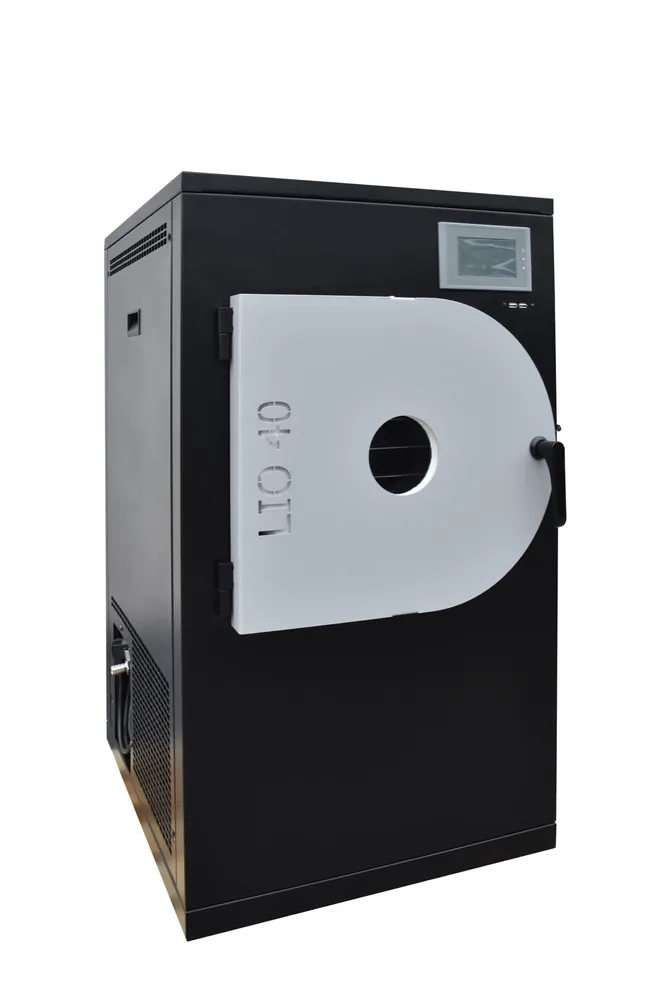
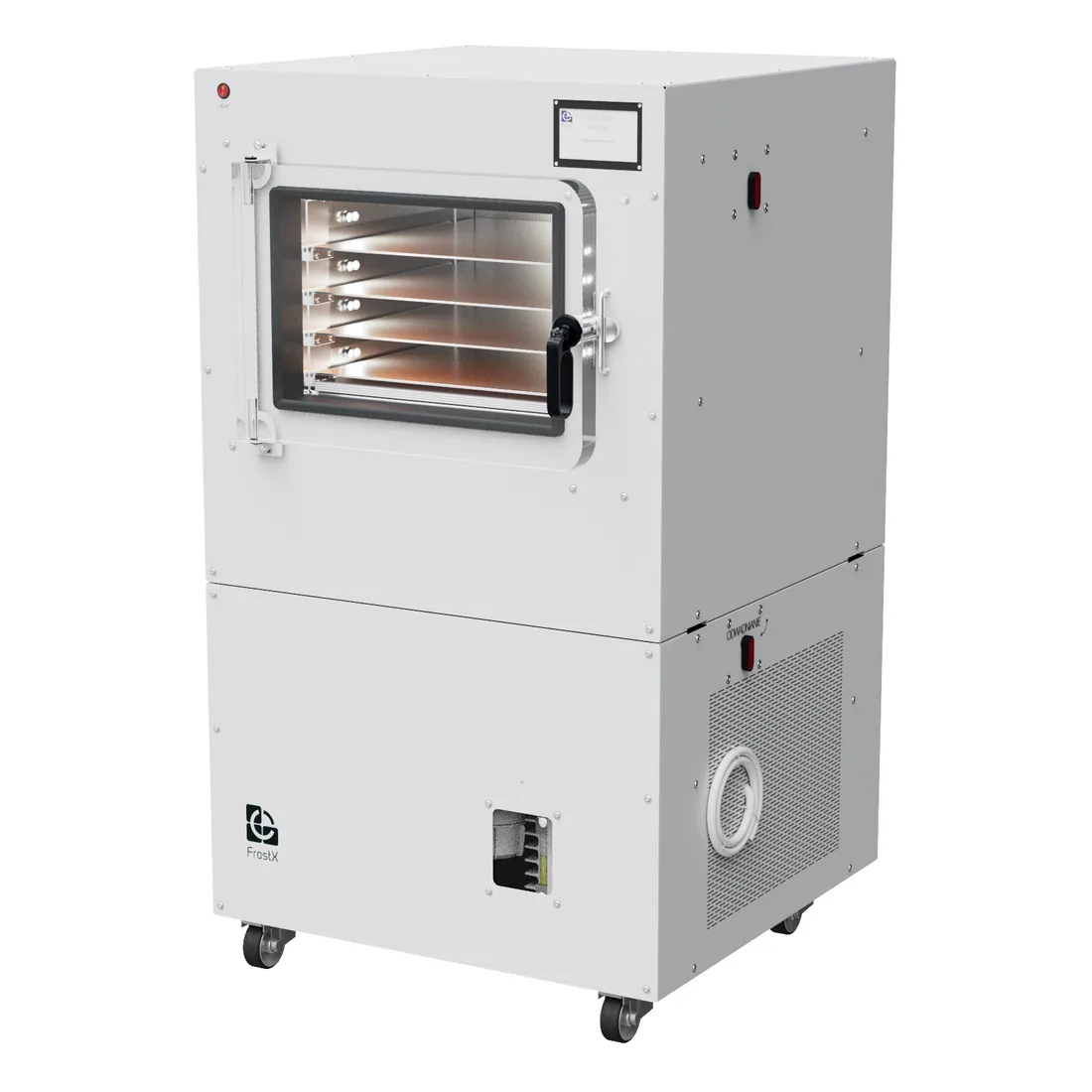
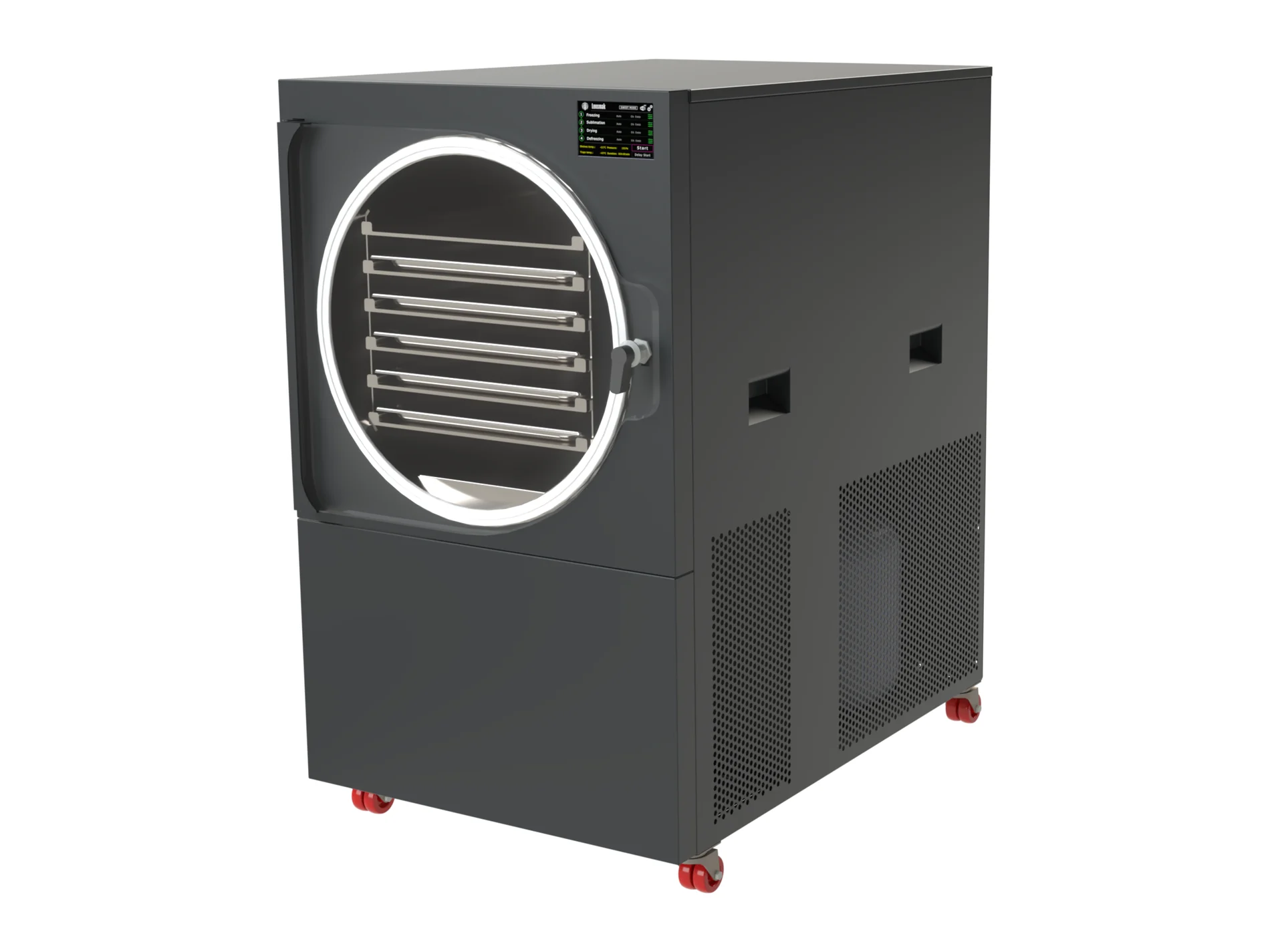
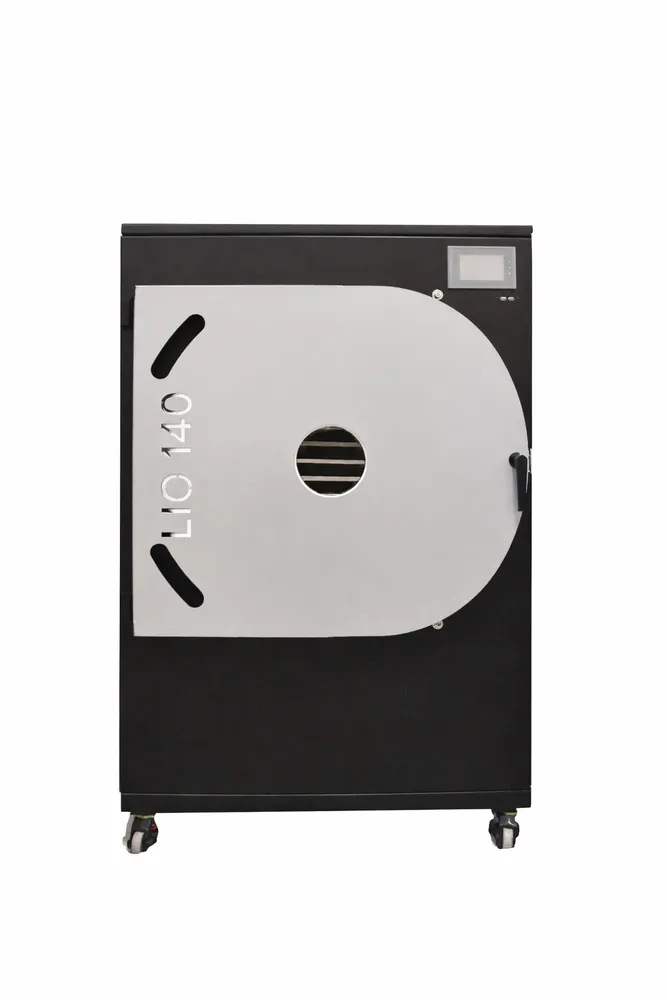
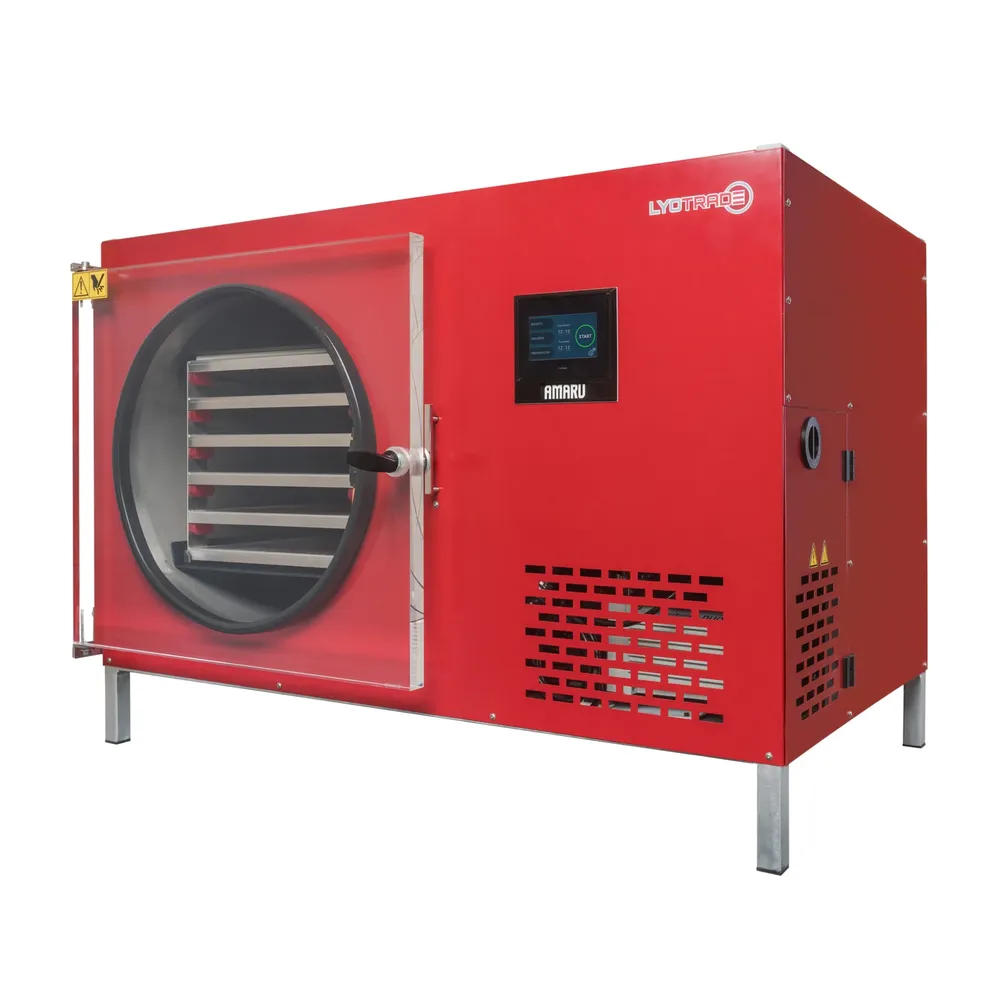
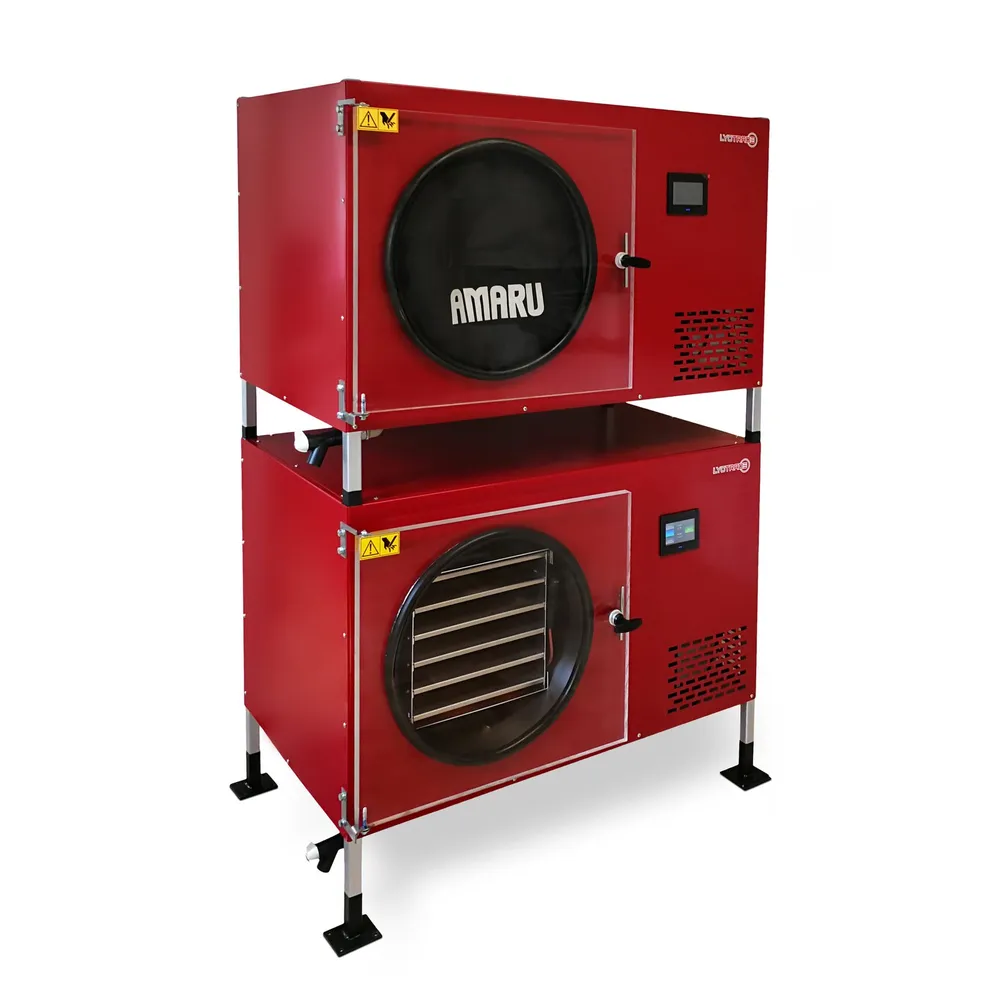
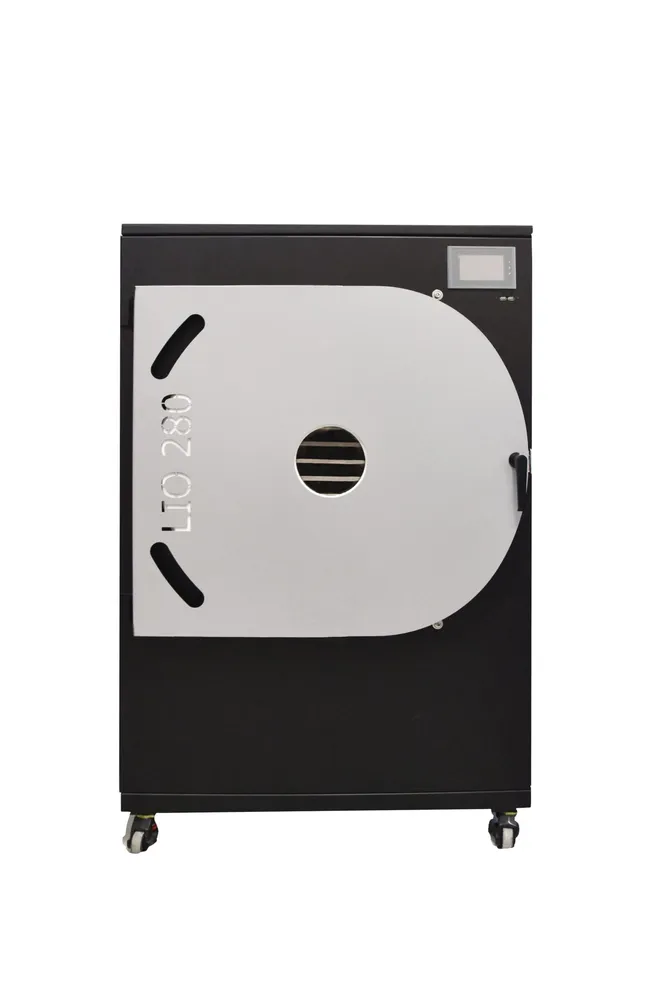
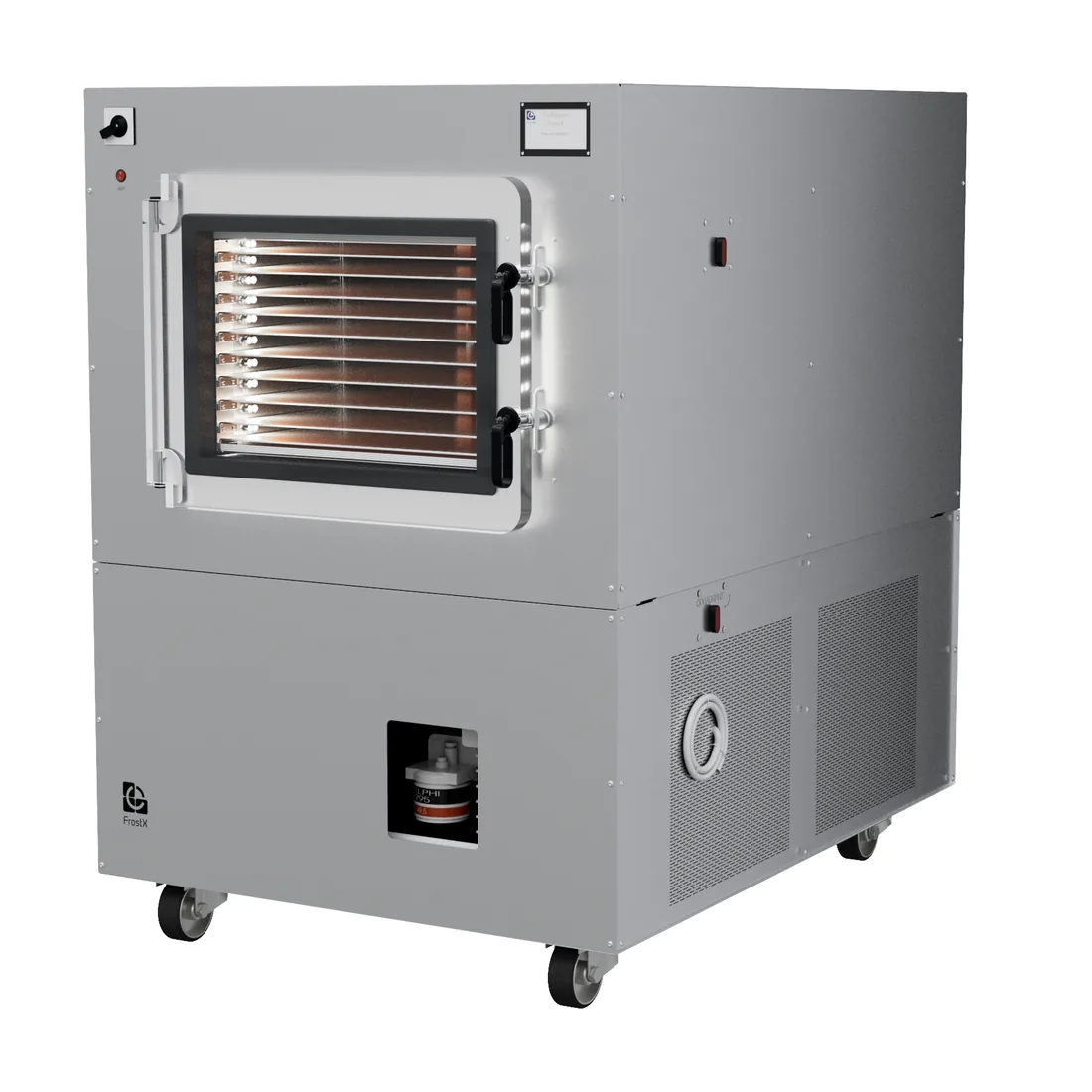
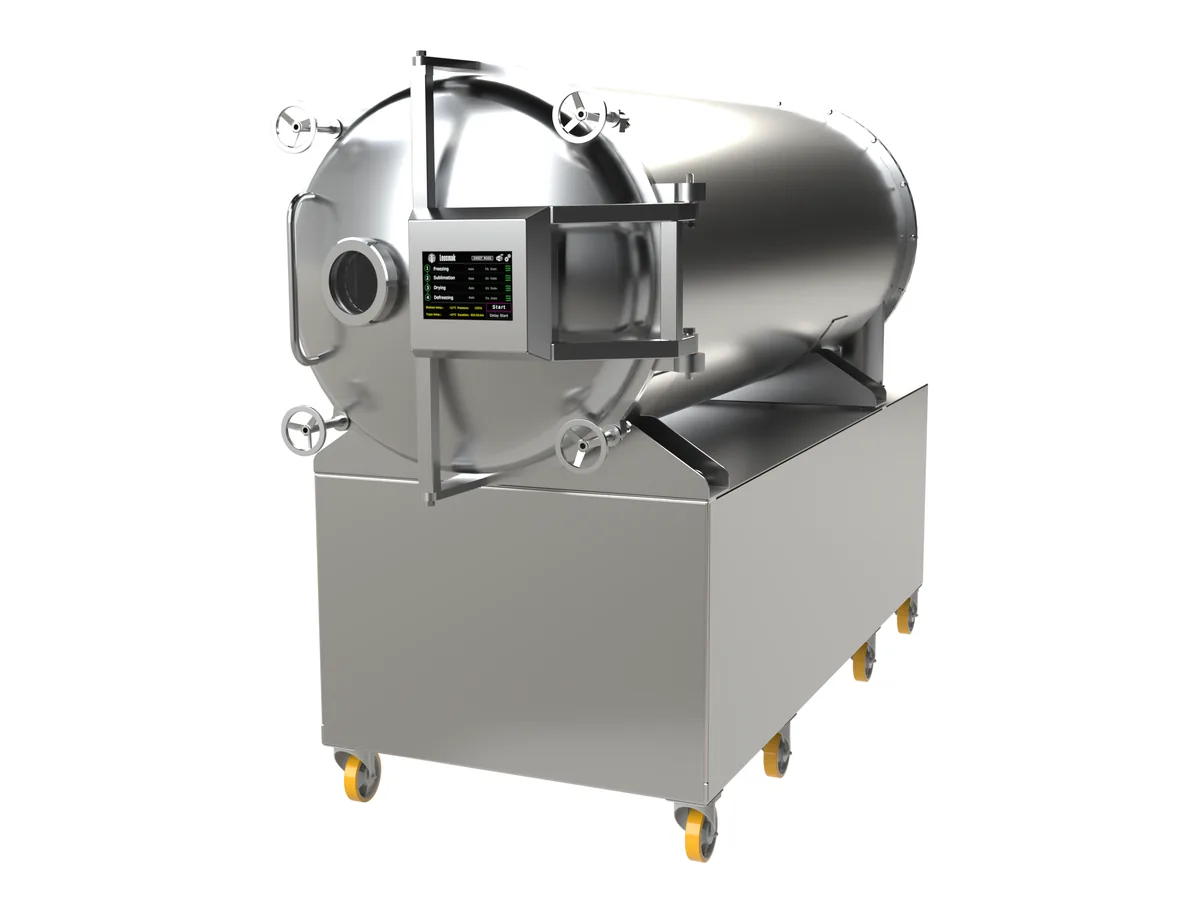
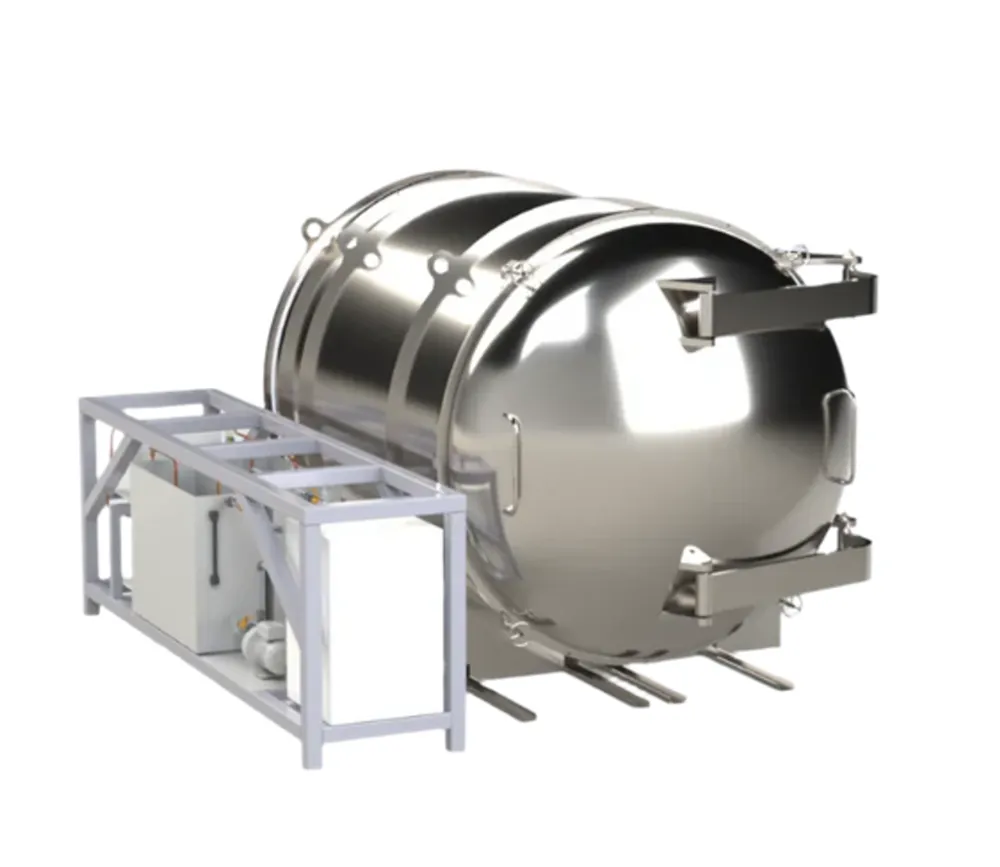
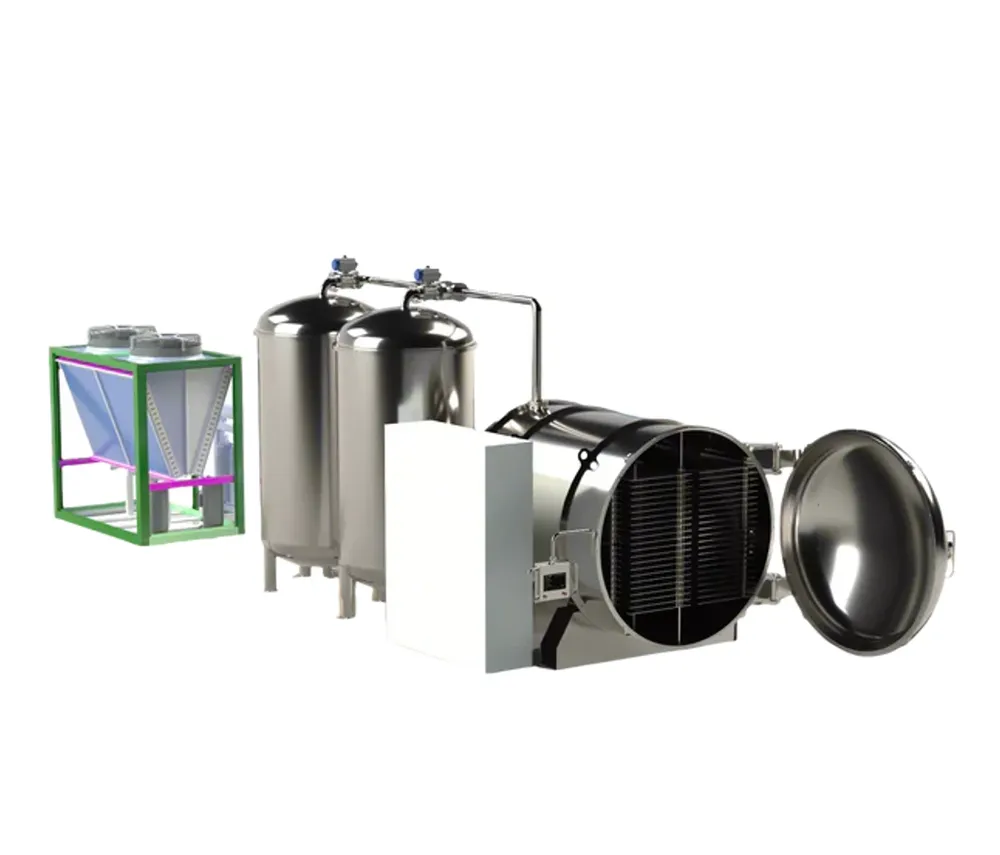
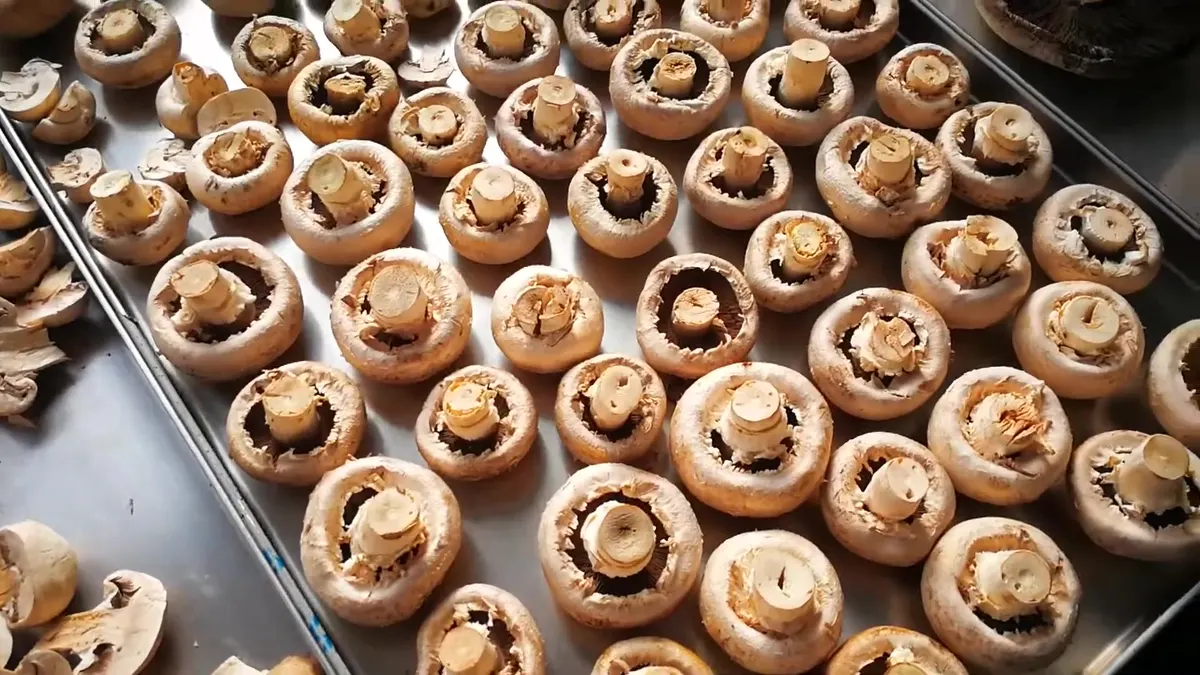
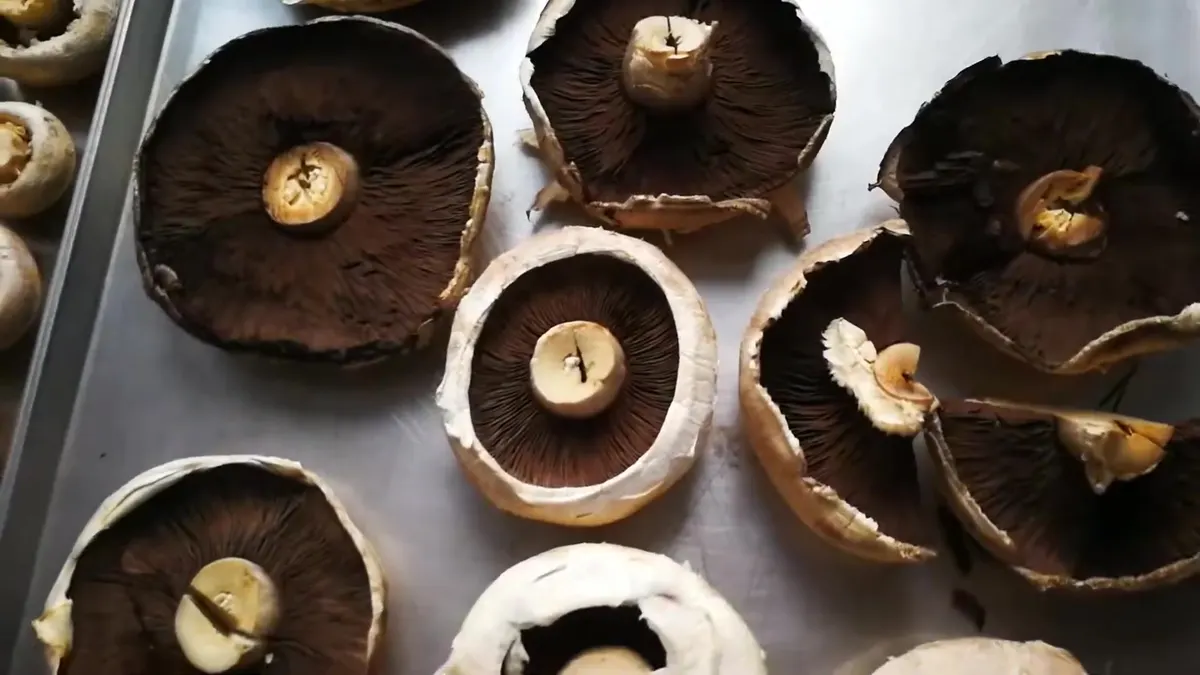
Running cost is average energy consumption across each band. FrostX machines are sold as normal but carry no energy figure from the manufacturer, so they are excluded from the bands rather than estimated. Four things to weigh on this material specifically. Ask what the loaded shelf area is rather than what the chamber holds, because whole caps run out of tray surface long before they reach rated weight. Ask about condenser capacity, because a 30 kg fresh load is about 27,5 kg of water that has to end up as ice. Check tray spacing if you dry whole caps, which runs from roughly 28 to 50 mm depending on the platform, and let a whole portobello decide it rather than a spreadsheet. And there is one trade-off with no free answer: a single large machine gives the lowest cost per kilo on a single species, while two smaller ones let you run shiitake and lion's mane on separate validated cycles without cross-contamination or re-validation. For the supplement channel, two smaller units is usually the better commercial answer even though it looks worse on a spreadsheet.
Yield, the number to plan around
Freeze-drying removes water, and mushrooms are mostly water, so the ratio between what you load and what you sell is worse here than in any other category on this site. The figures below are published water contents from USDA FoodData Central, SR Legacy, with fresh input calculated on a dry-solids basis.
Two consequences. Machine capacity is quoted as fresh load per batch, so a unit rated up to 30 kg gives roughly 2,3 kg of finished white button or 3,1 kg of finished shiitake per cycle. And species changes your economics before you make a single commercial decision: shiitake and oyster yield 35 to 45% more finished product per kilo loaded than button or portobello. USDA publishes no water content for lion's mane, king oyster or reishi, and we will not print an estimate. Send 2 kg and we will measure it. What the finished product is worth, and what the fresh crop costs, is on our freeze-dried price reference.
| Species | Water content | Fresh input per 1 kg finished (freeze-dried) |
|---|---|---|
| Portobello | ~92,8% | ~13,9 kg |
| White button / champiñón | ~92,5% | ~13,2 kg |
| Crimini / brown italian | ~92,1% | ~12,7 kg |
| Maitake | ~90,4% | ~10,4 kg |
| Chanterelle | ~89,9% | ~9,9 kg |
| Shiitake | ~89,7% | ~9,7 kg |
| Morel | ~89,6% | ~9,6 kg |
| Oyster | ~89,2% | ~9,2 kg |
What decides whether this works
Most equipment pages list benefits. These are the constraints that set your cost per kilo. One of the four argues against buying a freeze-dryer for certain mushroom products, and we would rather say so here than after the invoice.
Water content governs everything
White button is about 92,5% water and portobello about 92,8%. That is roughly 13 kg of fresh caps for a kilogram of finished product, so a machine rated up to 30 kg of fresh load gives you around 2,3 kg of finished white button per cycle. Beef liver, for comparison, takes about 3,4 kg fresh per finished kilo. Mushrooms tie up more chamber time per kilo of saleable output than almost anything else you can dry. Price for it, and never size a machine from a finished-weight target without converting first.
A freeze-dryer does not make you an extract producer
This is the most expensive misunderstanding in the functional category, and it argues against buying. Organic 1:1 fruiting-body powder, which is milled dried mushroom and exactly what a freeze-dryer produces, trades at about €59 a kilo in 5 kg bags. An 8:1 hot-water extract powder of the same species trades at about €200 to €225. The gap comes from the extraction step, which is a different process on different equipment with its own validation burden. If your plan is built on extract pricing, a dryer alone will not get you there. If it is built on clean, well-documented fruiting-body powder, it will.
Drying concentrates contaminants, and the legal limit is set on wet weight
Regulation (EU) 2023/915 sets maximum cadmium and lead levels for fungi on the wet weight. Cadmium runs from 0,050 mg/kg for cultivated fungi generally to 0,15 mg/kg for oyster and shiitake and 0,50 mg/kg for wild. Lead is 0,30 mg/kg for Agaricus bisporus, Pleurotus ostreatus and Lentinula edodes, and 0,80 mg/kg for wild fungi. Remove 92% of the water and everything left is about thirteen times more concentrated. Article 3 of the same Regulation requires you to give your competent authority the concentration factor you applied, with experimental data behind it. Material that passed as fresh can fail as powder, so test the input and be ready to show the arithmetic.
The functional buyer is buying documentation, not drying
A supplement brand buying mushroom powder asks for species identification, batch records, residual moisture against a stated specification, heavy-metal results, allergen and microbiological data, and evidence of where the material came from. The European trade convention for freeze-dried mushrooms is a maximum of 6% residual moisture, against 12% for conventionally dried. None of that is created by the machine. It comes from your process discipline, so buy equipment that lets you set a recipe, repeat it and log it.
What applies before you sell
Two entirely different regulatory routes run through this page, and which one you are on depends on how the product is sold rather than how it was dried. Culinary dried mushroom is ordinary food under Regulation (EC) 852/2004, with a HACCP-based system, establishment registration and labelling under Regulation (EU) 1169/2011. Functional powder sold as a supplement adds Directive 2002/46/EC and national notification, the Novel Food Regulation (EU) 2015/2283 and the health-claims regime under Regulation (EC) 1924/2006 on top. We sell equipment and not regulatory advice, but a machine whose output you cannot lawfully sell is worthless, so here is the short version.
Novel food status is decided per species and per part
Under Regulation (EU) 2015/2283 a food not consumed to a significant degree in the EU before 15 May 1997 needs pre-market authorisation. For mushrooms the answer differs between the fruiting body and the mycelium of the very same species, and that distinction is the one that ends businesses.
Fruiting body is generally not novel; mycelium generally is
In the EU Novel Food Catalogue the fruiting body and aqueous extract powder of Hericium erinaceus (lion's mane), Ganoderma lucidum (reishi) and Grifola frondosa (maitake) are all listed not novel in food, as are Agaricus bisporus, Lentinula edodes, Pleurotus ostreatus, Auricularia polytricha and Tremella fuciformis. The dehydrated mycelium powder of lion's mane, reishi, maitake and shiitake is listed not yet authorised, and so is the mycelium of several Pleurotus species. If you dry mycelium on grain, that is a different legal product from a dried fruiting body.
No mushroom health claim is authorised in the EU
Under Regulation (EC) 1924/2006 only claims on the Union list may be used. We checked the EU register on 3 August 2026 and every mushroom-related entry is recorded as non-authorised. The authorised beta-glucan claims relate to oat and barley beta-glucans, not to mushroom beta-glucans. Regulation (EU) 1169/2011 Article 7(3) separately forbids attributing to a food the property of preventing, treating or curing a disease. Plan your label and your website copy on that basis from day one.
Contaminant limits, testing and traceability
Regulation (EU) 2023/915 sets maximum cadmium and lead levels for fungi on a wet-weight basis, and Article 3 requires you to justify the concentration factor for a dried product. Wild-harvested material carries the higher limits and the higher risk. Species identity documentation matters commercially as well as legally, because it is the first thing a supplement buyer audits.
Where to apply
Register the establishment in the RGSEAA (Registro General Sanitario de Empresas Alimentarias y Alimentos), filed through your Comunidad Autónoma. AESAN maintains the national register. This is the baseline for any dried-mushroom operation.
Real Decreto 1487/2009, Article 9: notify placing on the market to the competent authority of the Comunidad Autónoma where the responsible party is established, before or at the same time as first sale, with a copy of the label. AESAN handles notifications where the responsible party is not established in Spain or the product comes from a third country.
Register the food establishment through the mera comunicação prévia route. DGAV and ASAE are the competent authorities for food business control.
Decreto-Lei n.º 118/2015: notify DGAV before placing a supplement on the Portuguese market, including a product already sold in another Member State. DGAV does not validate the label and issues no authorisation, so responsibility for the label sits entirely with you. Changes must be communicated within 10 working days.
Orientation, not legal advice, and accurate as checked on 3 August 2026. Novel food status changes. Confirm your species, your product form and your intended use with your competent authority before you invest.
What you can produce
A gourmet grower drying grade-out
A specialty grower producing shiitake and oyster sells Class I product fresh and currently composts open caps, broken stems and size rejects. They add one light-commercial machine, from €8.950 at list, and dry the grade-out into slices and a house blend. On USDA water content, shiitake takes about 9,7 kg fresh per finished kilo and oyster about 9,2 kg. The economic case rests on the input being close to free rather than on a premium price, and the constraint that decides it is tray area rather than capital: whole caps consume shelf surface far faster than slices, so the format decision comes before the machine decision.
A functional fruiting-body powder producer
A producer supplying lion's mane and reishi fruiting-body powder to supplement brands runs in the commercial band, from €13.950 at list, and would typically run two machines rather than one so that species stay on separate validated cycles.
Organic 1:1 fruiting-body powder trades at about €59 a kilo in 5 kg bags, against about €200 to €225 for 8:1 extract powder of the same species. This producer sells the former, because a freeze-dryer produces powder and not extract. What their customers audit is species identity, residual moisture against specification, where the European trade convention for freeze-dried mushrooms is a maximum of 6%, heavy-metal results calculated back to wet weight, and batch records. Both species' fruiting bodies are listed not novel in the EU catalogue while the dehydrated mycelium powder of both is listed not yet authorised, so the process is designed around fruiting body only, deliberately.
Frequently asked questions
How much fresh mushroom do I need per kilo of finished product?
About 13,2 kg of white button, 13,9 kg of portobello, 9,7 kg of shiitake, 9,2 kg of oyster and 10,4 kg of maitake, based on USDA published water content. Mushrooms are among the most water-heavy materials you can freeze-dry, so this figure, and not the machine's rated capacity, is what you plan around.
How long does a mushroom cycle take?
It depends on the species, slice thickness, load density, how the trays are packed and the residual-moisture endpoint you are drying to. Any supplier quoting one number for mushrooms is guessing. Send us 2 kg of your own material and we will measure it and give you a realistic cycle plan.
Is freeze-drying better than air-drying for mushrooms?
Not always, and it depends on what you are selling. Freeze-drying keeps the shape, colour and open structure, so the product rehydrates fast and still looks like a mushroom. Traditional dried shiitake, by contrast, is deliberately heat-dried because the flavour change is what the market expects. Chinese dried cultivated shiitake averaged around 15 euro a kilo FOB in 2022. If your buyer wants a conventional dried mushroom at a commodity price, freeze-drying is the wrong tool and we will tell you so.
Can I sell lion's mane, reishi or chaga powder in the EU?
It depends on the species and on which part of it. In the EU Novel Food Catalogue the fruiting body and aqueous extract powder of lion's mane, reishi and maitake are listed as not novel in food. The dehydrated mycelium powder of the same species is listed as not yet authorised. Chaga is listed as not novel in food supplements only, so other food uses may be novel. Turkey tail and Cordyceps militaris are listed as not yet authorised, meaning no lawful sale as food in the EU without authorisation. Verify your exact species and product form with your competent authority before you commit, because status changes.
Can I say a mushroom supports immunity, focus or energy?
No. Under Regulation (EC) 1924/2006 only health claims on the Union list may be used, and no mushroom claim is on it. We checked the EU register on 3 August 2026 and every mushroom-related entry is recorded as non-authorised. The authorised beta-glucan claims apply to oat and barley beta-glucans, not mushroom beta-glucans. Regulation (EU) 1169/2011 Article 7(3) separately prohibits attributing disease-preventing, treating or curing properties to a food. Build your label and your marketing around composition, species, origin and process instead.
Do I need testing for heavy metals?
Plan on it. Regulation (EU) 2023/915 sets maximum cadmium levels for fungi of 0,050 mg/kg for cultivated species generally, 0,15 mg/kg for oyster and shiitake and 0,50 mg/kg for wild, plus lead limits, all on a wet-weight basis. Because drying removes roughly 92% of the water, everything remaining is far more concentrated, and Article 3 requires you to justify the concentration factor you applied. Material that passes fresh can fail as a powder.
What does a commercial mushroom freeze-dryer cost?
Compact commercial machines start at 4.950 euro and hold up to 10 kg of fresh load. A first production line starts at 8.950 euro for up to 18 kg. Established production in the up-to-50 kg band starts at 13.950 euro. Factory-scale units start at 145.480 euro and run to up to 600 kg. All prices are ex-VAT and live on the product pages. Convert fresh load to finished weight before comparing.
What does it cost to run?
Between about 0,9 and 1,4 kWh per hour for compact machines, 1,13 to 2,46 for light commercial, 2,25 to 3,59 for commercial and 4 to 13 for industrial units. Electricity is rarely the deciding cost on mushrooms. Raw material volume and chamber occupancy are, because of the water content.
Will freeze-dried mushrooms rehydrate close to fresh?
The open, porous structure that freeze-drying preserves takes water back quickly, which is the main technical reason processors choose it over hot-air drying for soup, sauce and ready-meal applications. How close to fresh depends on species, slice thickness and how far you dried it. It is a property to demonstrate to your buyer with a sample rather than assert on a website.
Can I start with one machine and scale later?
Yes, and on mushrooms it is usually the right call. One compact unit, one species, one format, proven with paying buyers, before you commit to a tier where the machine costs more than your annual raw material. Tell us the growth curve you expect and we will size for the step after this one as well as this one.
Send us your species, your format and your volumes.
Tell us what you grow or buy, whether you sell into the culinary channel or the supplement channel, how much you want to process per week, and where you are. We will size the machine against the live catalogue, convert your fresh tonnage into finished weight properly, and quote it.
We will also tell you plainly when freeze-drying is the wrong answer. If you want certainty before you commit, send 2 kg and we will run a validation cycle and give you measured figures. What the finished product sells for, and what the fresh crop costs, is on our freeze-dried price reference.