
Freeze-Drying for Dairy & Eggs
Dairy and egg products are perishable, heavy with water and dependent on refrigeration. Freeze-drying removes around 95-98% of that water at low temperature, turning milk, cheese, yoghurt, cream and whole egg into stable powders, granules or pieces that keep their nutritional value and rehydrate close to the original.
For producers, that means longer shelf life, lower shipping weight and ingredients that work in dry blends, snacks, infant and sports nutrition, and bakery. The fat and protein content of dairy and eggs makes the process more demanding than fruit, so it pays to understand the considerations before specifying equipment.
Why freeze-drying
Nutrients and cultures kept
Low-temperature drying preserves proteins, vitamins and live yoghurt cultures far better than high-heat spray-drying.
Clean rehydration
The porous structure rehydrates fast and evenly, giving instant powders and inclusions without cooked, off notes.
Shelf-stable, cold-chain free
Removing most of the water makes dairy and egg products stable at ambient temperature, cutting refrigeration and transport cost.
Why freeze-dry dairy and eggs
Spray-drying uses high heat that can scorch milk solids, denature proteins and flatten flavour. Freeze-drying keeps temperatures low, so proteins, probiotic cultures in yoghurt, vitamins and the clean dairy flavour are largely preserved, and the powder dissolves or rehydrates without the cooked notes of heat-dried equivalents.
The porous freeze-dried structure rehydrates fast and evenly, which matters for instant powders, cheese inclusions and egg used in mixes. Live-culture products in particular benefit, because the low-temperature, low-water environment keeps a high proportion of cultures viable.
What to consider
Fat is the main variable. High-fat dairy dries more slowly, can resist full moisture removal and needs careful management of cycle temperature to avoid melting or oxidation. Eggs require strict hygiene and handling because of microbiological risk, and pre-freezing should be controlled to set structure before the cycle.
- Fat content: cream and full-fat cheese dry slower and are more prone to oxidation, so residual moisture targets and packaging matter.
- Pre-freezing: freeze liquids and purées solid first; thin layers or granules dry faster and more evenly.
- Food safety: eggs and fresh dairy need strict hygiene, validated handling and, where relevant, prior pasteurisation.
- End format: decide between powder, granule or piece early, as it drives loading, tray choice and cycle settings.
Recommended equipment
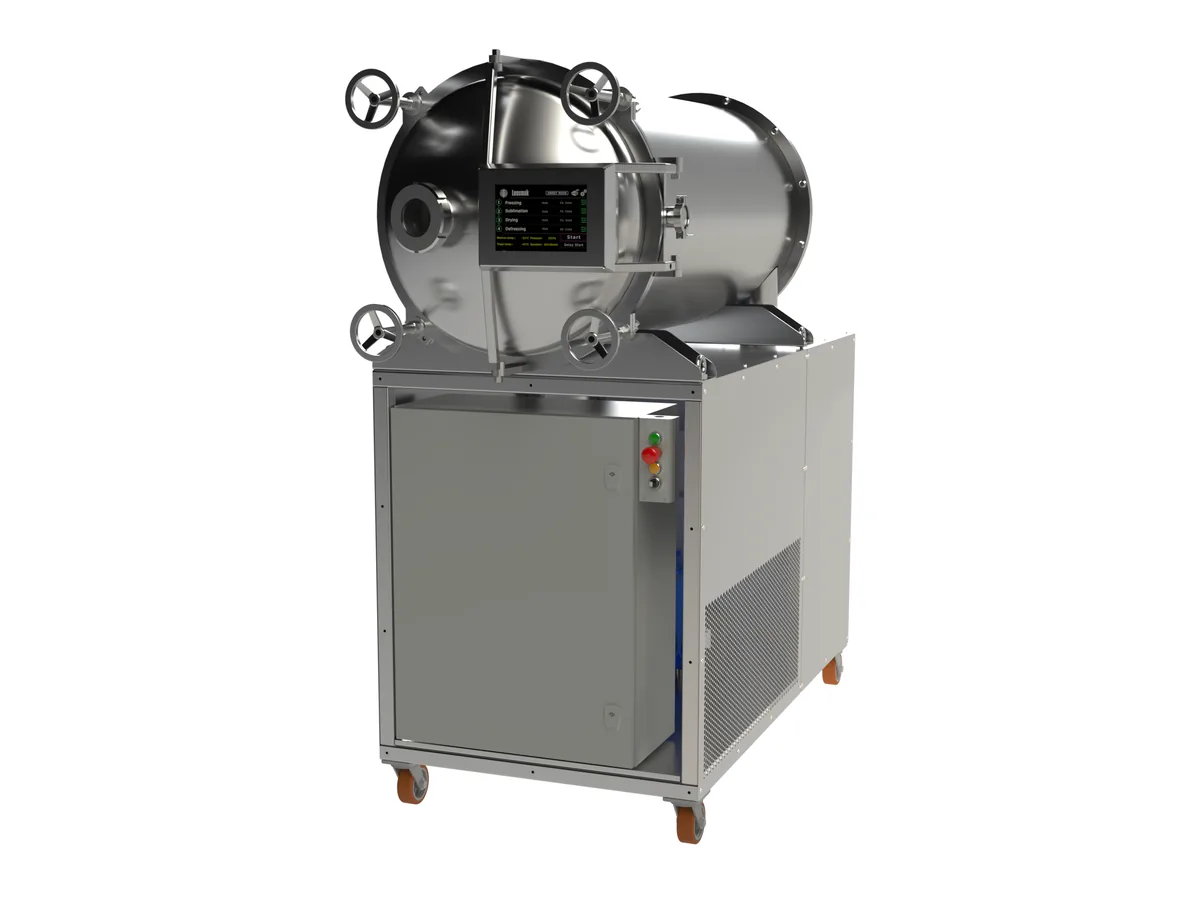
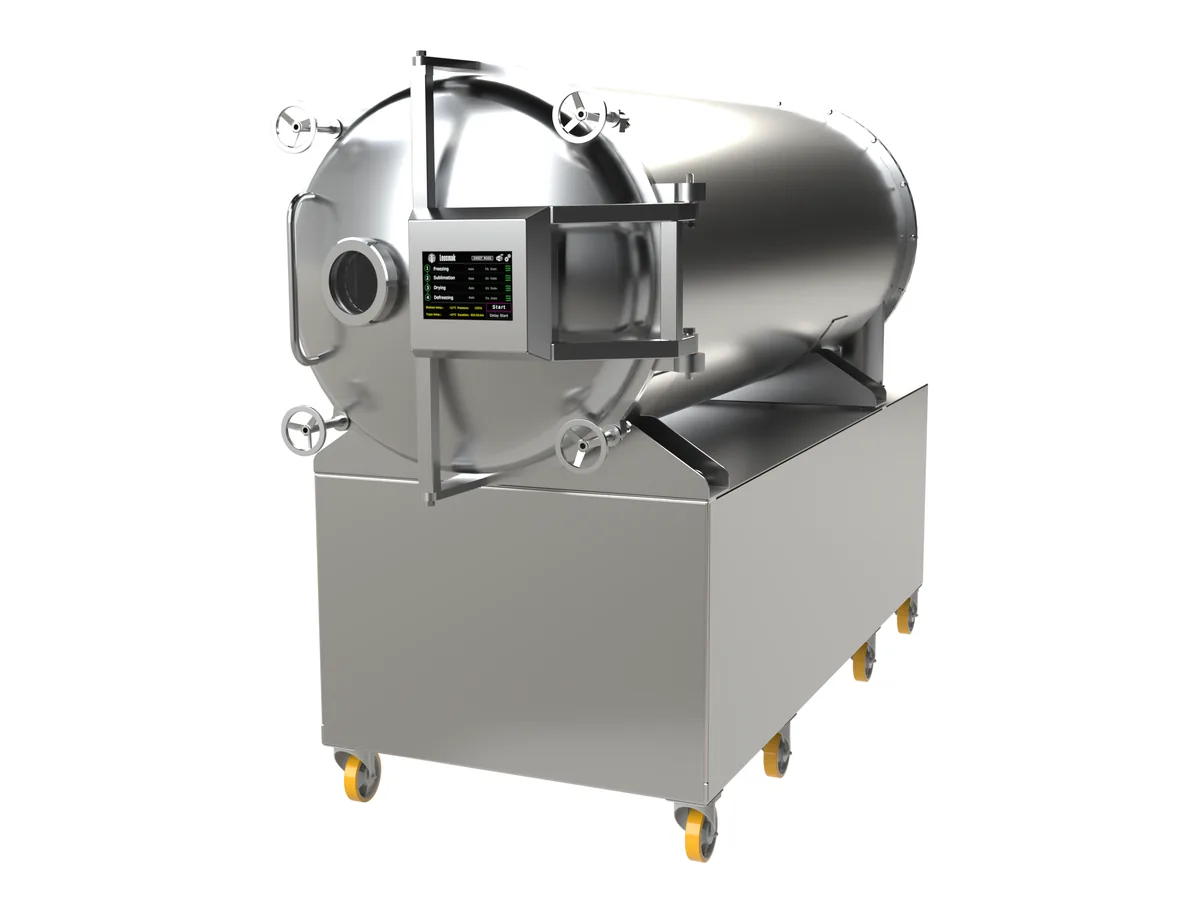
Not sure which model? Tell us your volume and we'll size it.

Frequently asked questions
Does freeze-drying keep probiotic cultures in yoghurt alive?
Yes, to a large degree. The low-temperature, low-moisture environment of freeze-drying keeps a high proportion of live cultures viable compared with heat-based drying, provided pre-freezing and packaging are managed correctly.
Why is high-fat dairy harder to freeze-dry?
Fat does not sublimate like water and slows moisture removal, and high-fat products are more prone to oxidation. They need controlled cycle temperatures, suitable residual moisture targets and moisture- and oxygen-barrier packaging.
Can whole egg be freeze-dried?
Yes. Whole egg, white and yolk can be freeze-dried into a stable powder that rehydrates for use in mixes and bakery. Strict hygiene and validated handling are essential because of the microbiological risk of egg.
What yogurt economics look like at three scales
Best-fit, vendor-neutral configurations generated by our ROI engine. Illustrative — example inputs, not quotes. B2B prices, conservative, exclude labour.
Open the ROI calculator →