
Freeze-Dryers for Herbs, Spices and Microgreens
Turn a crop with a few days of shelf life into a shelf-stable ingredient you can sell all year, and understand before you buy why the kilogram rating on a freeze-dryer does not apply to leaf.
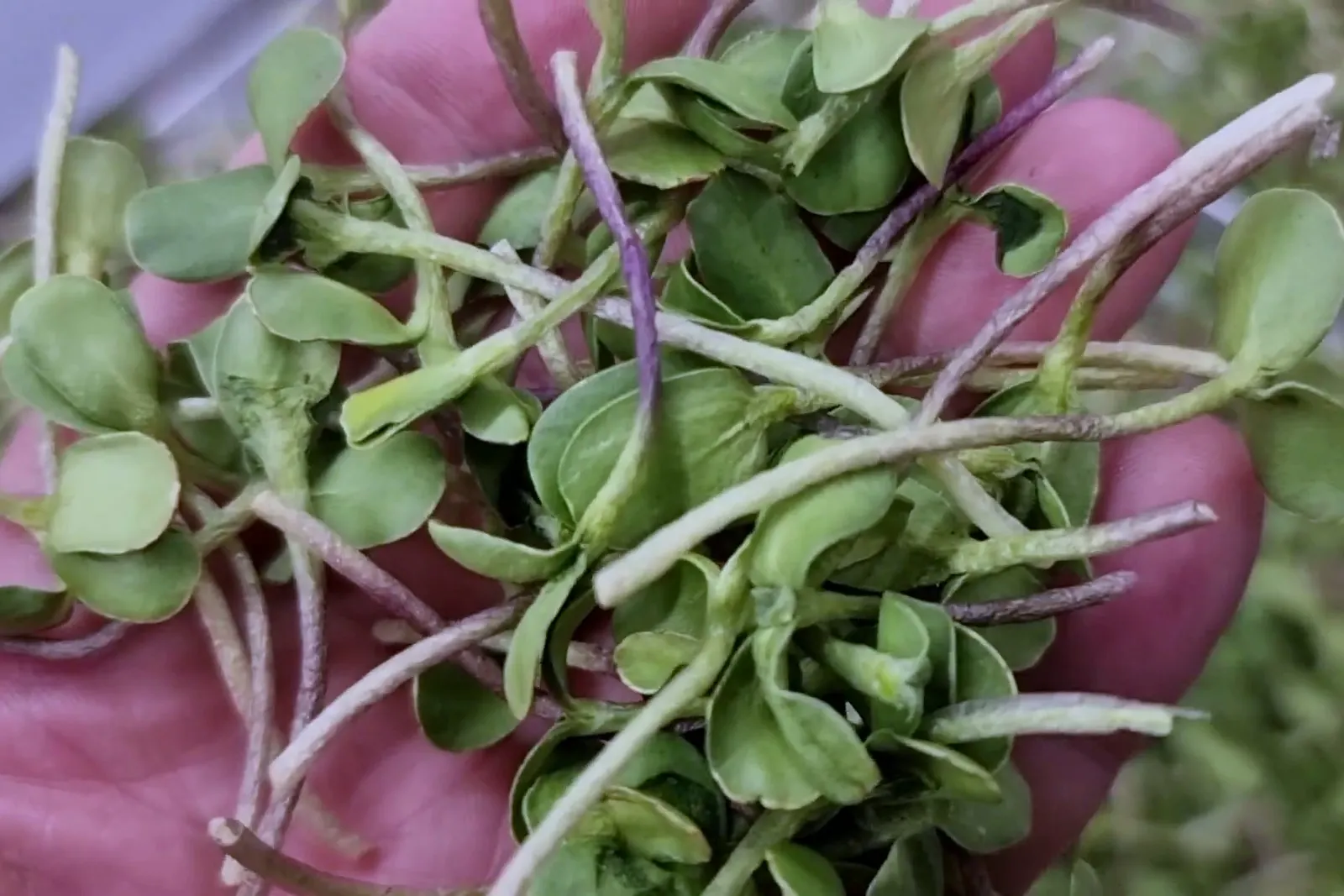
Herbs, spices and microgreens carry their value in colour, in structure and in aroma. Freeze-drying removes water by sublimation at low temperature, so a basil leaf stays green and an intact microgreen stays intact. That part is well supported, and it is usually what your buyer is paying for.
The commercial catch is density. Loaded to a depth that dries efficiently, a square metre of shelf holds something like 1,6 kilos of whole basil and returns about 125 grams of finished product per cycle. So a machine rated up to 30 kilos on dense material will not take 30 kilos of basil. No specification sheet says that, because shelf loading on leaf is not a field any of them carry.
Our own price reference puts freeze-dried herbs at €70 to €220 a kilo at retail, €120 typical, and we mark it indicative because our sample in this category is thin. Below: the yield table, the sizing arithmetic, the EU rules that actually apply, and the case for not buying a freeze-dryer at all.
In short
Send us 2 kg. We will weigh the trays and tell you your real batch size.
For most industries a validation cycle answers what your yield will be. For this one it answers a more useful question: how many kilos of your material actually fit on a square metre of shelf. That number decides which machine you should buy, and no specification sheet carries it, because it depends on your leaf, your cut and how you load.
Send us 2 kg of the crop you intend to sell. You get back the measured loading in kilos per square metre, the measured yield, a cycle plan, a machine recommendation across all four manufacturers, and the dried sample itself. If a cheaper machine, or no freeze-dryer at all, is the right answer, that is what we will tell you.
Which freeze-dryer for your scale
Capacity is fresh load per batch, measured on dense material rather than on leaf, so read the shelf-area point above before you use these numbers for herbs or microgreens. Prices are ex-VAT list prices, pulled live from the catalogue.
| Stage | Fresh load per batch | Running cost | From | Representative models |
|---|---|---|---|---|
| Compact commercialR&D, first SKU, market garden or microgreen grower | Up to 10 kg | 0,9–1,4 kWh/h | €4.950 | |
| Light commercialfirst production line, one or two crops | Up to 18 kg | 1,13–2,46 kWh/h | €8.950 | |
| Commercialestablished production, seasoning blends, contract drying | Up to 50 kg | 2,25–3,59 kWh/h | €13.950 | |
| Industrialfactory scale, powder-led product | Up to 600 kg | 4–13 kWh/h | €145.480 |
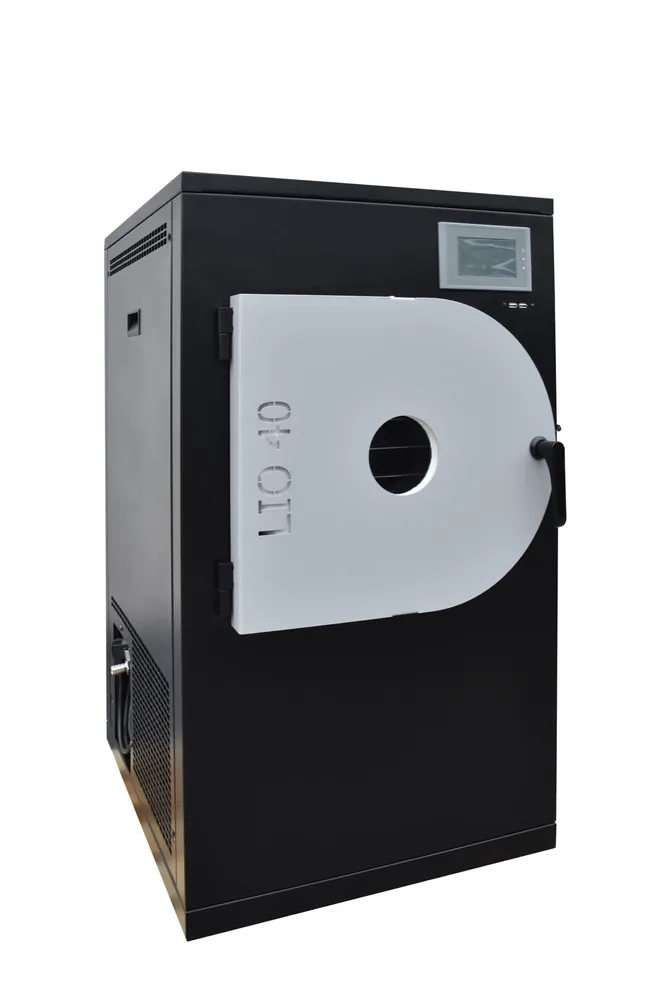
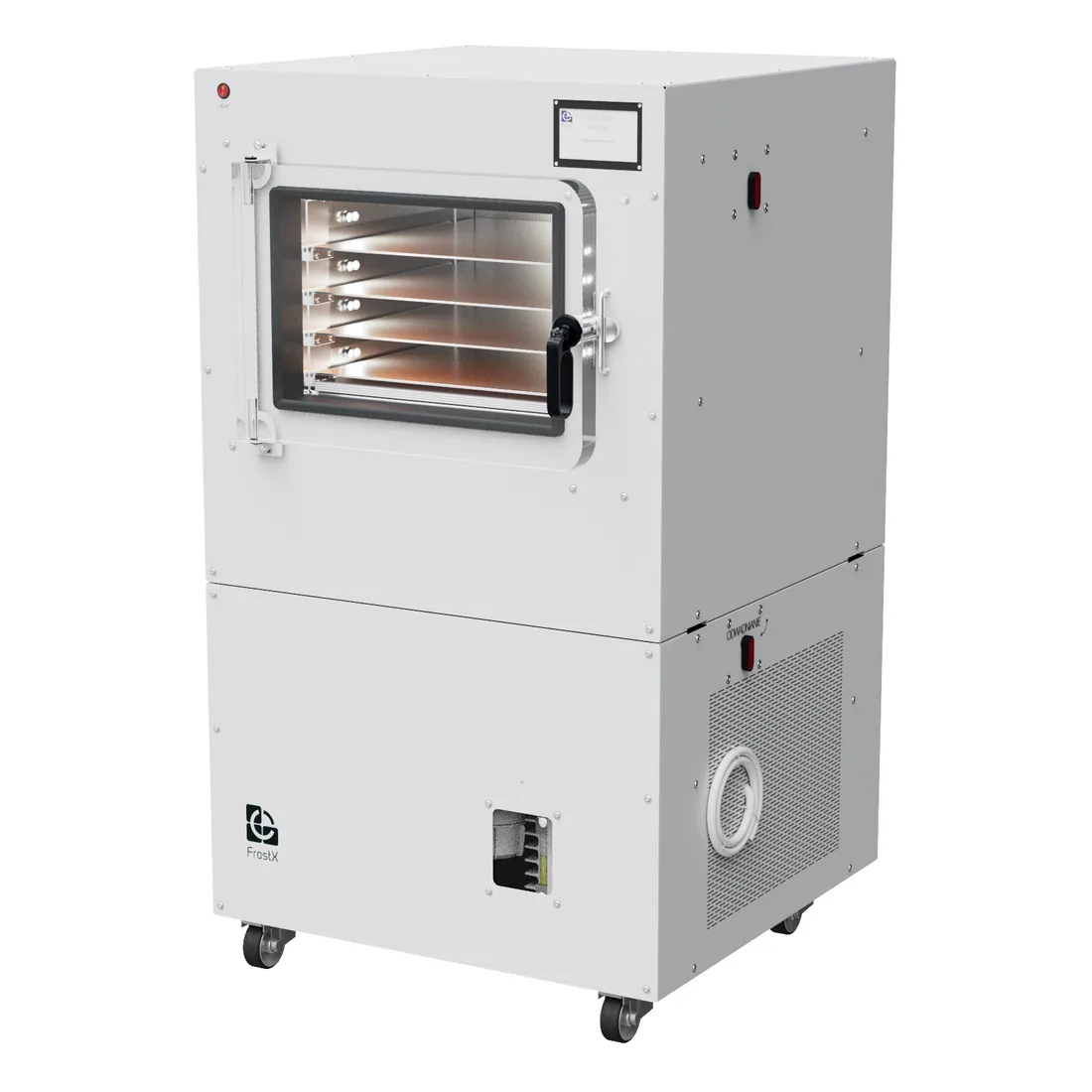
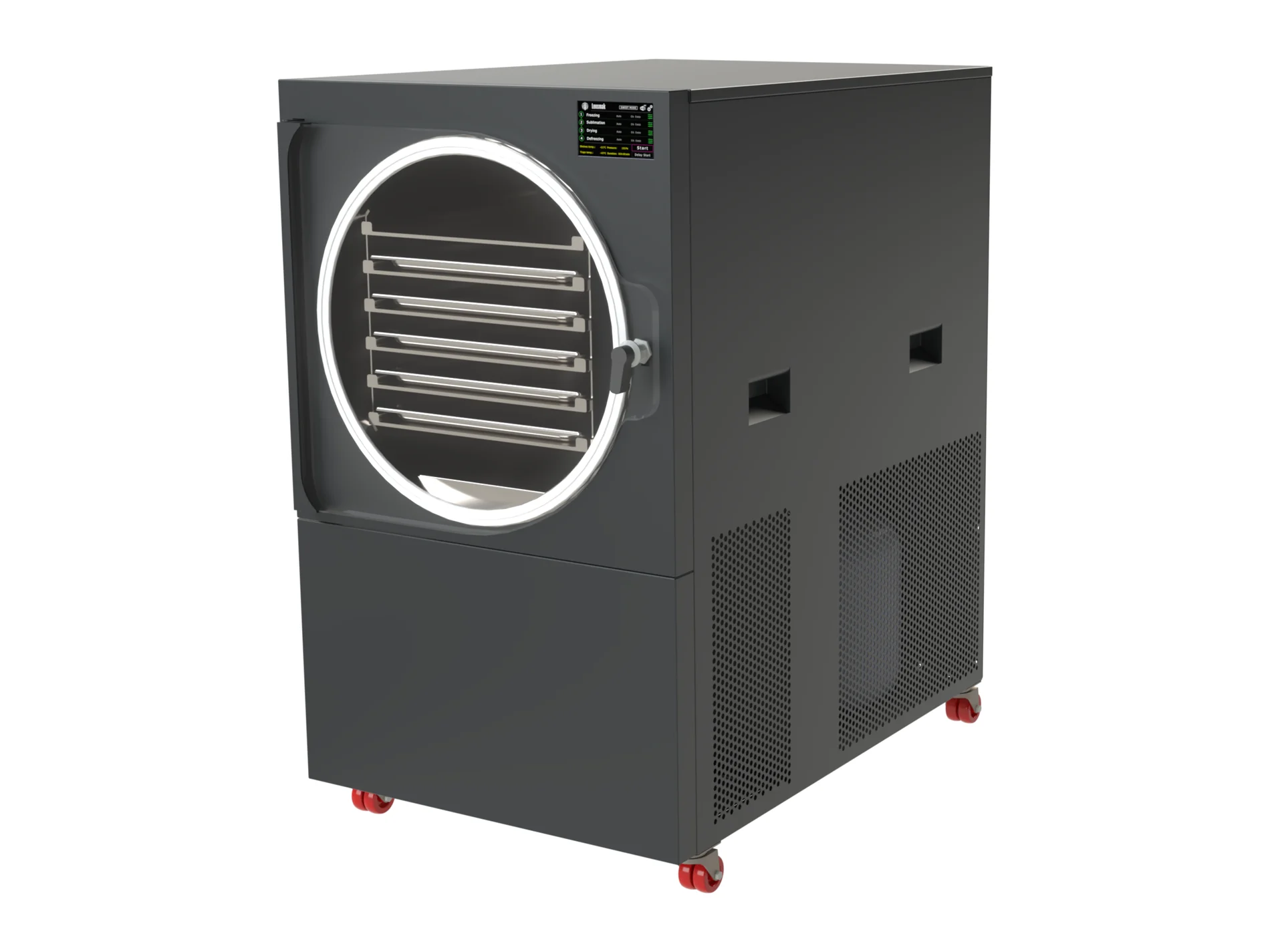
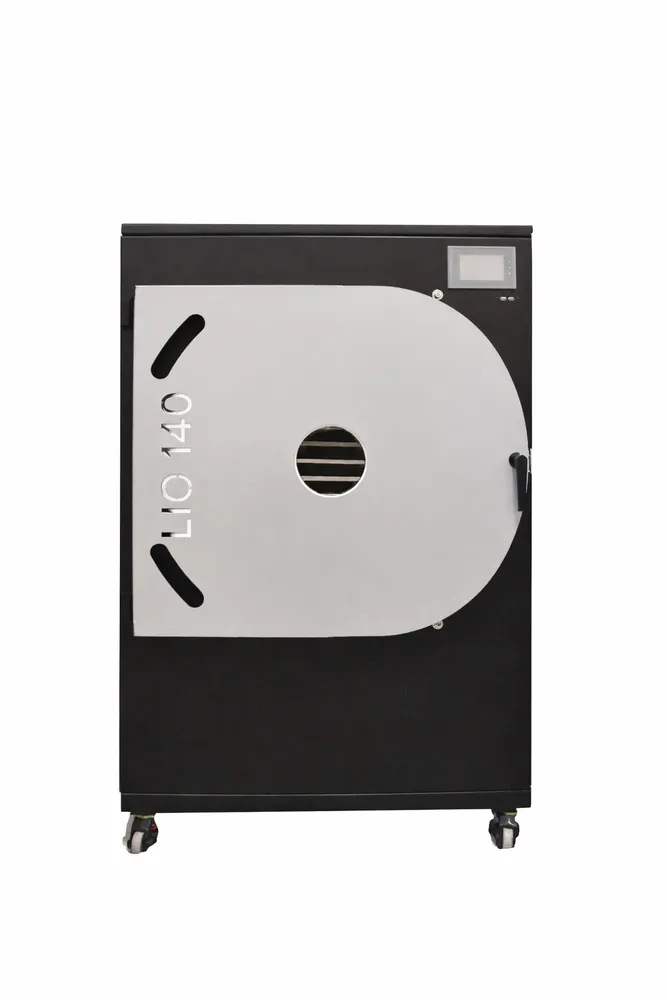
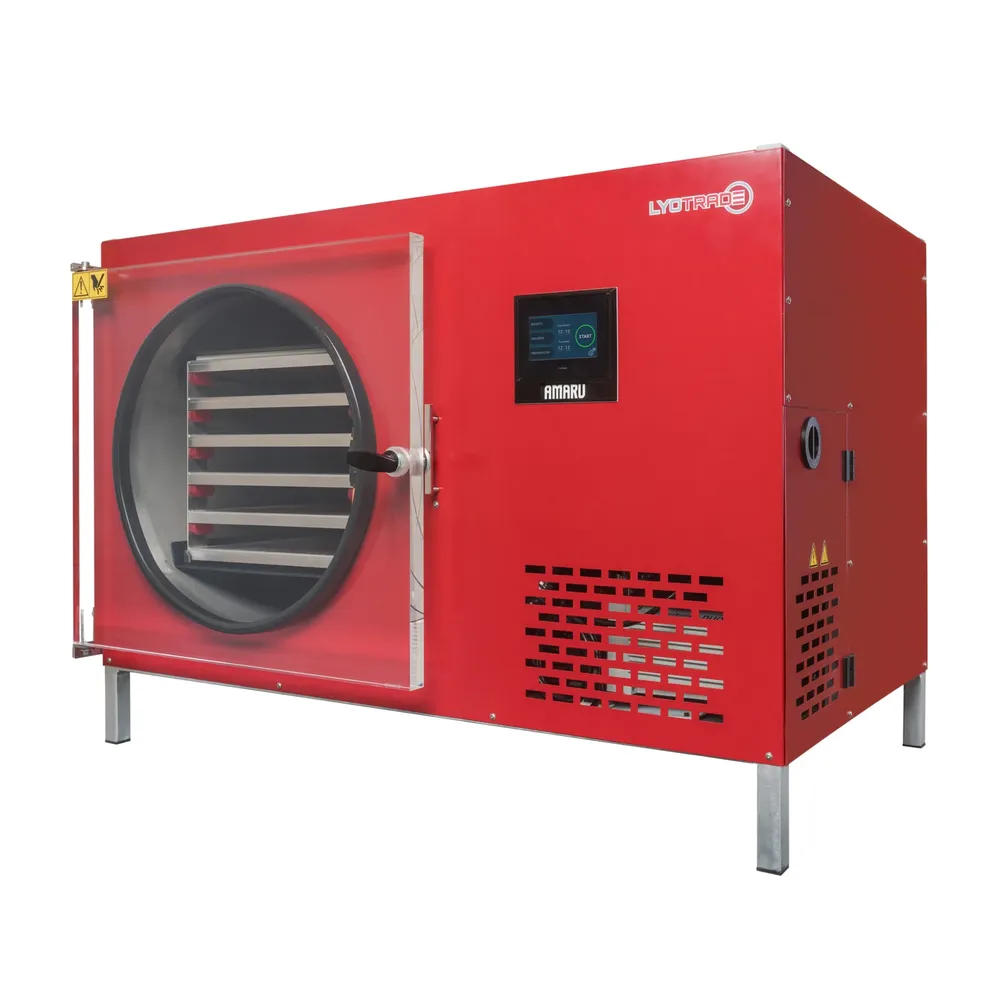
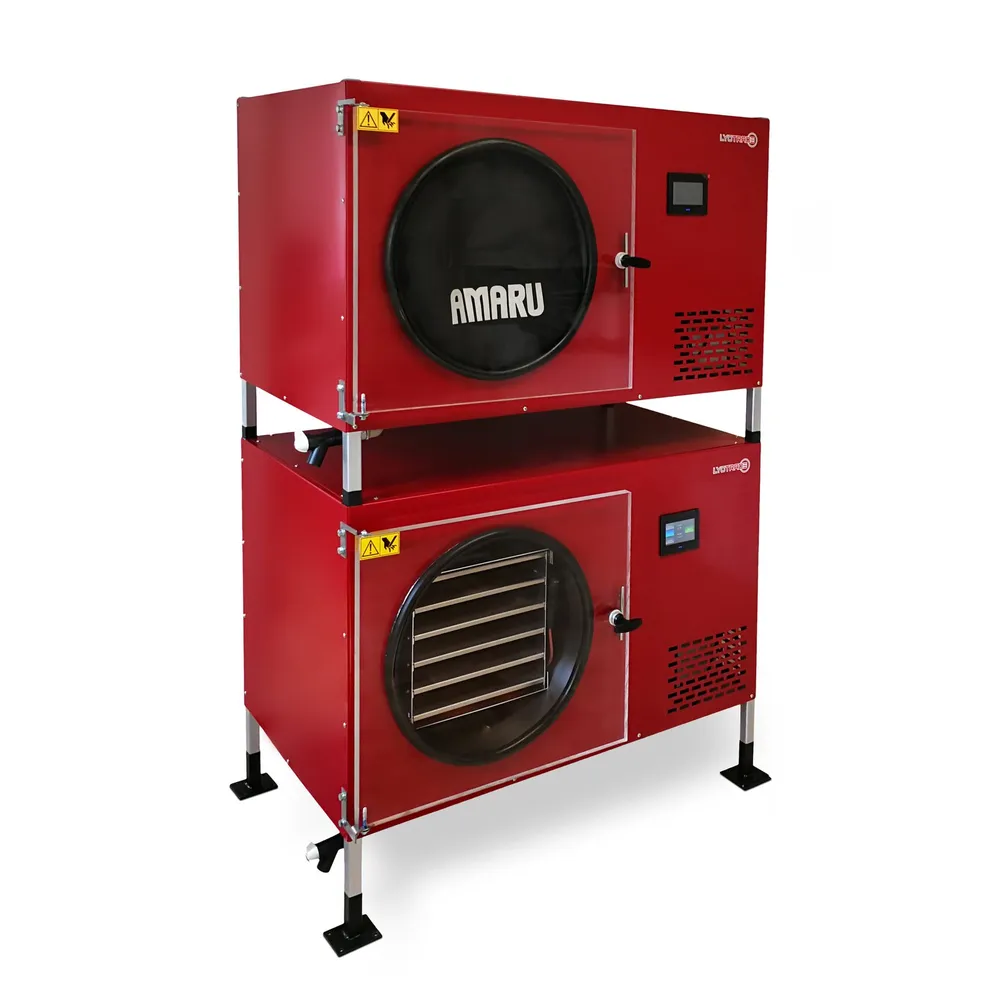
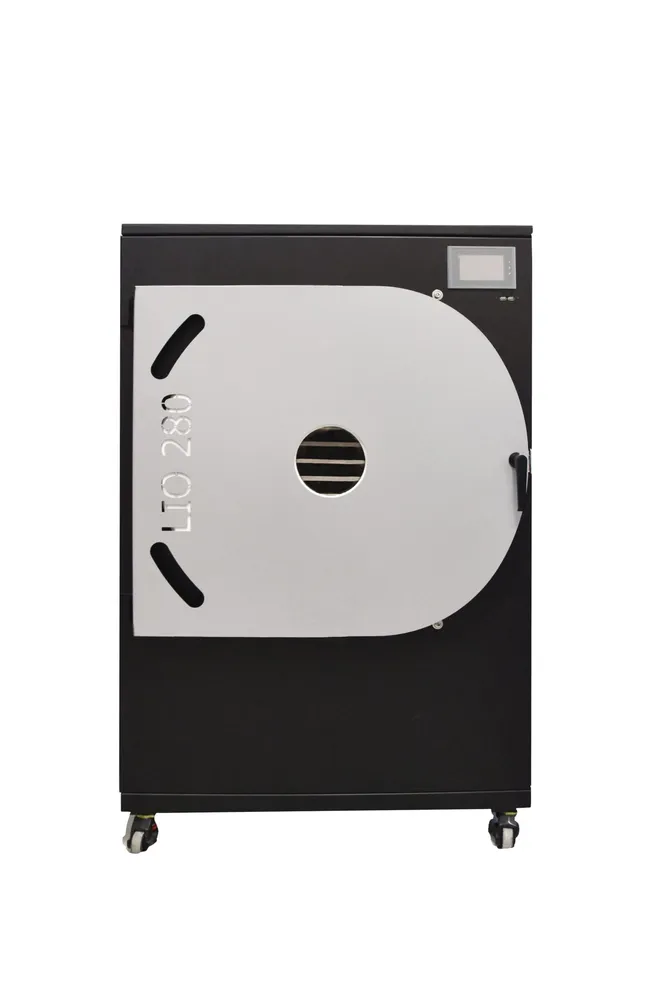
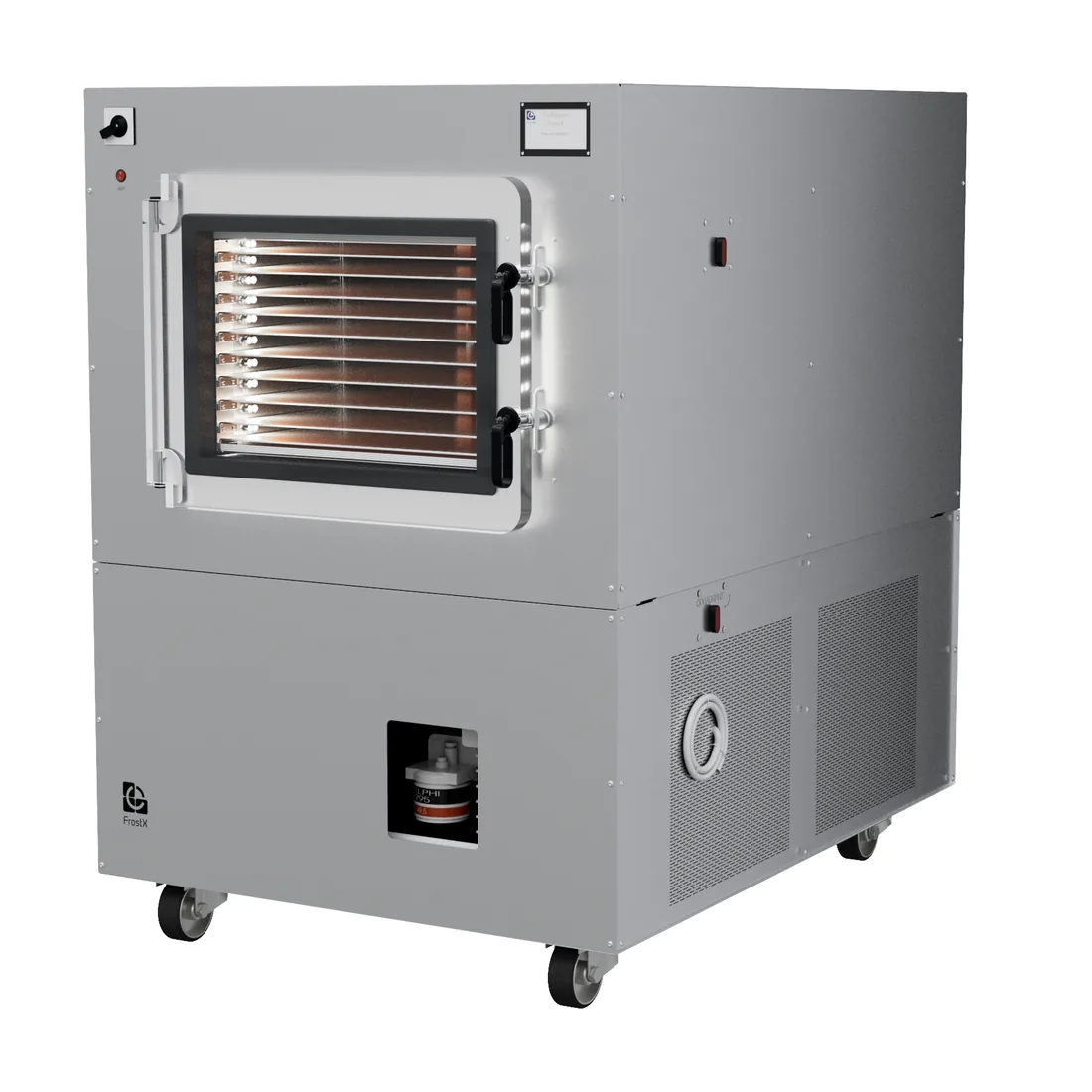
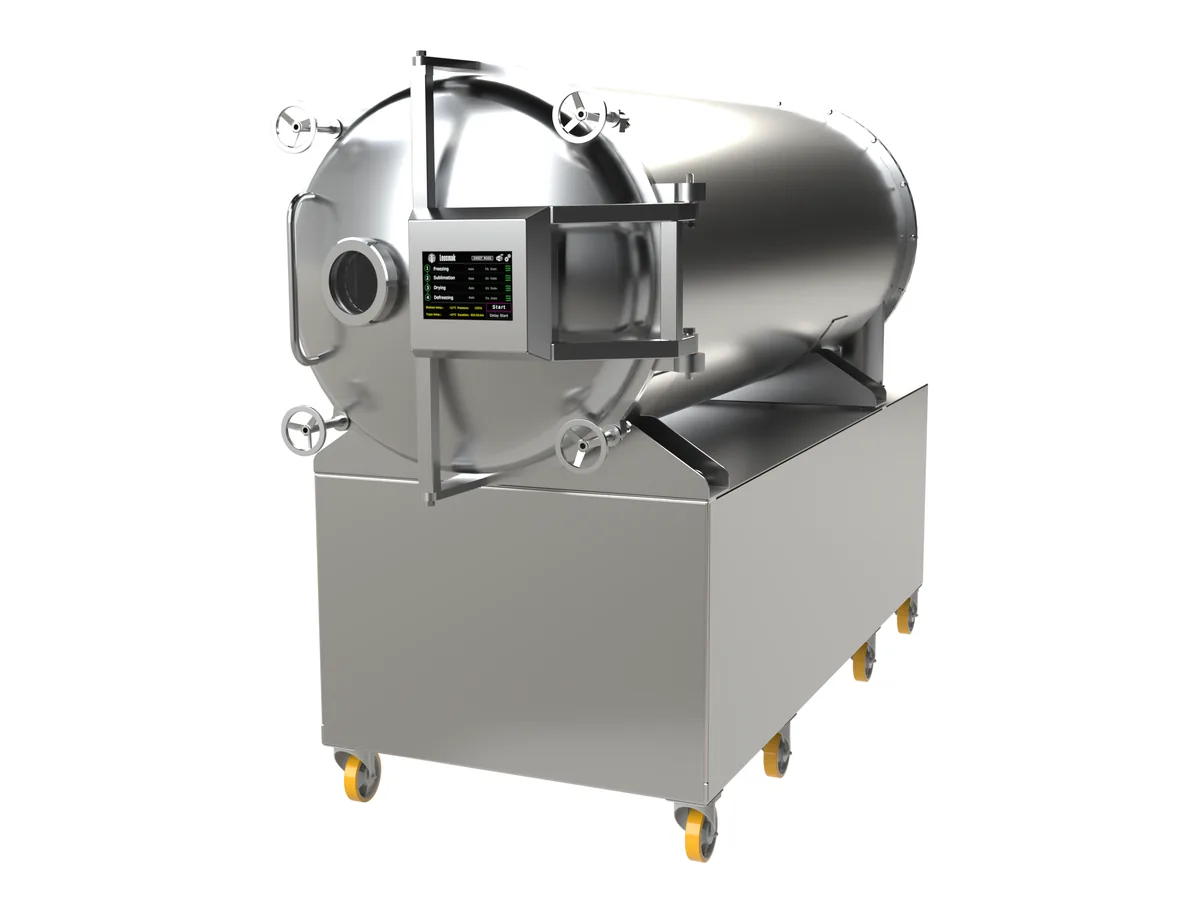
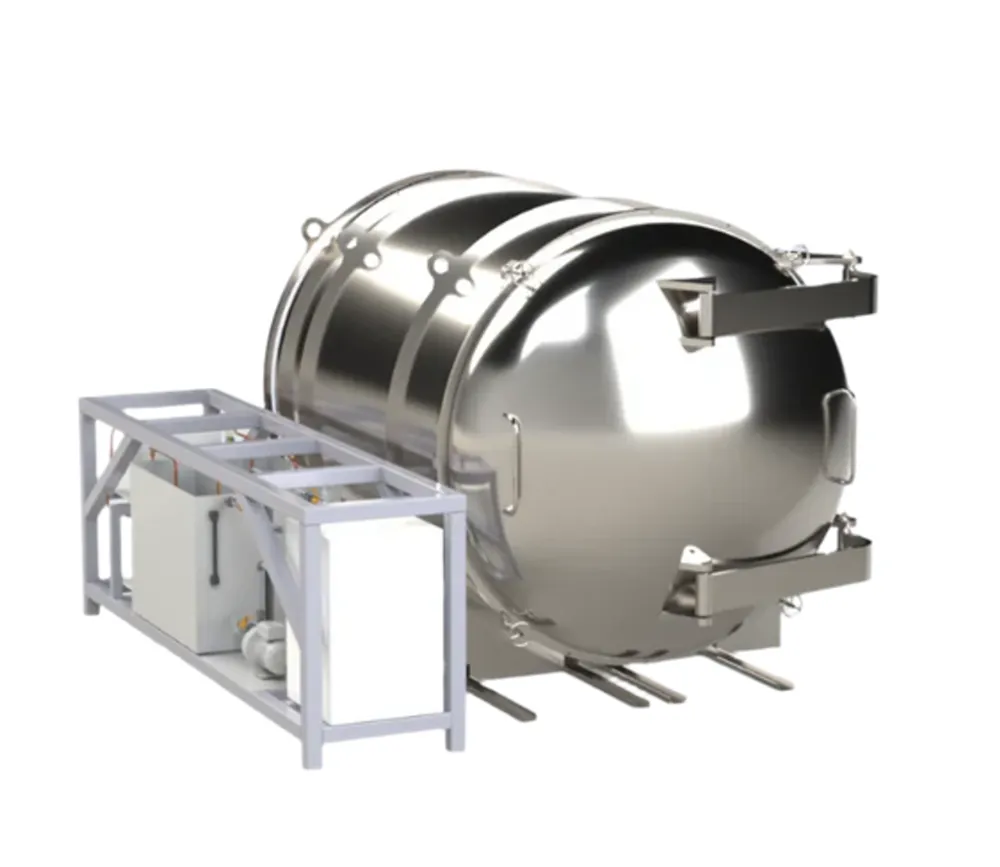
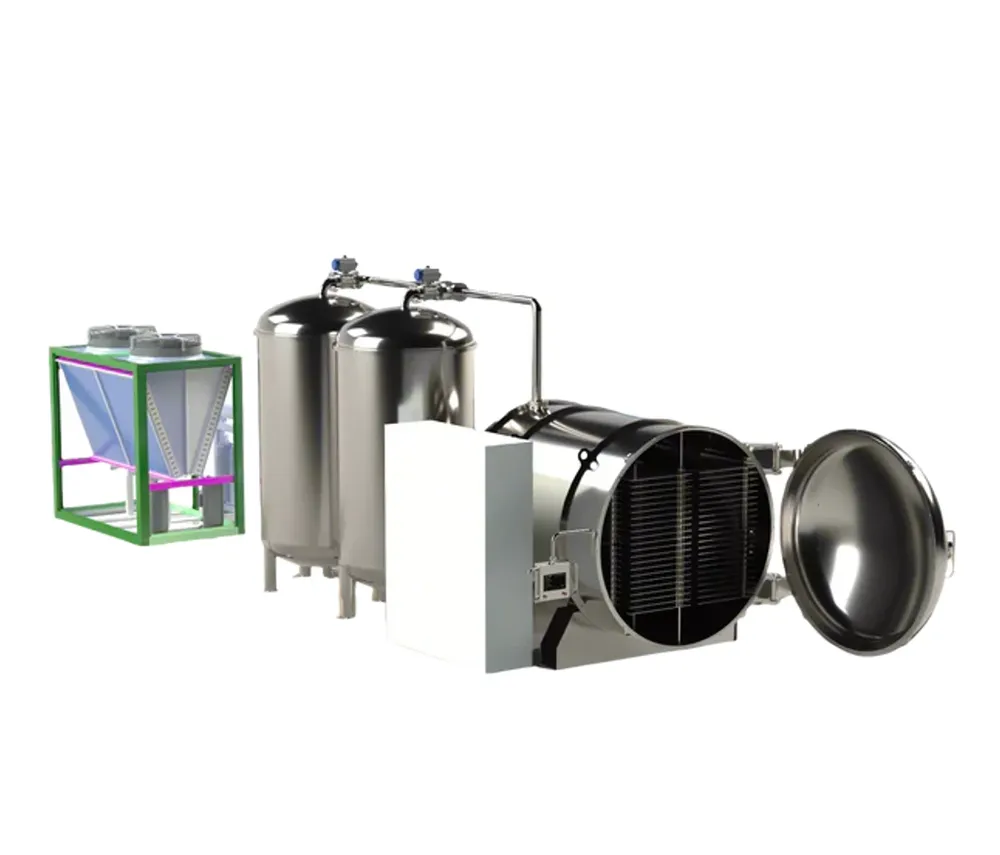
Running cost is average energy consumption across each band. FrostX machines are sold as normal but carry no energy figure until the manufacturer supplies one. Four things to check inside a band, and only one is on a spec sheet. Ask for square metres of usable shelf and the tray count, because that is what your batch size depends on. Ask for the tray gap: whole-leaf and intact-microgreen work needs clearance above the product, and spacing differs between platforms. Do not overpay for condenser capacity, because leafy loads are light in kilos, so the shelf runs out before the condenser does. And compare shelf area per euro rather than kilograms per euro: two compact machines can out-produce one larger machine rated for double the weight, and we will run that comparison across all four manufacturers for you.
Yield, and the number underneath it
Most industries need one yield number. This one needs two. Water content tells you how much fresh material you need per finished kilo. Bulk density tells you how much of it will physically fit on a shelf, and in this category the second constraint binds first, almost always.
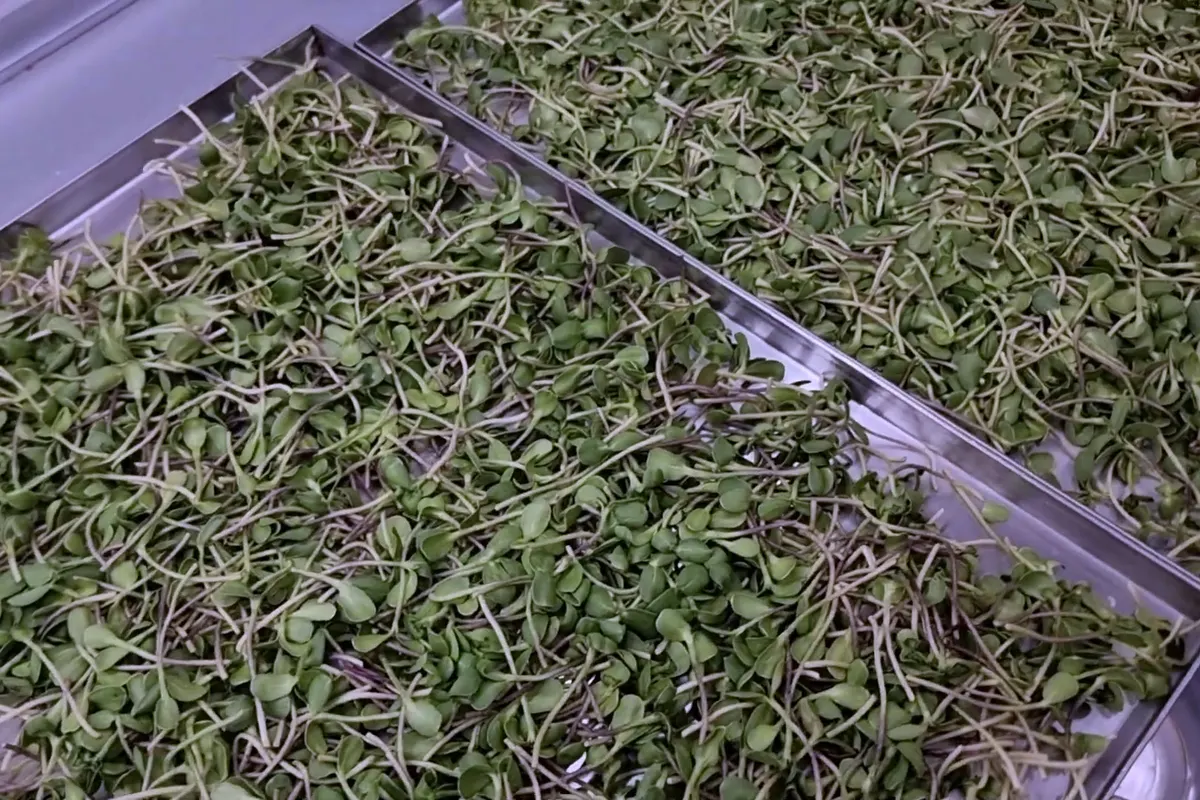
The first row is our own published planning figure, the one behind the ROI calculator, and it sits above the per-species arithmetic on purpose: it allows for trim, stem and handling loss on top of water content. The species rows are water content alone. Herbs is not one input. Coriander leaf needs more than four times the fresh weight per finished kilo that thyme does, so costing a blend at a category average will be wrong for every line in it. And no credible source publishes bulk density for freeze-dried leafy herbs, so we measure it on your material rather than quote one. See what the finished product sells for, by material
| Raw material | Water content | Fresh input per 1 kg finished |
|---|---|---|
| Leafy herbs and microgreens, mixed | our own published figure | ~14 kg |
| Coriander leaf | ~92,2% | ~13 kg |
| Basil | ~92,1% | ~13 kg |
| Chives | ~90,6% | ~11 kg |
| Parsley | ~87,7% | ~8 kg |
| Dill | ~86,0% | ~7 kg |
| Rosemary | ~67,8% | ~3 kg |
| Thyme | ~65,1% | ~3 kg |
What decides whether this works
Colour retention, long shelf life and light weight are all true, and none of them helps you decide anything. These four set your cost per kilo, and one of them is a reason not to buy.
Shelf area is your capacity here, not the kilogram rating
Every freeze-dryer on the market is rated in kilos of fresh load per batch, and that rating was measured on dense material: diced fruit, meat, purée. Leaf does not behave that way. Whole fresh basil runs roughly 40 to 125 kilos per cubic metre, a spread that comes from how firmly the leaves are laid in rather than from the variety. Drying works best at a product depth near 20 mm, so a square metre loaded to that depth holds between 0,8 and 2,5 kg of basil, call it 1,6 kg on a sensible load, and returns about 125 g of finished product per cycle. Ask any supplier for square metres of usable shelf and the tray count, then multiply by the loading you achieve.
This category pays back more slowly than fruit, and sometimes hot air is the right answer
Herbs return the slowest payback of any industry on this site on an entry configuration, and we would rather explain that than hide it. The cause is density: fewer kilos per batch on the same cycle and the same electricity. The practical answers are to mill rather than sell whole leaf, to buy shelf area rather than kilogram rating, and to fill the chamber with a denser second crop between herb runs. There is also a case for not buying at all. Published work on radish microgreens found hot-air drying preserved nutrients and phytochemicals well, and a drying-method comparison on ginseng found air drying held volatiles better than vacuum freeze-drying did, with freeze-drying winning on appearance. If your product is a milled powder going into a blend where nobody sees the colour, a hot-air dryer at a fraction of the price may be the correct purchase, and we will say so.
Drying concentrates residues, and this category is watched harder than any other
Freeze-drying removes 98 to 99% of the water, so it concentrates whatever the crop arrived with, exactly as any other drying method does. A crop that is comfortably compliant fresh can fail once dried. The compliance section below has the regulation and the dehydration factors behind that. The scrutiny is real: a 23-year analysis of the EU rapid alert system counted 3.741 notifications on herbs and spices, 5,3% of every notification across every food category, four fifths of them recently classed as serious. Get your grower's residue data before you buy a machine, not after.
Aroma retention is real, but do not buy on a percentage
You will find sites quoting 90 to 95% essential-oil retention for freeze-drying against 20 to 60% for air drying. Those figures circulate widely and we cannot trace them to a source we would put our name to. A 2020 review of lyophilisation and essential oils in herbs and spices is more careful, concluding that only limited and contradictory information is available on essential-oil content after freeze-drying: sublimation avoids the thermal losses of hot air, but a vacuum also strips volatiles, and the balance differs by species. What is consistently supported is colour and structure, and that is the claim we make. If aroma retention is central to your specification, have the volatiles measured on your own material.
What applies before you sell
Herbs and spices are among the most closely watched food categories in the EU, and the reasons are not the ones most new producers expect. Start early: the paperwork takes longer than the machine does. Article numbers are given so you can take the source to your authority.
Registration, not approval
Article 6 of Regulation (EC) 852/2004 requires every food business operator to notify the competent authority of each establishment for registration, and Article 5 requires HACCP-based procedures on top of the hygiene requirements in Annex II. For plant-origin herbs, spices and microgreens this is registration rather than the approval regime that applies to products of animal origin. It still means premises, procedures and records that pass an inspection, and for a drying operation the control point is normally water activity, verified per batch on a bench meter you own, not a weight-loss reading. Budget for the meter: it is your release record and no equipment supplier can produce it for you.
Drying concentrates pesticide residues, and this is the one people miss
Maximum residue levels under Regulation (EC) 396/2005 are set on the fresh product. Article 20 allows the concentration caused by drying to be taken into account, and the European Spice Association publishes the dehydration factors used for that assessment, running from about 3 for dried garlic to about 13 for coriander leaves. The practical consequence is blunt: a crop that passes comfortably fresh can fail once dried. Treat your grower's residue data as part of the purchase decision, not a detail for later.
Freeze-drying is not a kill step, and your buyer knows it
It lowers water activity so microorganisms cannot grow. It does not remove what was already there. Salmonella is the single most notified hazard for this category in the EU rapid alert system, ahead of aflatoxin, and EU microbiological criteria set no specific limits for herbs and spices, so commercial buyers set their own, commonly Salmonella absence and a plate count ceiling. Ethylene oxide is not a legal fumigant in the EU and appears regularly in alerts on imported material. Codex CXC 75-2015, the code of hygienic practice for low-moisture foods, is the reference your auditor will expect you to know.
Contaminants, plant toxins, protected names and claims
Maximum levels for aflatoxins, ochratoxin A and other contaminants sit in Regulation (EU) 2023/915, and pyrrolizidine alkaloids from weed contamination such as ragwort or Datura are a recurring cause of alerts on oregano and cumin. Both are field and sorting problems, and freeze-drying will fix neither. A protected name belongs to a product specification rather than to a raw material, so under Regulation (EU) 2024/1143 a freeze-dried version is covered only if the specification permits it. Read it before you launch. Any nutrition or health claim on a herb powder falls under Regulation (EC) 1924/2006, and only authorised claims may be used.
Where to file
— Entry in the Registro General Sanitario de Empresas Alimentarias y Alimentos under Real Decreto 191/2011. You apply to the health authority of your Comunidad Autónoma rather than to AESAN directly: AESAN maintains the register, your autonomous community processes you. The activity codes on the entry govern what you may then label, so confirm the exact clave with your community before you file.
— Registration of the establishment with DGAV under Article 6 of Regulation (EC) 852/2004, through the route for food of non-animal origin. Applications go through the +SIPACE system, and a prior inspection of the premises is part of the process. ASAE inspects and enforces but does not register you. You will also need the industrial-activity permit for the premises, through the Balcão do Empreendedor, before the registration can complete.
Orientation, not legal advice. Every reference above is given so you can read the source and take it to your competent authority. Confirm your case before you invest: a machine you cannot legally run is worthless. Checked against consolidated EU and national sources in August 2026.
What you can produce
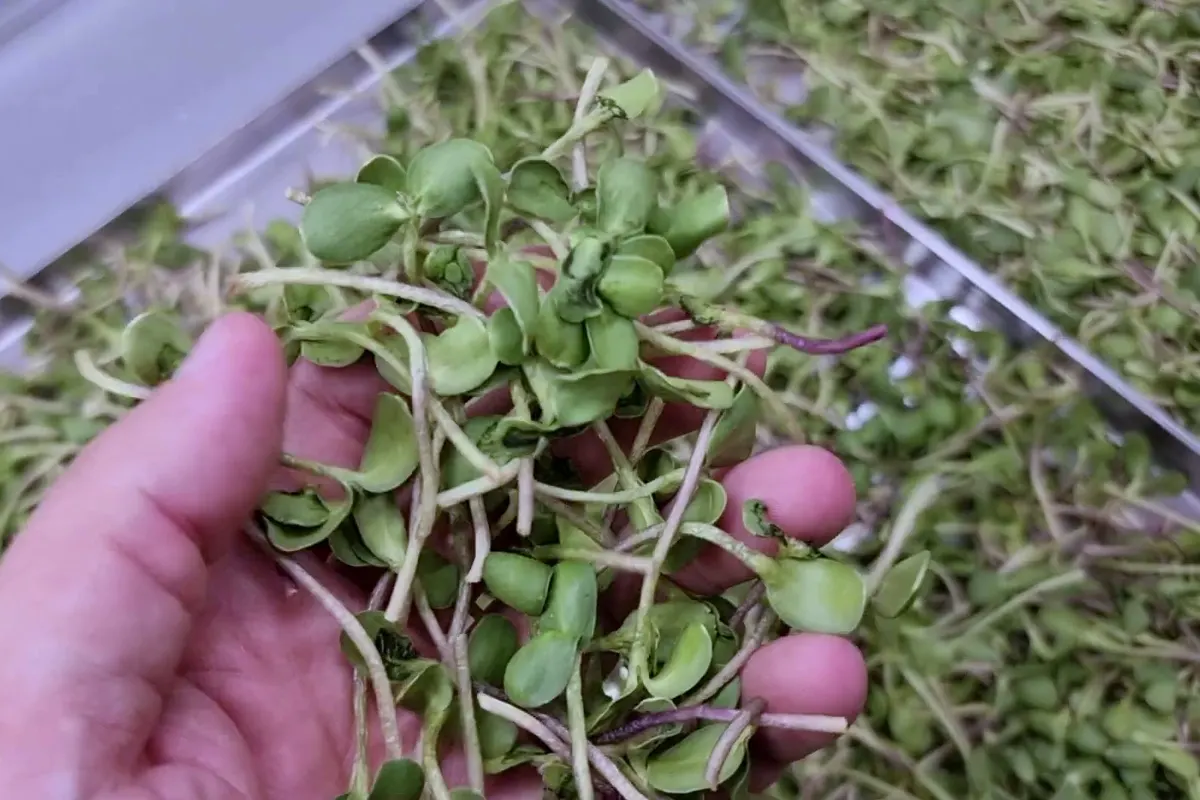
A microgreens grower in Portugal
A Portuguese microgreens grower bought a compact-tier machine from us in March 2026, to turn a crop with a few days of shelf life into a product they could hold and sell all year. That is the right shape for this category: microgreens carry the highest price a kilo of anything we handle and the lowest tray loading of anything we dry, so the entry tier is the correct starting point rather than a compromise you grow out of. We are not publishing volumes, product mix or results, because we have not measured them and will not invent them.
A spice business in Portugal adding a freeze-dried line
An established Portuguese spice business bought from us to run a freeze-dried line alongside conventional dried product. The commercially interesting part is what they already had: the sourcing, the residue data and the customer list. Those are the three things that slow a new entrant down, and none of them was in the way, which left only the sizing question this page is about. No volumes or values are published here, because we have not been given permission to publish them.
Frequently asked questions
Why freeze-dry herbs instead of air-drying them?
Colour and structure. Freeze-drying works cold, so green stays green and a leaf or an intact microgreen keeps its form rather than curling to a dull flake. Pigment and phenolic retention is consistently better than under hot air in the published comparisons. Aroma is a harder argument and we deal with it honestly further up this page. If your product is a milled powder going into a blend where nobody ever sees the colour, hot air may be the better commercial decision, and we will tell you so.
How much fresh herb do I need per kilo of finished product?
Our published planning figure is about 14 kilos of fresh leaf per finished kilo for herbs and microgreens, and it is the same figure behind the ROI calculator. It allows for trim and handling loss on top of water content. Woody herbs are a different business: rosemary and thyme give a finished kilo from about 3 kilos of fresh material. Costing a blend at a category average will be wrong for every line in it.
What size machine do I need for basil or microgreens?
Not the one the kilogram rating suggests, because that rating was measured on dense material. Size on square metres of usable shelf and the tray count instead, then apply the loading you achieve on your own leaf, which for whole basil is somewhere near 1,6 kilos a square metre. Send us 2 kg and we will measure it and size across all four manufacturers we carry.
How long is a cycle?
It depends on the crop, the load depth, the water content, the tray loading and the end point you are drying to. Any supplier who quotes you a single number for herbs is guessing, and the guess will be wrong for at least one of your lines. Tell us your crop and your volumes and we will work through a realistic cycle plan, or run a validation cycle on your own material and give you measured figures instead of an estimate.
Does freeze-drying really retain more essential oil than air-drying?
It avoids the thermal loss that hot air causes, and that much is well established. But a vacuum also strips volatiles, and the published evidence on net essential-oil retention is mixed. A 2020 review of lyophilisation in herbs and spices concluded that the available information on essential-oil content and composition after freeze-drying is limited and contradictory. So we will not quote you a retention percentage. The figures circulating online, 90 to 95% against 20 to 60% for air drying, are widely repeated and we cannot trace them to a source we would stand behind. If aroma retention is central to your specification, measure it on your own material.
Does freeze-drying kill Salmonella?
No. It lowers water activity so microorganisms cannot grow, but it preserves what was already present. Salmonella is the single most notified hazard for herbs and spices in the EU rapid alert system, EU microbiological criteria set no specific limits for this category, and ethylene oxide is not a legal fumigant in the EU. Your control system is raw material sourcing, hygiene and water-activity management, not the chamber.
Does drying change my pesticide residue position?
Yes, and this is the point that catches most new producers. Residue limits under Regulation (EC) 396/2005 are set on the fresh product, and Article 20 allows the concentration caused by drying to be taken into account. The European Spice Association publishes the dehydration factors used in that assessment, running from about 3 for dried garlic to about 13 for coriander leaves, with rosemary at 7. In practice a crop that is comfortably compliant fresh can fail once dried. Get your grower's residue data before you commit to a machine, not after.
Do I need approval to sell freeze-dried herbs in Spain or Portugal?
You need your establishment registered and a HACCP-based system, under Articles 6 and 5 of Regulation (EC) 852/2004. For plant-origin herbs, spices and microgreens this is registration rather than the heavier approval regime that applies to products of animal origin. In Spain that means an entry in the RGSEAA filed through your Comunidad Autónoma under Real Decreto 191/2011. In Portugal it is registration with DGAV through the +SIPACE system, which includes a prior inspection of the premises. Confirm your own case with your competent authority before you invest.
What does a machine cost, and can I start small?
Compact commercial machines start at €4.950 ex-VAT, a first production line from €8.950, established production in the up-to-50 kg band from €13.950, and the industrial tier from €145.480. All list prices sit on the product pages and update live. You can start small, and most producers in this category do. Be realistic about payback: low-density material means fewer kilos per batch on the same cycle and the same electricity, so this category pays back more slowly than fruit does on the same machine price.
Send us your crop and your volumes.
Tell us what you want to dry, how much per week, and whether you are selling whole leaf, intact microgreens or milled powder. We will size the machine on shelf area rather than on a kilogram rating, compare all four manufacturers we carry, and run the cost per finished kilo with you against our published prices.
And we will tell you plainly when freeze-drying is the wrong answer. If your spice is already dry, or your powder never shows its colour to a customer, a hot-air dryer at a fraction of the price is the correct purchase, and we would rather say so than sell you the wrong machine.