
Freeze-Dryers for Bakery, Pastry and Chocolate
Freeze-drying removes 98–99% of the moisture from a material while it is frozen, so the piece keeps its shape, its colour and most of its aroma instead of shrinking and browning. For a baker the functional point is narrow and useful: you can put real fruit, zest, praline or a live culture into a dough, a batter, a buttercream or a chocolate without putting water into it.
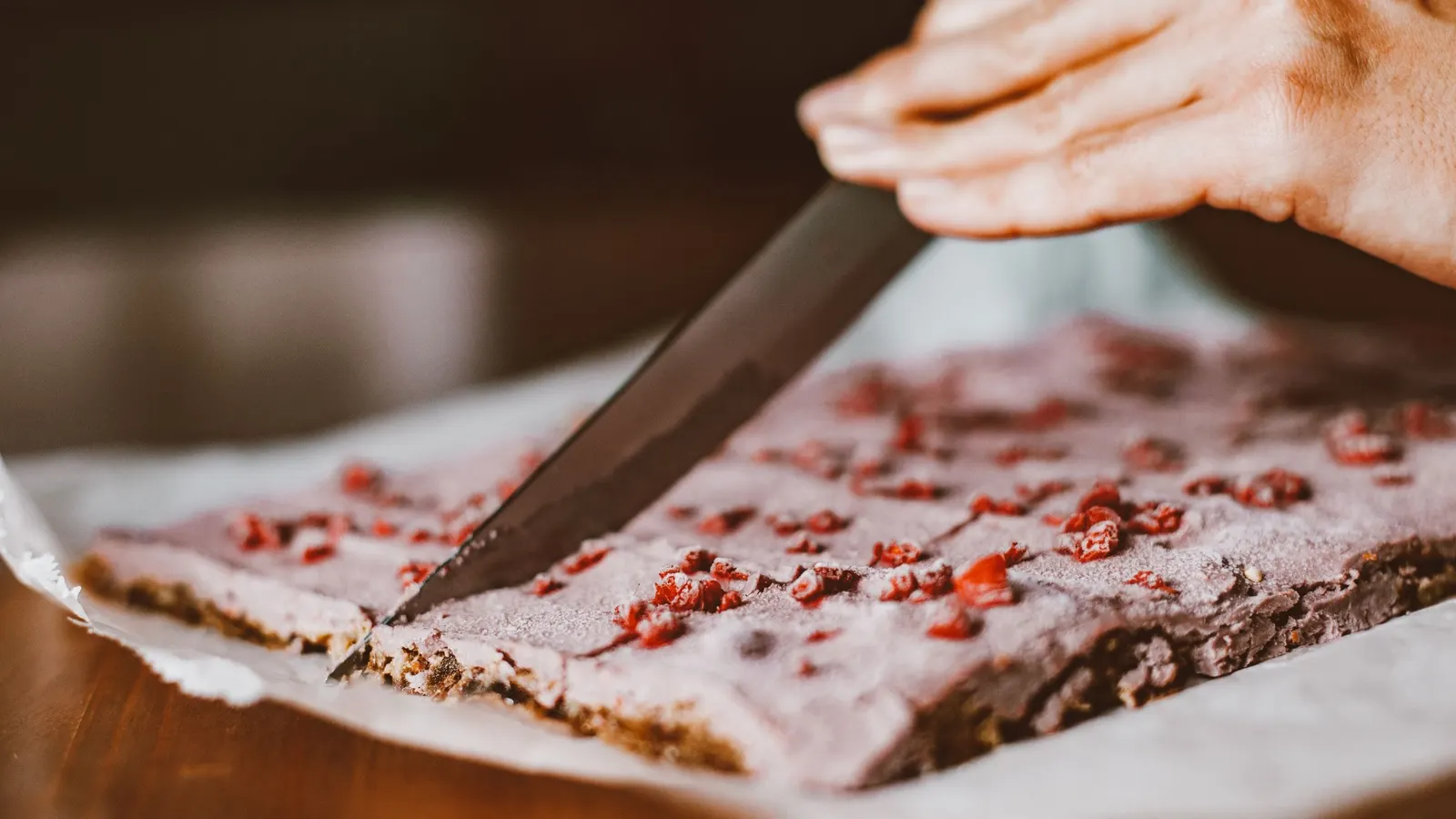
The interesting half of this page is not the fruit you can already buy. It is everything you cannot: your own praline and caramel dried and broken into shards, a local variety nobody sells dried, herb and floral powders in the quantities a pastry kitchen actually uses, your own starter, and the cake trim and croissant off-cuts that currently go in the bin. Nobody sells you those, at any price.
So the page publishes both sides: what the formats are, what the machines cost, and the arithmetic that tells you whether making a commodity inclusion beats the invoice you pay today. Our own freeze-dried price reference puts bought-in strawberry at about €51/kg business-to-business at the standard tier and about €95/kg premium or organic — and those are the numbers in-house production has to beat.
In short
Send us 2 kg. Get measured yield, water activity and cycle figures.
We will not quote you a cycle time, because anyone who does is guessing. Sugar content, fat content, piece size, load depth and the water activity you are drying down to all move it, and they move it a lot.
What we will do is run a validation cycle on your actual material and give you the measured finished yield, the measured cycle behaviour and the water activity of the result. With those three numbers you can run the arithmetic on this page with your figures instead of ours.
It matters most for the material that has no published figures at all — your own praline, your own ganache, your own trim. Fruit we can model; your recipe we have to measure.
Which freeze-dryer for your scale
Capacity is quoted as fresh load per batch, which means what goes in wet. Convert to finished weight with the yield table above before you compare anything. Prices are ex-VAT list prices, pulled live from the catalogue.
| Stage | Fresh load per batch | Running cost | From | Representative models |
|---|---|---|---|---|
| Compact commercialtrials, one inclusion, a single obrador or pastry kitchen | Up to 10 kg | 0,9–1,4 kWh/h | €4.950 | |
| Light commerciala bakery group or chocolatier with two or three regular inclusions | Up to 18 kg | 1,13–2,46 kWh/h | €8.950 | |
| Commercialdry-mix manufacture, ingredient supply, multi-site bakery | Up to 50 kg | 2,25–3,59 kWh/h | €13.950 | |
| Industrialingredient houses and industrial bakery | Up to 600 kg | 4–13 kWh/h | €145.480 |
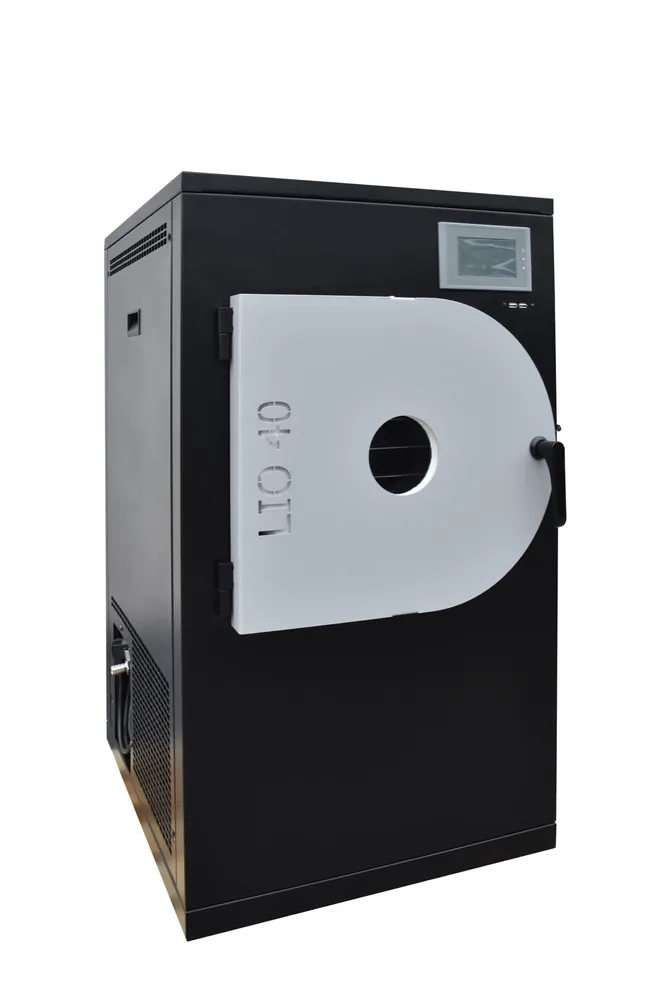
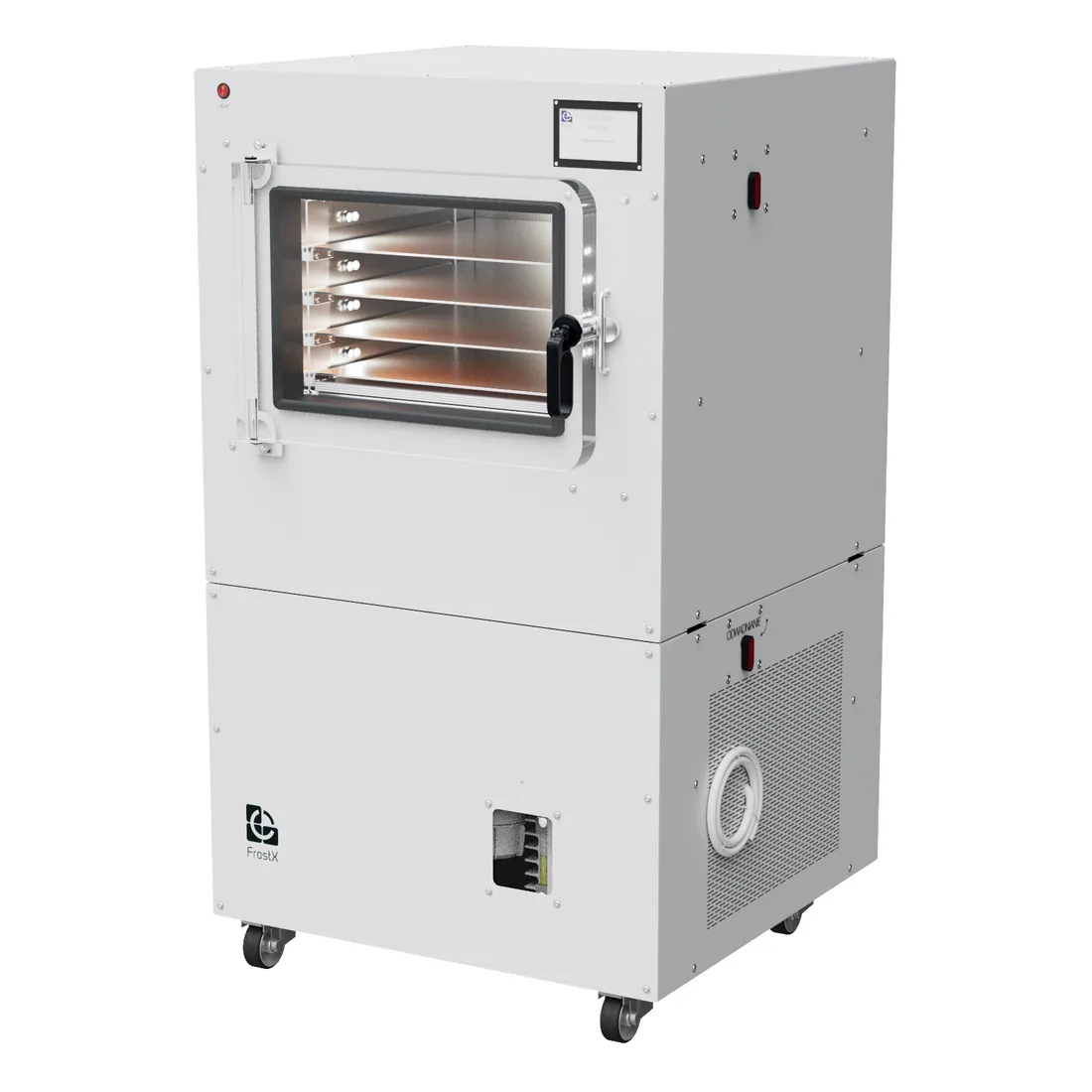
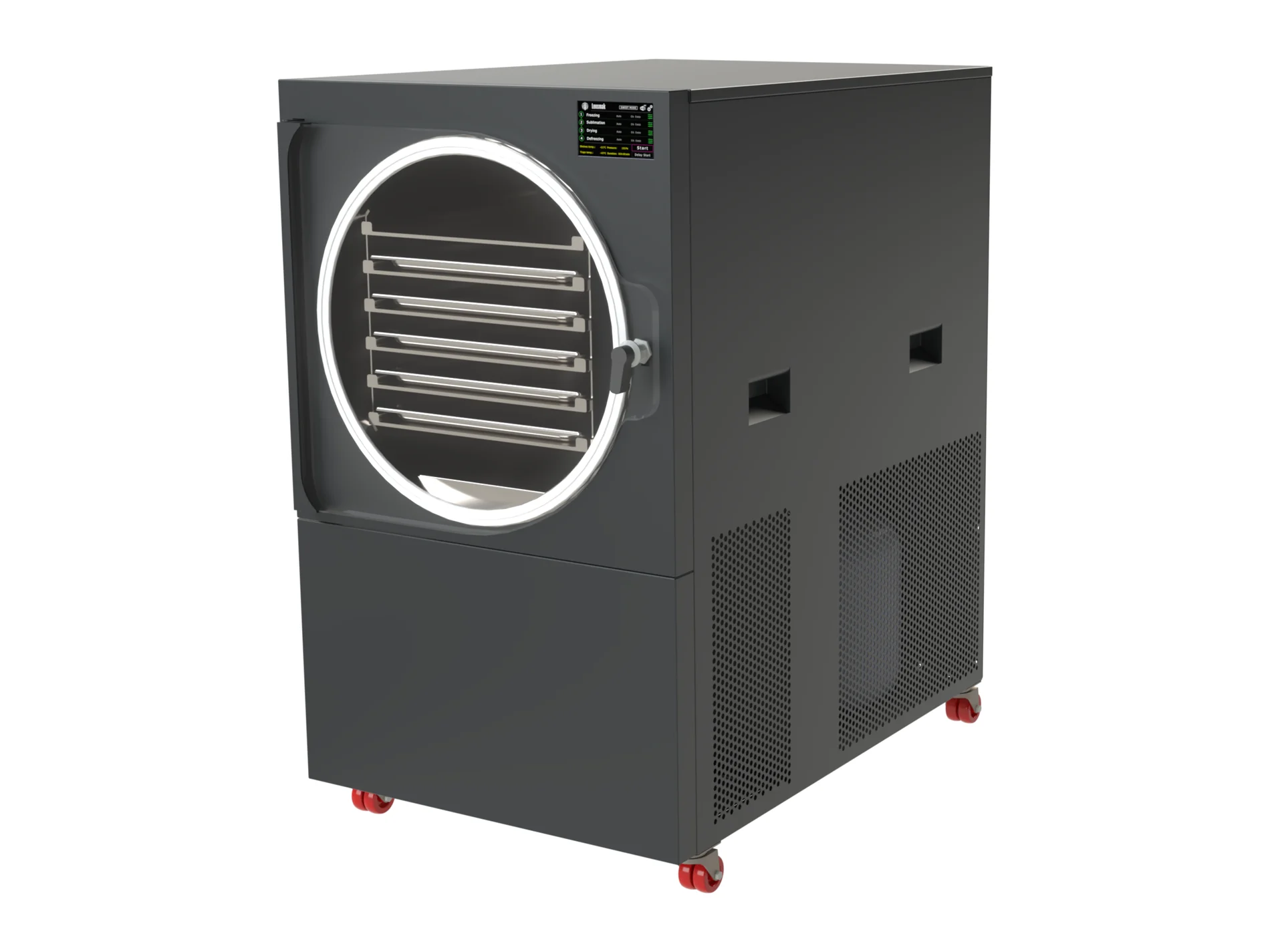
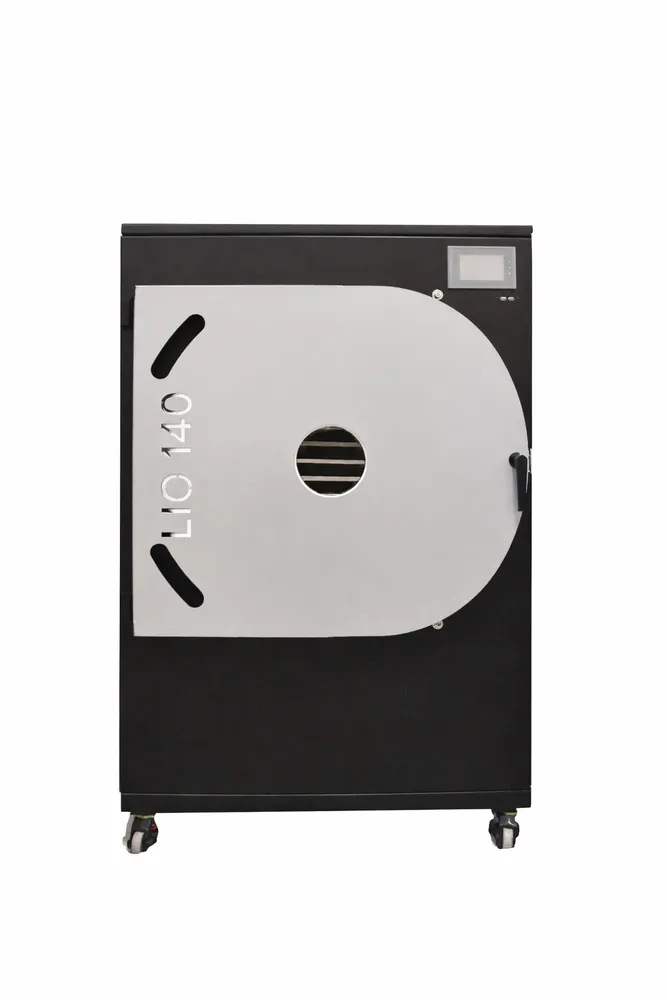
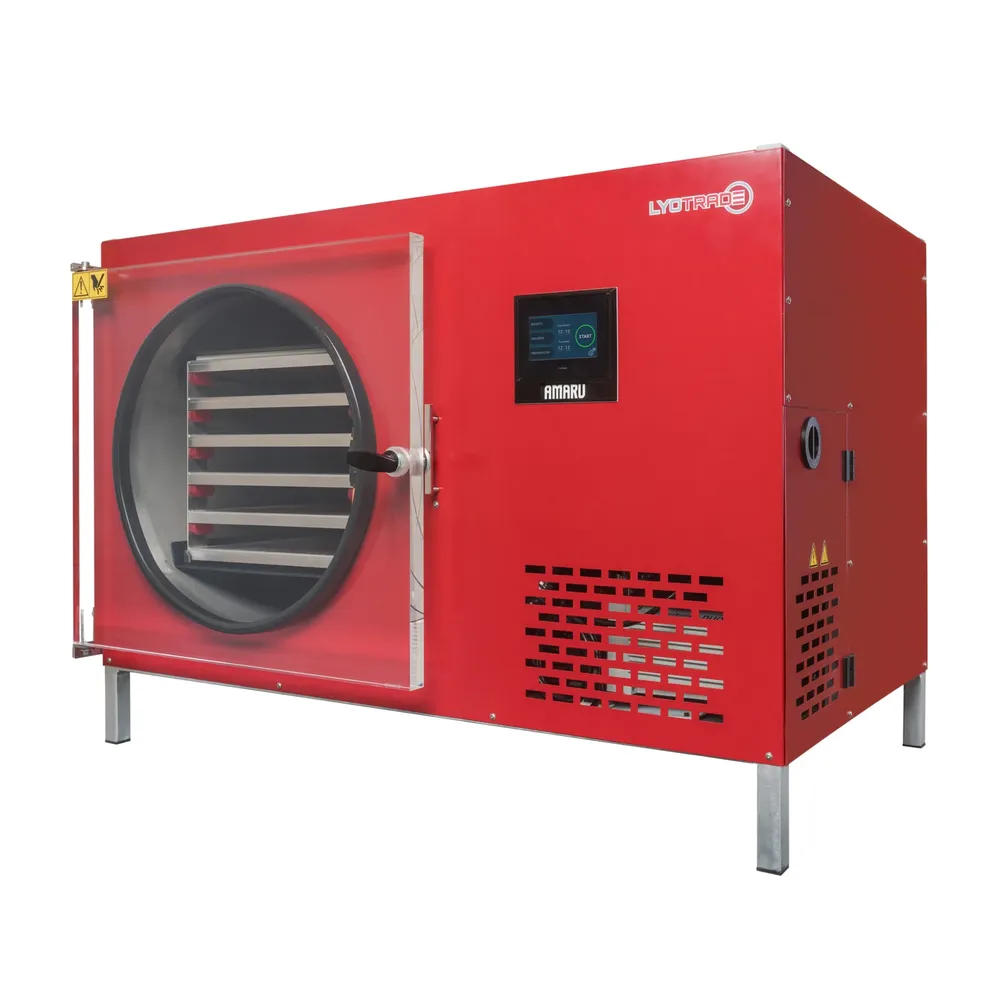
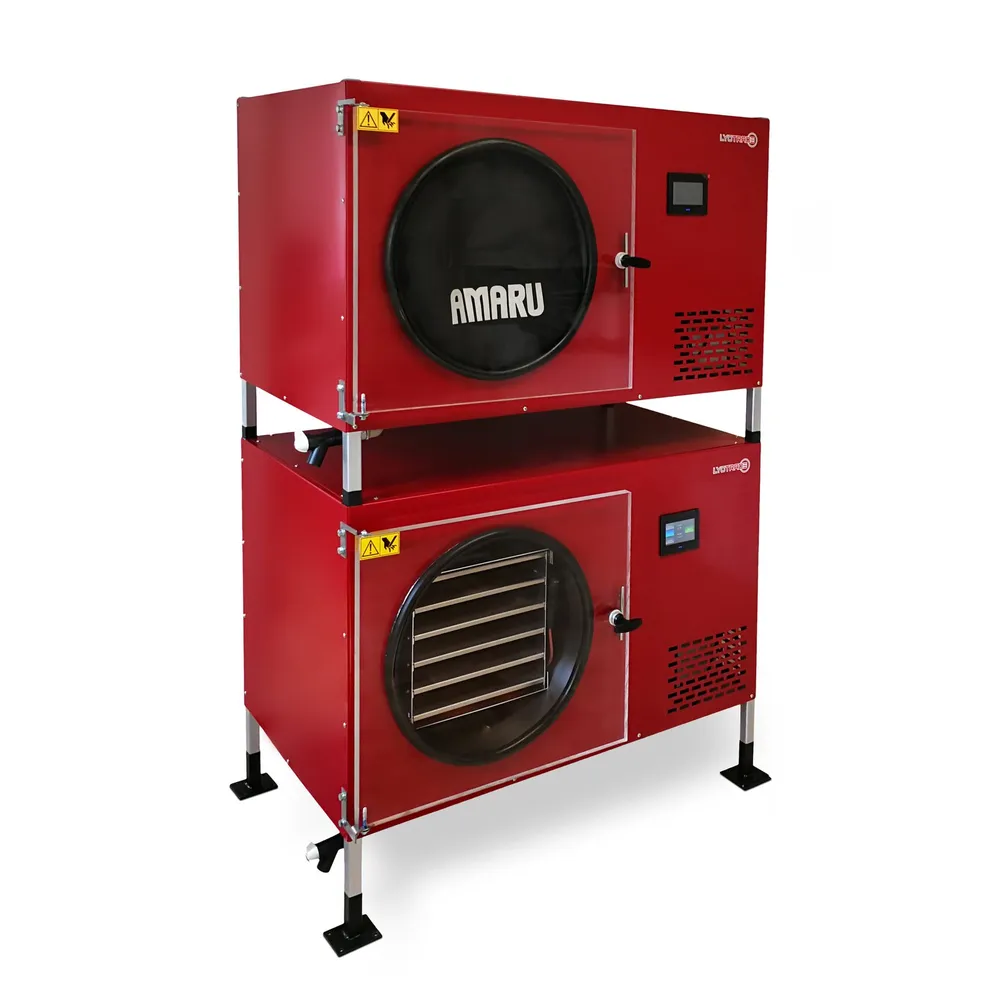
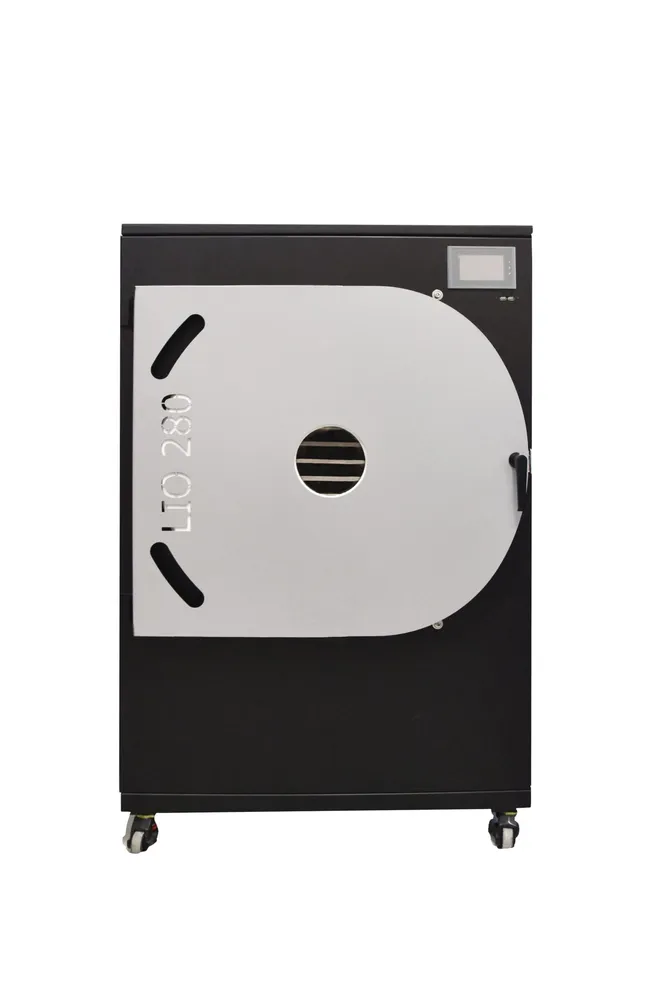
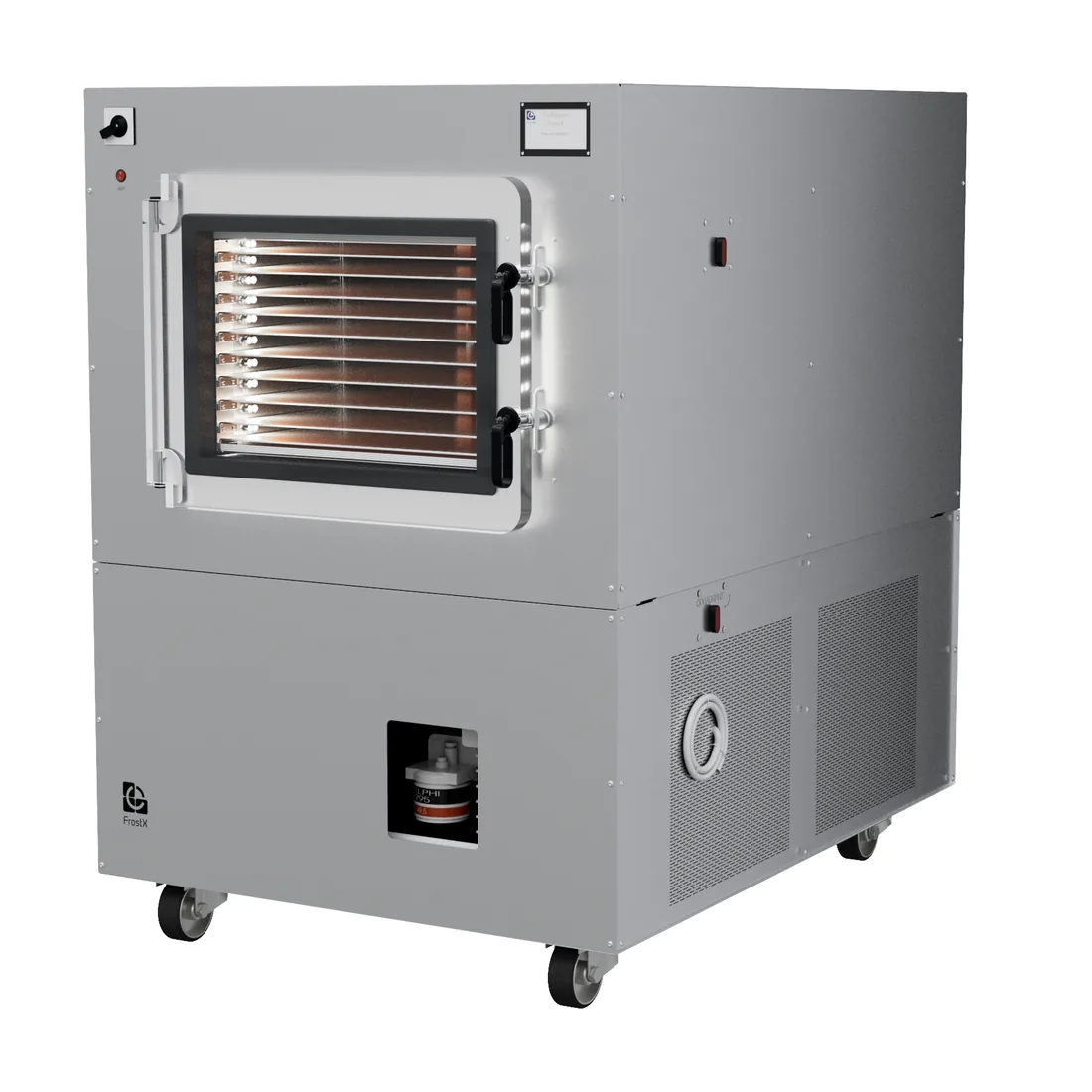
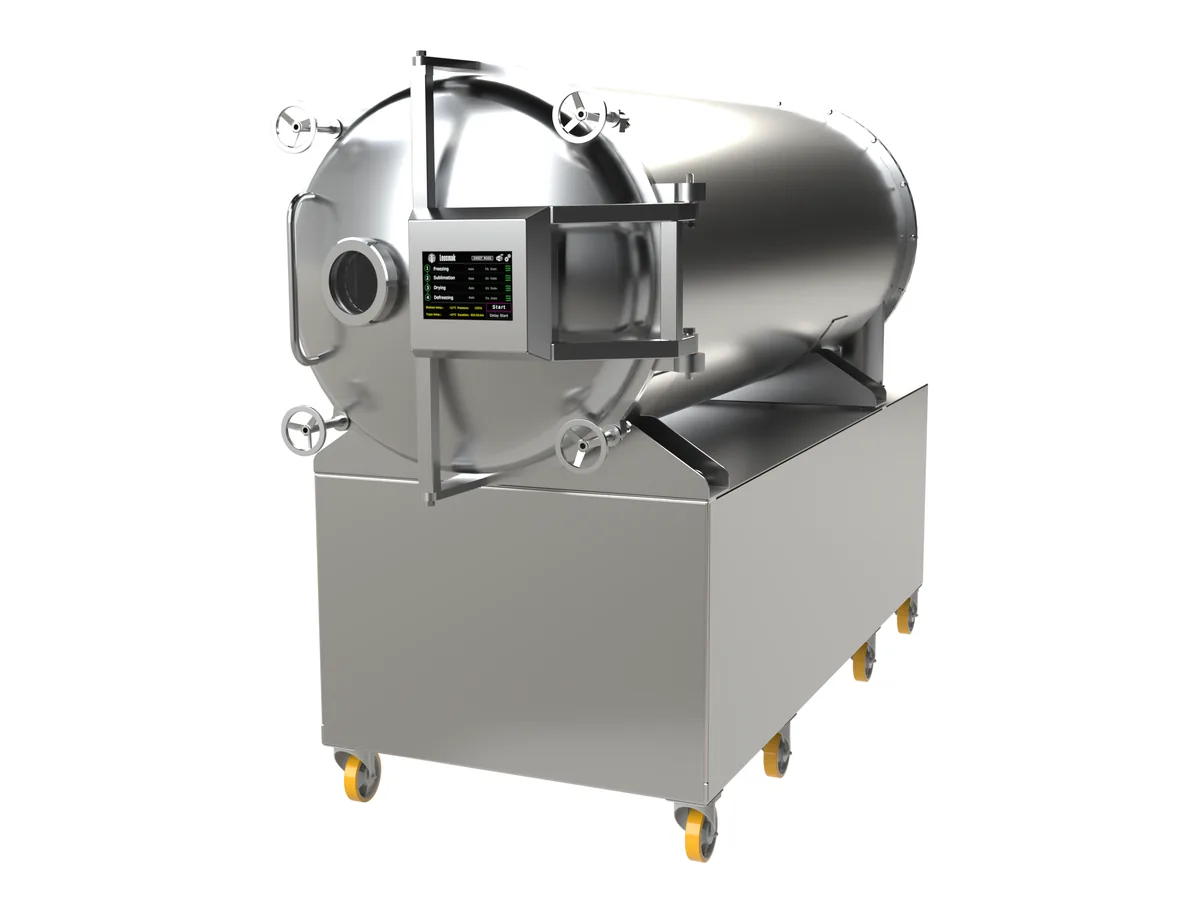
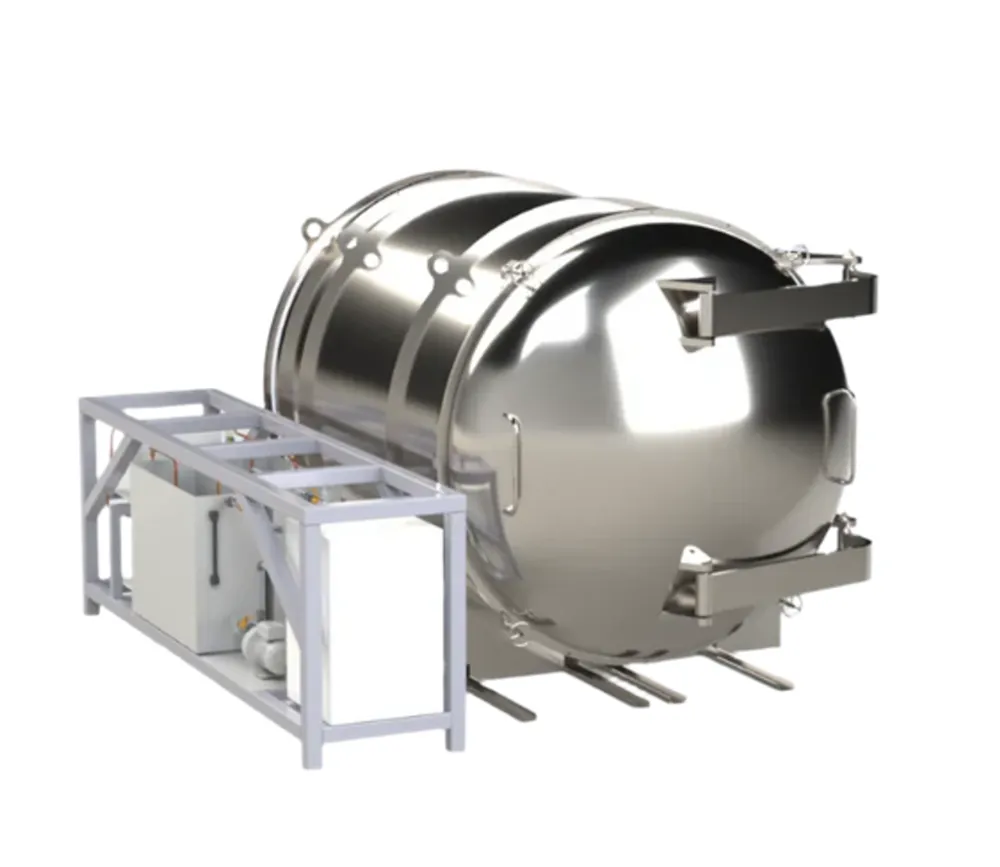
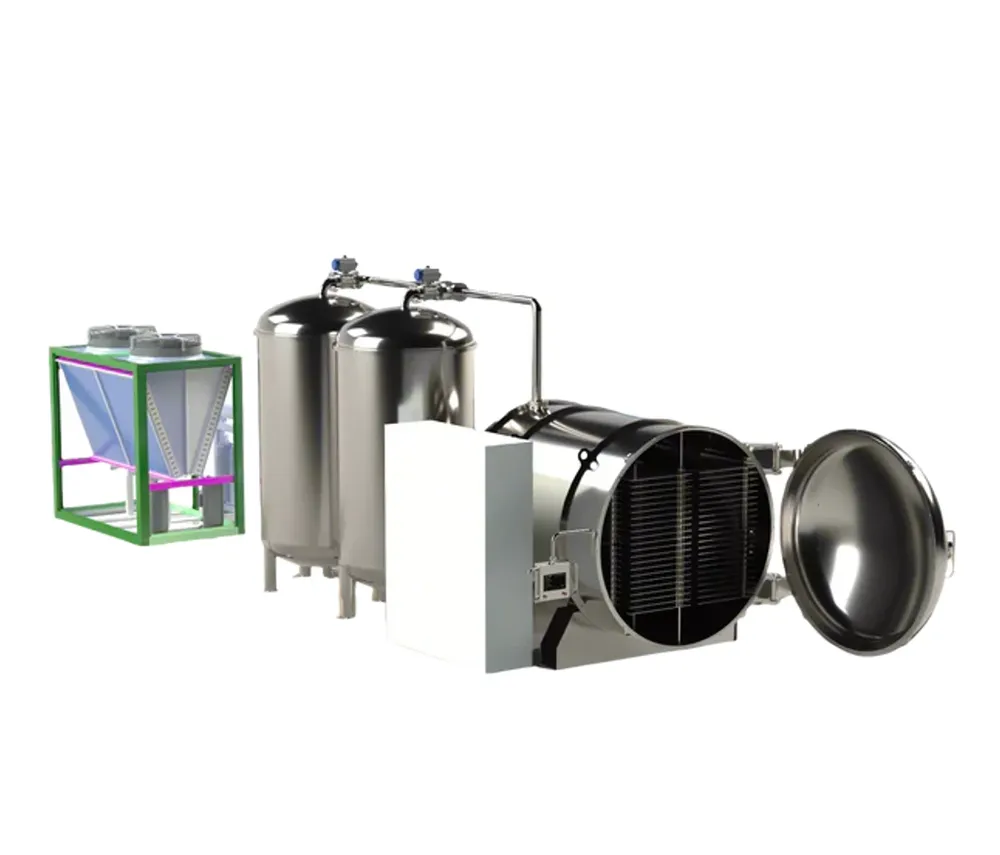
Running cost is average energy consumption across each band. FrostX machines are sold as normal but carry no energy figure from the manufacturer, so they are excluded from the bands rather than estimated. Four things to weigh on this application. Size on finished kilos per week, not on the machine's rating. Check tray spacing if you dry whole fruit — it runs from roughly 28 to 50 mm across the range, and if you only ever mill to powder you should not pay for the taller gap. Ask about programmable recipes and batch data logging, which are what let you reproduce an inclusion to the same water activity every run and what a retail or foodservice customer audits; they are not on every machine in the compact band. And treat allergen segregation as a specification: if the same chamber dries nuts, dairy fillings and fruit, cleaning validation and batch sequencing become allergen controls.
Yield, the number to plan around
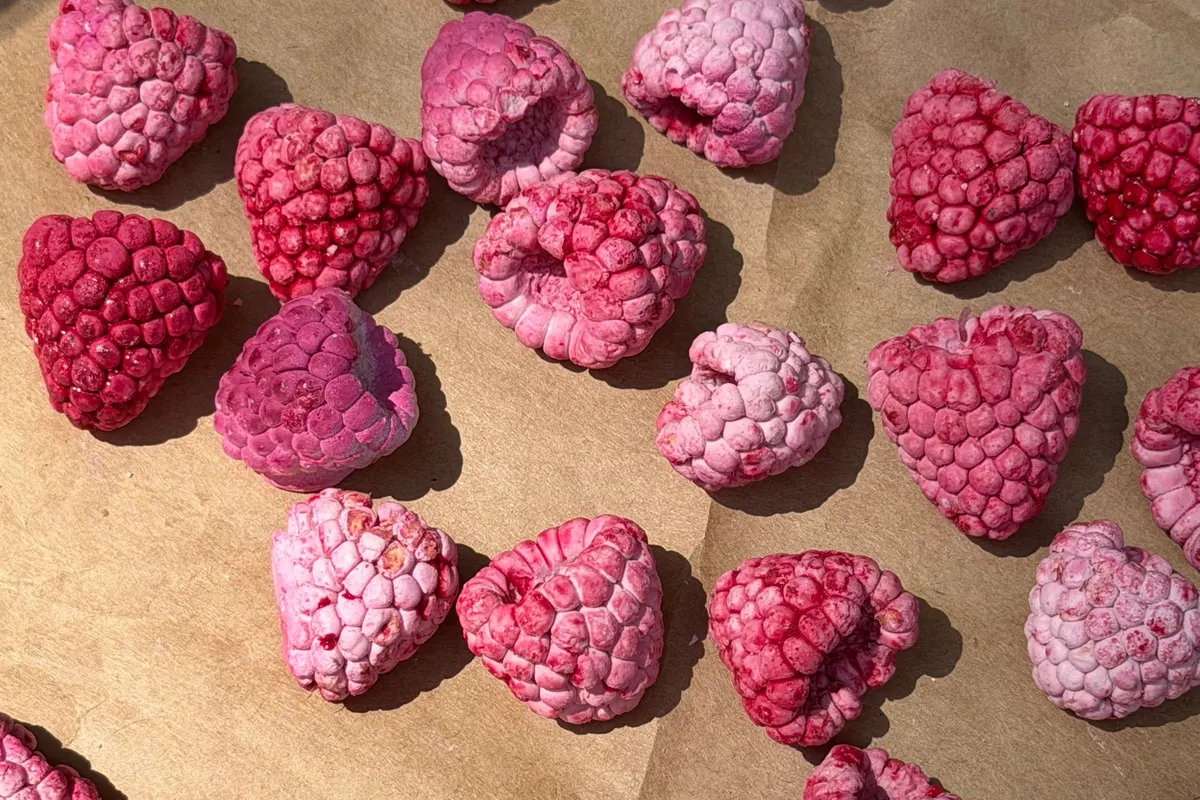
Freeze-drying removes water and fruit is mostly water. That ratio is the reason bought-in inclusions are as competitive as they are, and it is the first line of any in-house calculation. The figures below are published water contents from USDA FoodData Central, SR Legacy, with fresh input calculated on a dry-solids basis.
Three consequences for a bakery specifically. Capacity is quoted wet and your usage is quoted dry — a machine rated up to 30 kg of fresh load returns roughly 2,7 kg of finished strawberry inclusion per cycle, so size on the finished kilos your recipes consume in a week, not on the brochure figure. The material is the dominant cost line, not the machine — at 11:1 every euro per kilo of fresh fruit adds about €11 to the finished kilo, and nothing else in the calculation moves that fast. And if you grow or source the fruit yourself this is a different business — owning the material changes every line, so start with fruits and vegetables instead. Sour cherry and citrus zest are both bakery-relevant and neither has a published water content we are willing to reprint; send 2 kg and we will measure them. What finished product sells for is on our freeze-dried price reference.
| Raw material | Water content | Fresh input per 1 kg finished |
|---|---|---|
| Banana | ~74,9% | ~4,0 kg |
| Mango | ~83,5% | ~6,0 kg |
| Blueberry | ~84,2% | ~6,3 kg |
| Raspberry | ~85,8% | ~7,0 kg |
| Apple (flesh) | ~86,7% | ~7,5 kg |
| Strawberry | ~91,0% | ~11,0 kg |
What decides whether this works
Most equipment pages list benefits. Colour retention, shelf life and light weight are all true, every competitor says them, and none of it helps you decide anything. These six decide whether a freeze-dried inclusion works in your product and whether making it beats buying it. The fifth argues against buying a machine, and the sixth is the one nobody tells you: the price you are comparing against may not describe the same product at all.
Water activity, not percentage moisture, is the number you control to
Percentage moisture is a mass measurement. Water activity tells you how much of that water is free — available to microorganisms, to chemical reactions, and to move somewhere else. Two products at the same percentage moisture can sit at very different water activities, because sugars, salts and proteins bind water and take it out of circulation. Below 0,6 aW mould does not grow, which is why a product held there is shelf-stable at ambient without preservatives. A correctly dried, properly packed inclusion sits well below it. Measure it; do not assume it.
Moisture moves from high water activity to low, and your inclusion is always the low side
Simple physics, and the mechanism behind almost every failure a baker sees with this ingredient: in a sealed system water moves from the higher water activity to the lower until they equilibrate. Your inclusion is the driest thing in the product, so it is always on the receiving end. Put a dried raspberry in a sponge and it goes leathery while the crumb around it dries out; put it in a buttercream at around 0,92 aW and it is soft by the next day. Four fixes, and pick one deliberately: reformulate the adjacent component to a low water activity, put a fat or chocolate barrier between them, add the inclusion late rather than inside, or accept the migration and set a shelf life you have measured.
Chocolate is the least forgiving thing you will put an inclusion into
Chocolate is a fat-continuous system: hydrophilic sugar and cocoa particles suspended in cocoa butter. Introduce free water — from a wetter inclusion, from condensation on a cold bowl, from a humid room — and the sugar surfaces dissolve, bridge the particles, and the mass seizes irreversibly. Over storage the slow version raises the surface water activity of a coating and recrystallises sugar on it as sugar bloom, a different mechanism from fat bloom. So a properly dried inclusion is safer in chocolate than almost any other fruit format, precisely because it is dry. The risk is letting it pick up moisture between the chamber and the tempering bowl.
Sugar and fat make the cycle harder, and bakery material is full of both
High-sugar fruit and confectionery material have a low collapse temperature in the frozen state: driven too hard, the piece shrinks, goes sticky, browns and rehydrates badly. Fat-rich material — praline, ganache, cream — needs its own validated cycle, not the fruit recipe with a different label on it. That is why we will not quote a cycle time for anything on this page. It is also why the packing station is half the capital: a mill, a sieve, a heat sealer, barrier pouches with desiccant, and a water activity meter. The product is hygroscopic and a bakery is a warm, humid room.
On fruit you have to buy, in-house rarely wins on price alone
This is the argument against a machine, and it runs on our own published figures rather than the cheapest listing online. Our price reference puts bought-in strawberry at €51/kg business-to-business at the standard tier and €95/kg premium or organic. A kilo of inclusion holds about 11 kg of fresh fruit, so the fruit decides most of it. At €4,50/kg for bought-in conventional fruit that is about €50 against a €51 buy price; at €7,50/kg for organic, about €83 against €95. The headroom is thin at both tiers before you have paid for anything else. Then add the machine: straight-line over five years, a compact unit at €4.950 costs about €39,60 per finished kilo at 25 kg a year, €3,96 at 250 kg and €0,99 at 1.000 kg. And the invoice already covers labour, freezing, electricity, barrier packaging, waste, HACCP validation and the operator responsibility you would be taking on. Which is why this page leads with the material you already own. On fruit you have to buy, at either tier, in-house rarely wins on price alone. It wins when the input is yours — an orchard, a grower relationship, seasonal surplus, your own trim — or when the inclusion cannot be bought at any price.
Before you use a price as your benchmark, check you are comparing the same thing
A €51 kilo and a €95 kilo are not the same product, and the cheapest bulk listing you will find online is a third thing again. Four points establish which one you are looking at. Origin and traceability — where the fruit was grown, and whether the supplier can take a batch back to the farm. Certification — EU organic verified against the certificate, not the listing, if you intend to label it. Residue documentation per batch, not per year — chlorate in particular, where the EU maximum residue level is 0,05 mg/kg, plus the pesticide screen. Residual moisture and water activity per batch — deviations move rehydration behaviour and shelf life, which is exactly what you are buying the ingredient for. Most EU-origin supply comes out of Poland, where producers hold both organic and conventional certification. Certified organic acreage outside the EU is thin, so genuinely certified organic product is a narrower market than the price lists suggest. Our own price index excludes the cheapest bulk online stock for this reason: it does not describe the product a bakery ends up specifying.
What applies before you sell
The regulatory route for drying plant material is short. The part nobody tells you about is what changes when an ingredient you used to buy becomes an ingredient you make. We sell equipment and not regulatory advice, but a machine whose output you cannot lawfully sell is worthless, so here is the short version.
Registration, not approval — but it is still a change
Article 6 of Regulation (EC) No 852/2004 requires every food business operator to notify the competent authority of each establishment under their control, for registration. Approval under Regulation (EC) No 853/2004 applies to products of animal origin, not to a plant-only drying operation. You are almost certainly already registered as a bakery, so adding a drying step is a change to your registered activity rather than a new business — but it is a change, and it should be notified rather than assumed. Article 5 of the same Regulation requires HACCP-based procedures, so the new process needs its own hazard analysis, and for a drying step the control point is water activity verified per batch, not a weight-loss reading.
You become the food business operator for that ingredient
Under Article 3(3) of Regulation (EC) No 178/2002 the food business operator is responsible for ensuring food law is met within the business under their control, and Article 18 requires traceability one step back and one step forward. Today, when you buy an inclusion, your supplier holds the specification, the allergen statement and the upstream traceability. Make it yourself and you hold all three: the specification you wrote, the allergen assessment for your own room, and the batch record connecting a pouch of inclusion to a delivery of fruit. What changes is that you can no longer point at somebody else's specification when something goes wrong. Count it as a real cost in any make-or-buy calculation — most of the ones we see leave it out entirely.
Allergen cross-contact is the real exposure, and the chamber is where it happens
Fruit is not on Annex II of Regulation (EU) No 1169/2011. Your drying room may well be. If the same chamber and the same trays dry nuts, sesame, dairy-based fillings or gluten-containing material alongside fruit, the fruit inclusion carries that risk and you have to manage it by segregation, batch sequencing and validated cleaning. Precautionary "may contain" labelling is not harmonised in EU law and does not discharge your obligation under Article 21 to declare allergenic ingredients accurately. Control it in the room, then label it.
What you may and may not claim
Freeze-drying genuinely adds nothing, so factual statements — "one ingredient: strawberry", "nothing added" — are true and useful. Regulated claims are a different matter. Article 7 of Regulation (EU) No 1169/2011 prohibits information that misleads, including suggesting a food has special characteristics when all similar foods possess the same characteristics. Nutrition and health claims such as "no added sugar" or "source of vitamin C" are governed by Regulation (EC) No 1924/2006 and are only permitted in the authorised wording and where the stated conditions are met. "Natural" is not defined in general EU food law. And your nutrition declaration has to be calculated on the dried product: drying concentrates the sugars roughly tenfold, so a declaration copied across from fresh fruit is wrong, and expensive to correct after printing.
Where to file
You will already hold an entry in the RGSEAA (Registro General Sanitario de Empresas Alimentarias y Alimentos) under Real Decreto 191/2011 for your bakery activity. Adding a drying step for a fruit or vegetable ingredient is a new activity, which may require that entry to be modified or extended. Fruit and vegetable processing sits under clave 21, Vegetales (hortalizas, frutas, setas, tubérculos, legumbres) y derivados. You apply to the health authority of your Comunidad Autónoma, not to AESAN directly — AESAN maintains the register and the autonomous community processes you. Confirm the exact clave and whether a modification or an additional entry is required before you install anything, because the activity codes govern what you may then label.
Registration of the establishment with DGAV under Article 6 of Regulation (EC) No 852/2004, via the route for establishments handling food of non-animal origin. Applications go to DGAV through the +SIPACE system with the registration form and proof of the establishment's licensing, and DGAV publishes the list of registered operators. ASAE is the inspection and enforcement authority, not the registering one. An existing padaria adding a drying activity should treat this as an amendment to its registered activity, filed the same way.
Orientation, not legal advice, and accurate as checked on 14 August 2026. We sell equipment, not regulatory consultancy. Confirm your specific case with your competent authority before you invest — a machine you cannot legally run is worthless.
What you can produce
Illustrative profile, not a customer — the craft bakery or chocolatier
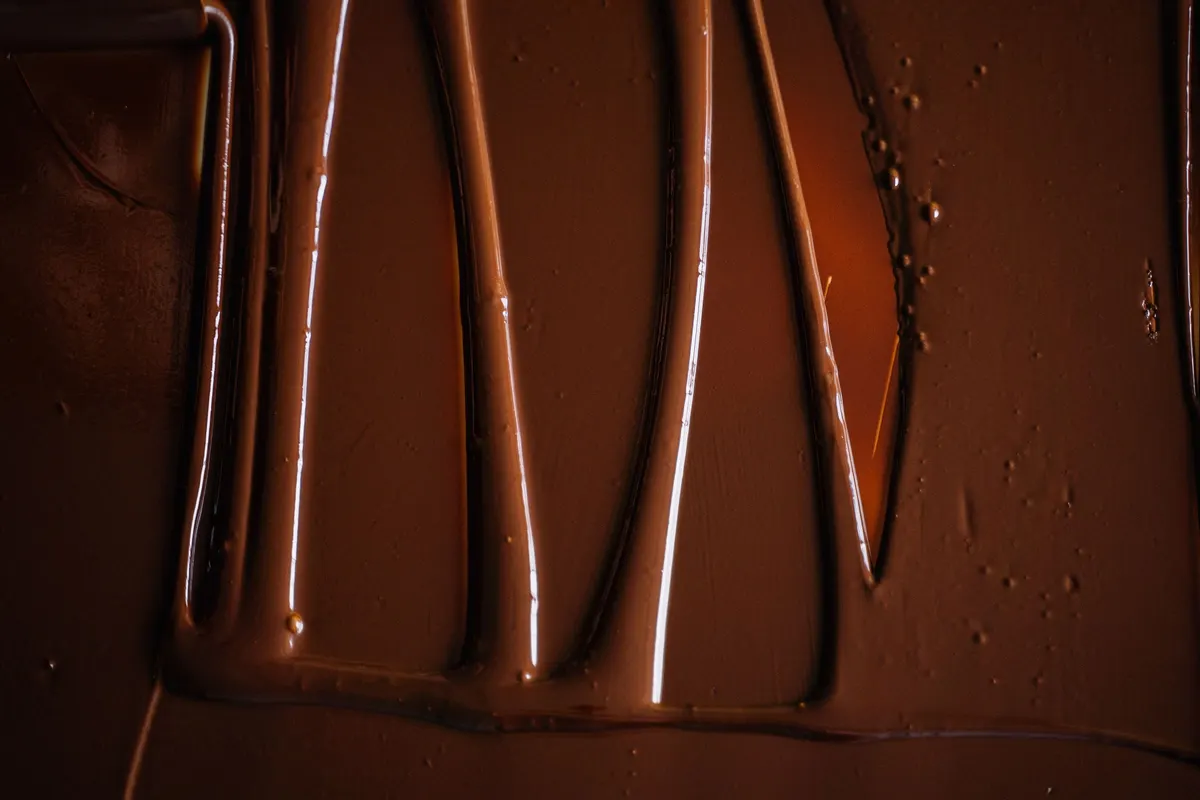
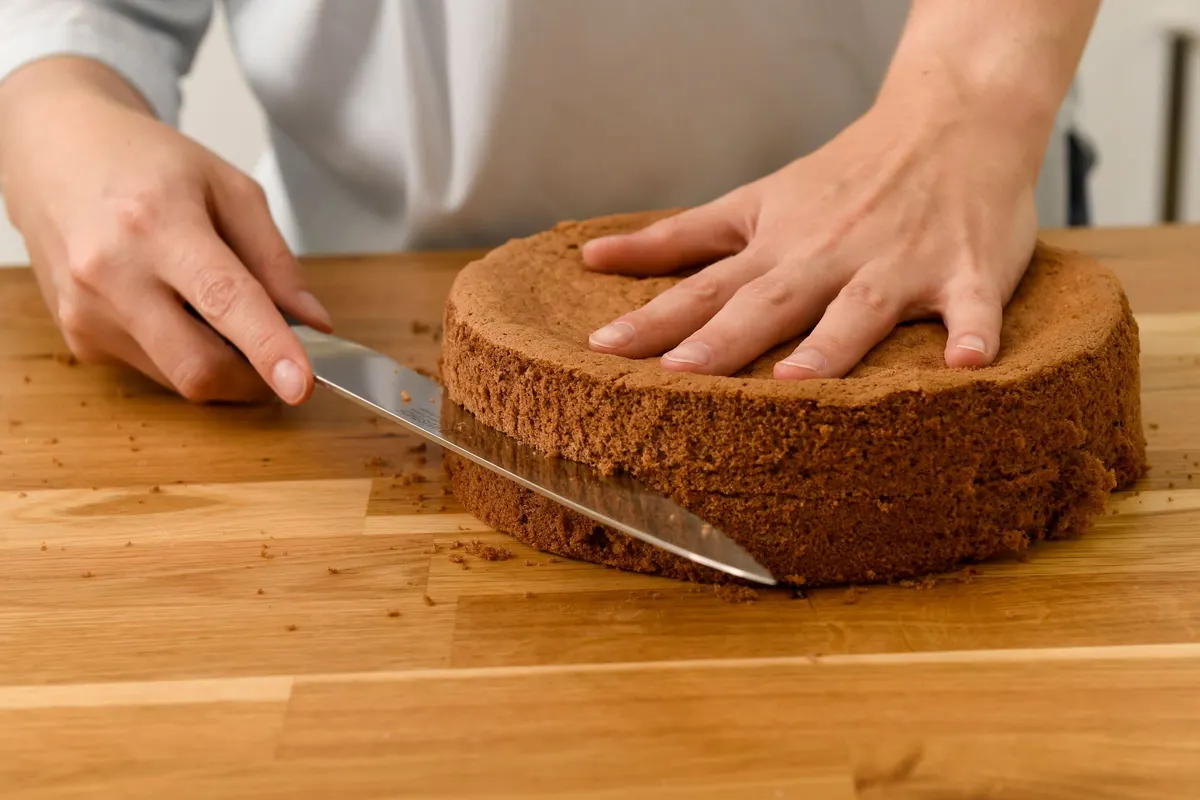
A single-site pastry kitchen or chocolatier running a compact machine from €4.950 at list, on material that is not on anybody's price list: their own praline and caramel dried and broken into shards, a local fruit variety nobody sells dried, herb and floral powders in the quantities a pastry kitchen actually uses, and their own cake trim milled into a crumb.
What makes this work is not a saving on strawberry pieces. At the volumes a craft operation runs, buying them at €51 to €95 a kilo wins comfortably, and a compact machine amortised over five years carries about €39,60 per finished kilo at 25 kg a year. It works because the products it makes cannot be bought at any price, and because the machine also removes a waste stream that currently costs money to throw away.
Illustrative profile, not a customer — the dry-mix manufacturer or ingredient supplier
An operation running commercial-tier equipment from €13.950 at list in the up-to-50 kg band, producing fruit and flavour components for its own premixes or selling inclusions on to bakery customers. At around a tonne of finished output a year the capital line falls to about €2,79 per finished kilo and stops being the deciding term. What decides it instead is the input price of the material and the occupancy of the chamber.
This is the profile where in-house production is most defensible on cost alone, and it is also where recipe repeatability, batch logging and water activity records stop being nice to have — because the customer audits them. Every machine we sell freezes in the chamber, so material is loaded into the trays where it will dry and nothing has to be carried frozen from one room to another; what varies across the range is the shelf-temperature control and the data logging that a specification-driven customer will ask to see.
Frequently asked questions
Can I put real fruit into a dough or a chocolate without adding water?
That is the functional point of the ingredient. Freeze-drying removes 98–99% of the moisture while the piece is frozen, so what goes into your mix is the fruit and not the water in it. A correctly dried and properly packed inclusion sits far below 0,6 aW, which is why it is safe in a chocolate where a fresh or a semi-dried piece is not. The same dryness is also the thing you have to design around. Because the inclusion is the driest component in the finished product, it will pull moisture out of whatever sits against it unless you match the components, coat it, or add it late.
Is it cheaper to make my own freeze-dried fruit inclusions than to buy them?
For a commodity inclusion at craft volumes, usually not. Our own price reference puts bought-in strawberry at about €51/kg business-to-business at the standard tier and about €95/kg premium or organic, and a kilo of inclusion contains about 11 kg of fresh strawberry. At €4,50/kg for conventional fruit the fruit alone comes to about €50, and at €7,50/kg for organic about €83 — so at both tiers the fruit has already used up most of the buy price before the machine, the labour and the packaging. Making it wins when you already own the material, when the inclusion cannot be bought, when your volume is high enough to bury the capital, or when supply continuity rather than price is the problem. Send us your usage and your current invoice price and we will run it with your numbers.
What water activity should a freeze-dried inclusion be, and why not just measure moisture?
Percentage moisture is a mass measurement. Water activity measures how much of that water is free — available to microorganisms, to chemical reactions and to move into whatever is sitting next to it. Two products at the same moisture percentage can have very different water activities depending on their sugar and solids content. Below 0,6 aW microbial growth is inhibited and mould does not grow. A correctly dried and properly packed freeze-dried inclusion sits well below that. Measure it on your own product: a water activity meter is not an optional instrument if you are making your own, and it is what your HACCP plan will be built around.
Why did my freeze-dried raspberry go soft inside the cake?
Because moisture moves from high water activity to low until the components equilibrate, and your inclusion is the driest thing in the product. A crumb, a cream filling at around 0,92 aW or a fruit filling at 0,86 to 0,98 aW will all give up water to a dry inclusion, and the inclusion will take it. There are four fixes and you should pick one deliberately: reformulate the adjacent component to a low water activity, put a fat or chocolate barrier between them, add the inclusion late rather than inside, or accept the migration and set a shelf life you have measured on your actual product.
Will a freeze-dried inclusion make my chocolate seize or bloom?
A properly dried and properly stored one is safer in chocolate than almost any other fruit format, because it is dry. The risk is moisture pick-up before it reaches the tempering bowl. Chocolate is a fat-continuous system with hydrophilic sugar particles suspended in it. Introduce free water and the sugar surfaces dissolve and bridge the particles together, and the mass seizes irreversibly. Over storage, moisture migrating into a coating raises the surface water activity, dissolves sugar and lets it recrystallise on the surface as sugar bloom, which is a different mechanism from fat bloom. Keep the inclusion sealed with a desiccant, open the pouch in the room where you use it, and hold any adjacent filling at a low water activity.
How much fresh fruit do I need per kilo of inclusion?
Roughly 4 kg of banana, 6 kg of mango, 6,3 kg of blueberry, 7 kg of raspberry, 7,5 kg of apple flesh or 11 kg of strawberry, calculated from published water content on a dry-solids basis. Machine capacity ratings are fresh load per batch, so this is the conversion between the brochure and your actual output. It is also why a bakery should size on finished kilos per week rather than on the machine's rating. An inclusion at 2 to 3% of a dough weight goes a very long way, and oversizing is the most common mistake we correct on this application.
How long is a cycle?
It depends on the material, the sugar and fat content, the piece size, how deep you load the tray and the water activity you are drying down to. Confectionery and fat-rich material behave differently from fruit and need their own validated cycle rather than the fruit recipe with a different label on it. Any supplier who gives you a single number is guessing. Send us 2 kg of your actual material and we will run it and measure it.
Do I need a new registration to make my own ingredient?
You are already a registered food business. Adding a drying step is a change to your registered activity, so it should be notified rather than assumed, and the new process needs its own HACCP hazard analysis with water activity as the control point rather than a weight-loss reading. In Spain that means checking with your Comunidad Autónoma whether your RGSEAA entry needs modifying or extending. In Portugal it means filing the amendment with DGAV through the +SIPACE system. Orientation only — confirm your case with your competent authority.
What does a machine cost, and what does it cost to run?
Compact commercial machines start at €4.950 ex-VAT, a first production line at €8.950, the up-to-50 kg band at €13.950, and factory-scale units at €145.480 with the two largest quoted per project. Prices and specifications come live from the catalogue. Running cost is between about 0,9 and 3,6 kWh per hour across the compact, light commercial and commercial bands, and 4 to 13 kWh per hour at industrial scale. FrostX machines are sold as normal but carry no energy figure from the manufacturer, so they are excluded from those bands rather than estimated. Electricity is rarely the number that decides this — the material and the capital per finished kilo are.
Send us your usage and your current invoice price.
Tell us how many kilos of inclusion your recipes actually get through, what you pay for them now, where the material would come from, and — the more interesting question — what you are trying to make that you currently cannot buy. We will size the machine across all four manufacturers and run the arithmetic with your numbers rather than ours.
If you want certainty before you commit, send 2 kg of your actual material and we will run a validation cycle and give you the measured yield, the residual water activity and a cycle plan for your load pattern. And if the answer is that you should keep buying, we will say so — that is a shorter conversation and a more useful one than selling you a chamber that sits idle.