
Freeze-Dryers for Pet Food Production
Raw nutrition on an ambient shelf. The format the category is growing into, and the equipment that produces it.
Freeze-dried is where the money is moving in pet food. Kibble is flat. Freeze-dried, air-dried and fresh formats are each growing above 20% a year. In Spain, dry dog food shrank 2.1% in 2025 while cat snacks grew 26.7%. A 120 g pack of freeze-dried chicken topper retails at around €56/kg; premium kibble sells at €4–5/kg.
This page covers what it takes to produce it: the process, the constraints that set your cost per kilo, what the machines cost and consume, and the approval you need before you sell a gram.
In short
Send us 2 kg. Get measured yield and cycle time.
We run a validation cycle on your own material and give you the figures your business plan and your authorisation dossier both need: measured yield, cycle length and energy draw on the machine you would actually buy.
Tell us what you want to dry and how much per week. If freeze-drying is the wrong answer for your product, we will say so.
Which freeze-dryer for your scale
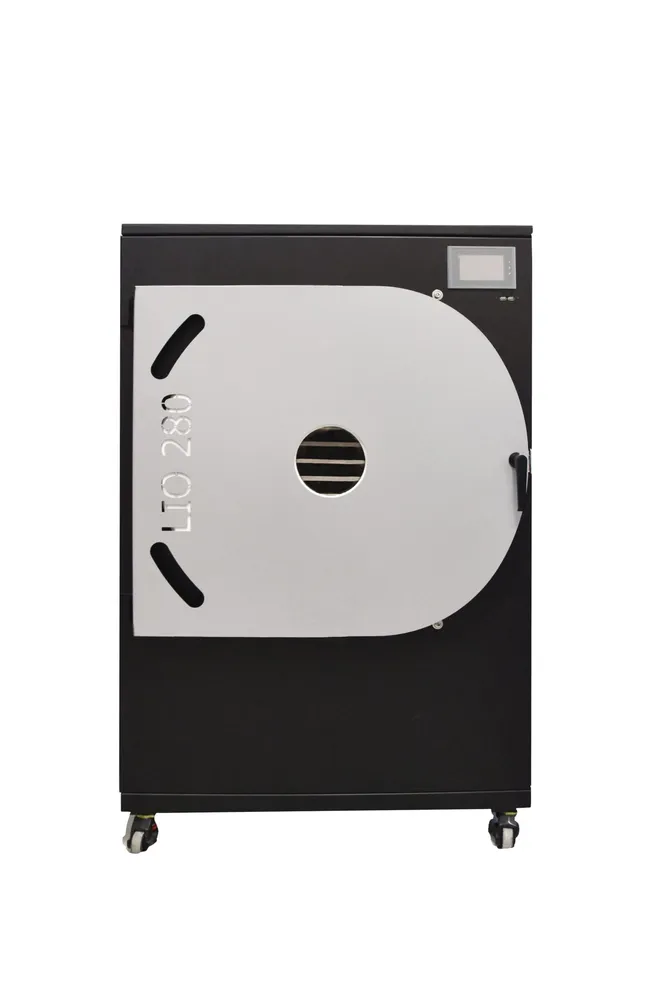
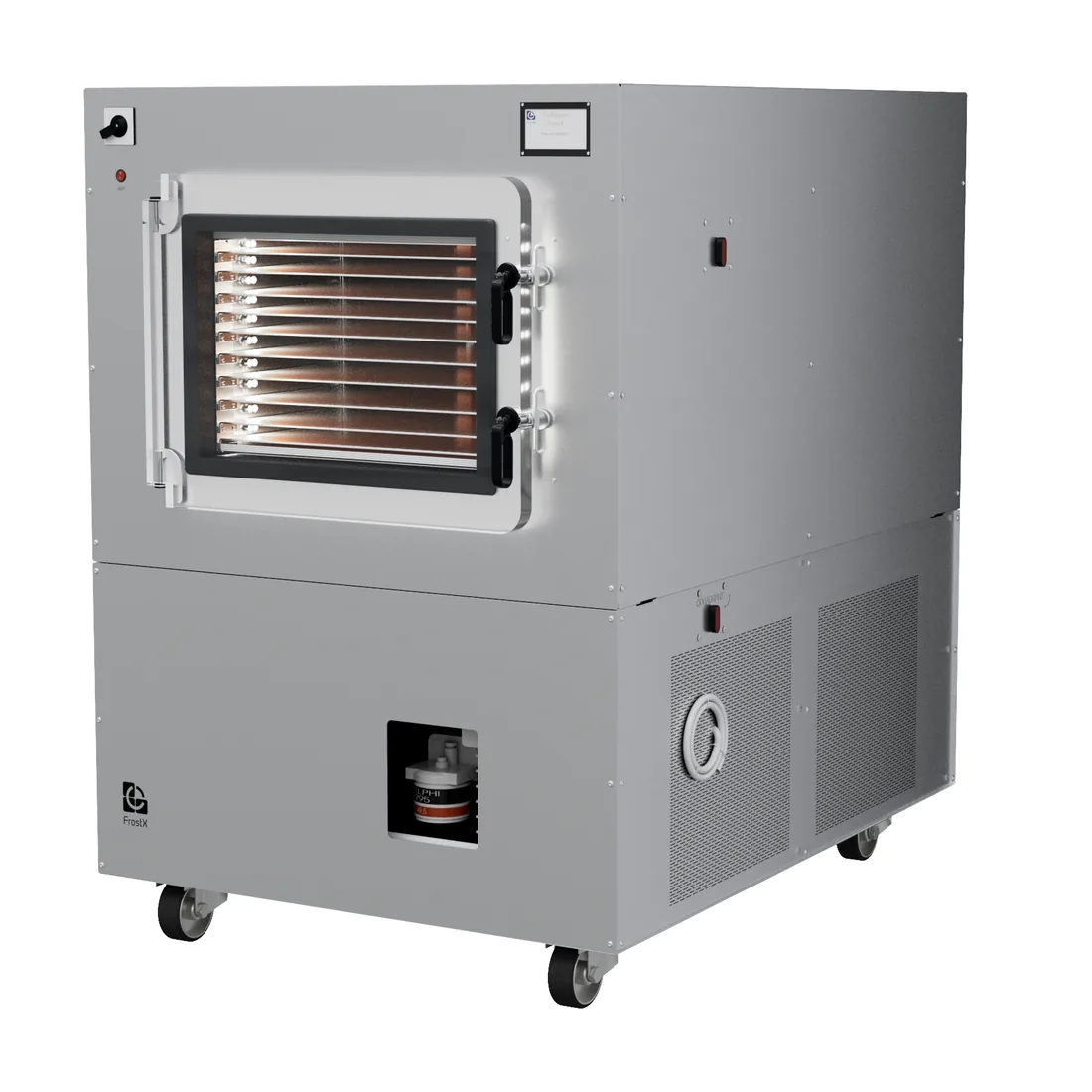
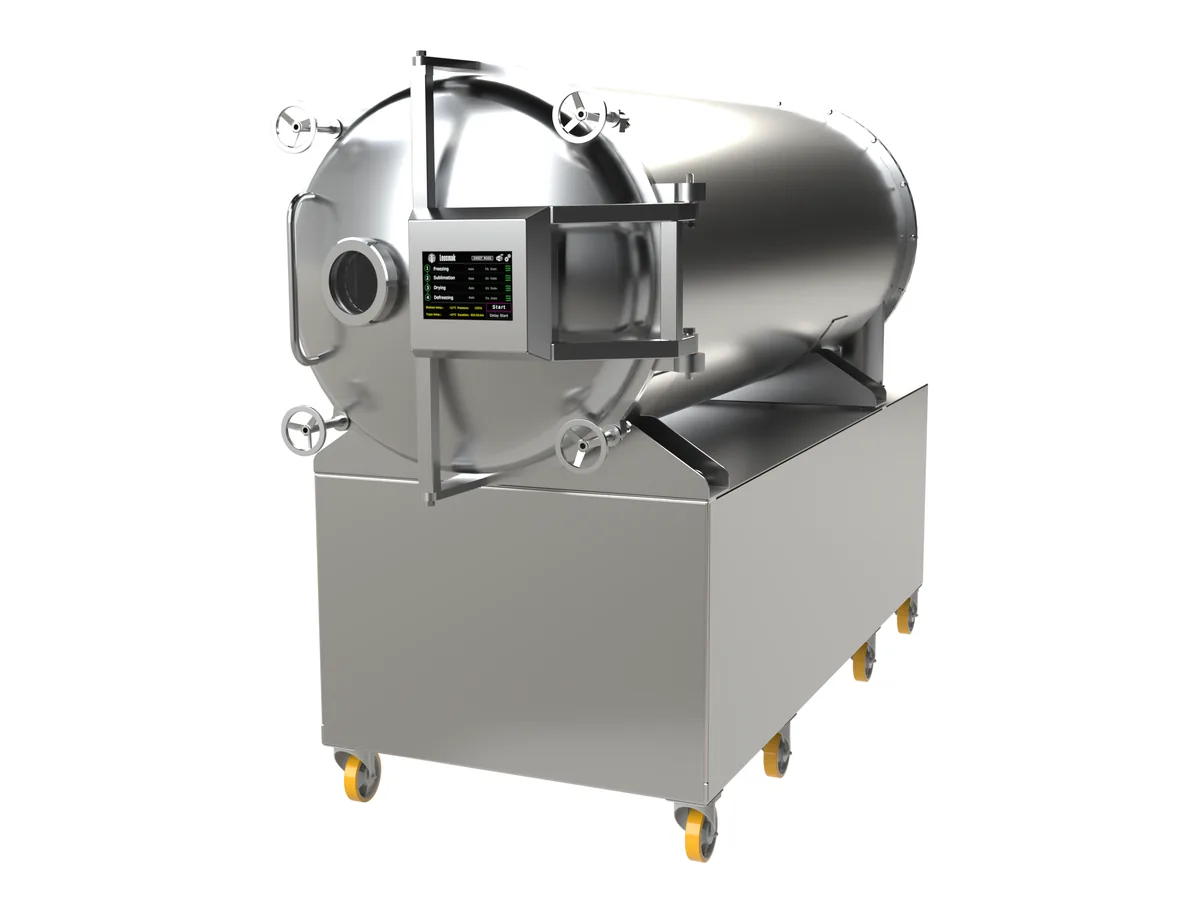
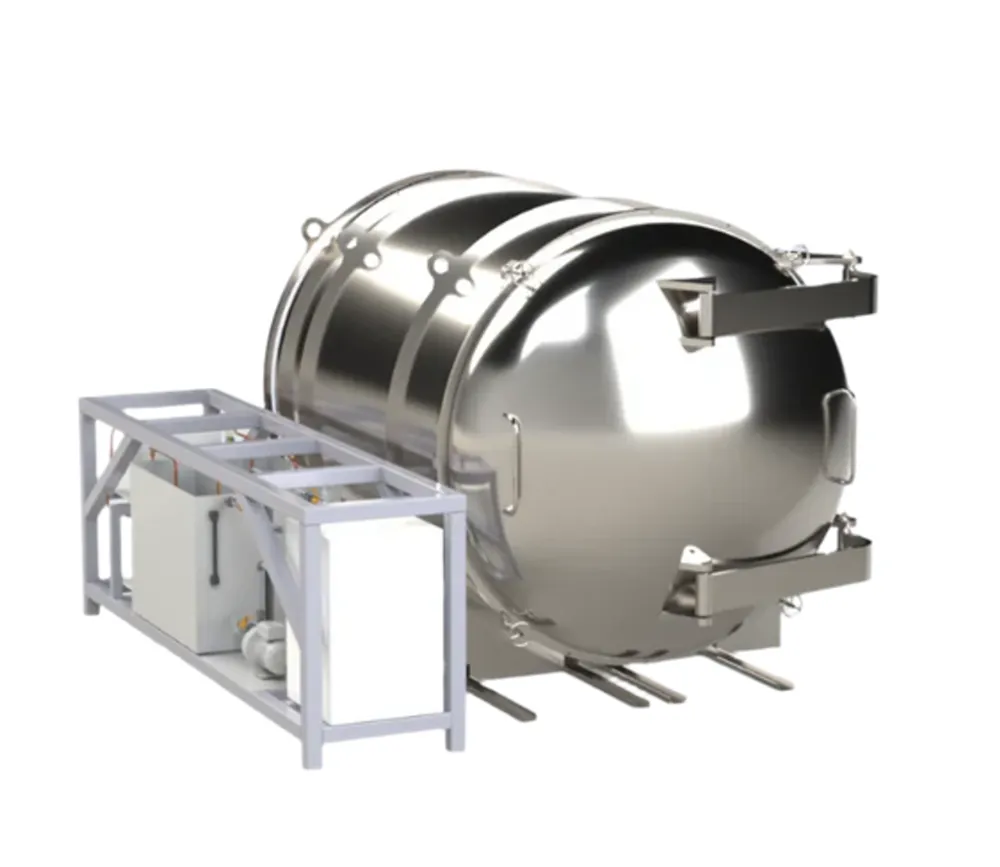
Capacity is quoted as fresh load per batch. Prices are ex-VAT list prices, pulled live from the catalogue.
| Stage | Fresh load per batch | Running cost | From | Representative models |
|---|---|---|---|---|
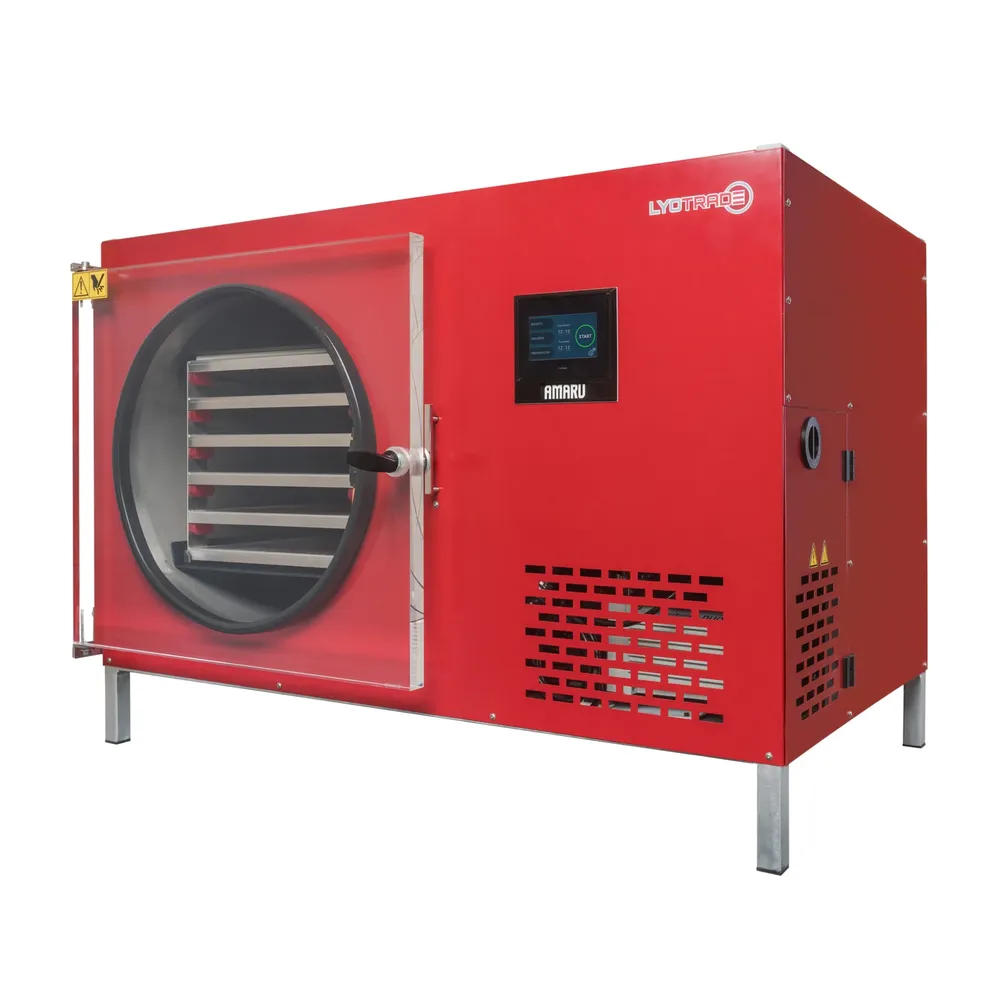
| Compact commercialR&D, first product, farm shop | Up to 10 kg | 0,9–1,4 kWh/h | €4.950 | |
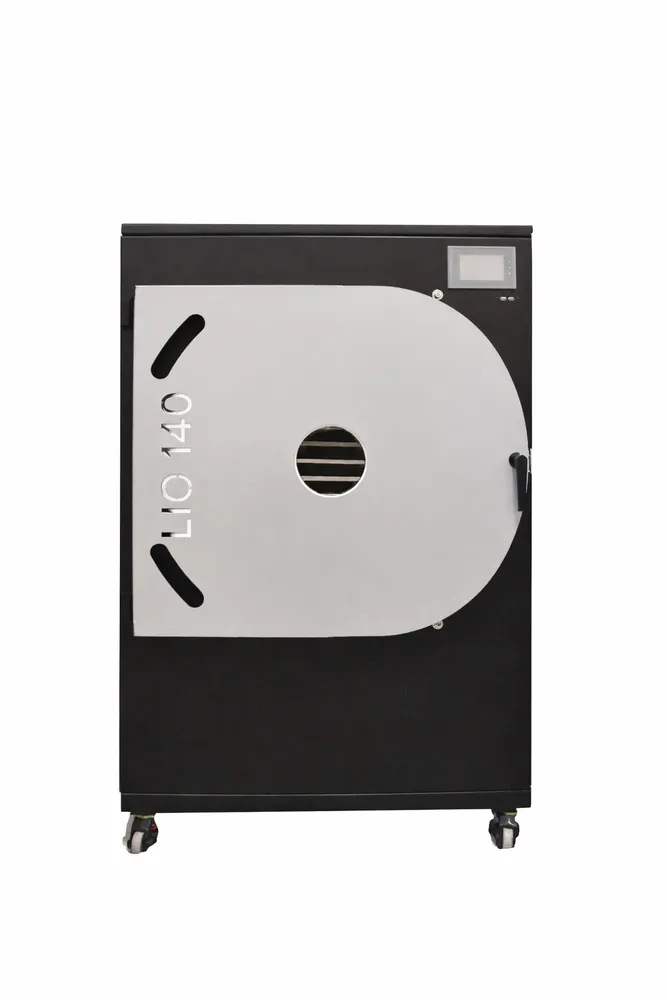
| Light commercialfirst real production line | Up to 18 kg | 1,13–2,46 kWh/h | €8.950 | |
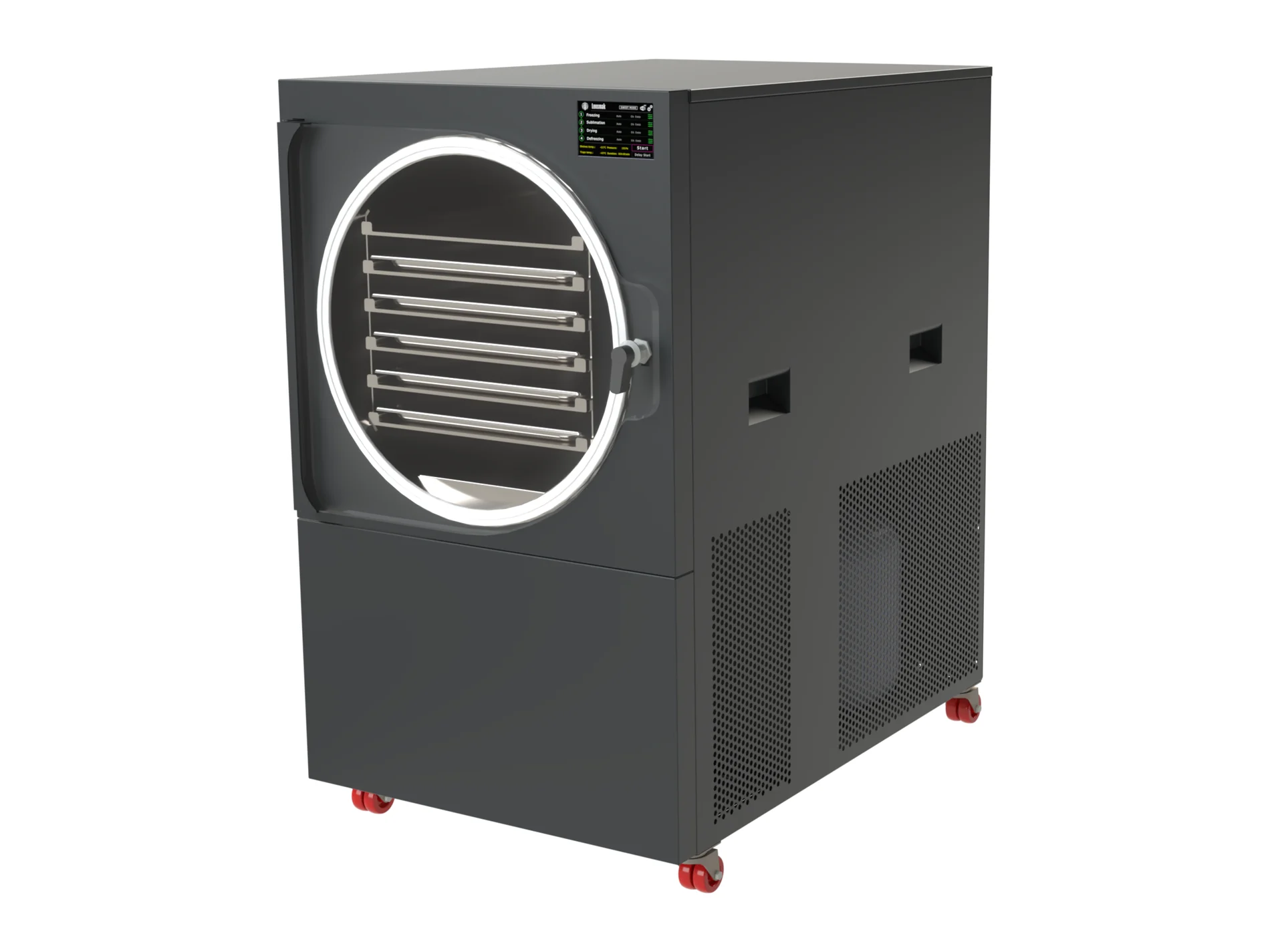
| Commercialestablished production | Up to 50 kg | 2,25–3,59 kWh/h | €13.950 | |
| Industrialfactory scale | Up to 600 kg | 4–13 kWh/h | €145.480 |
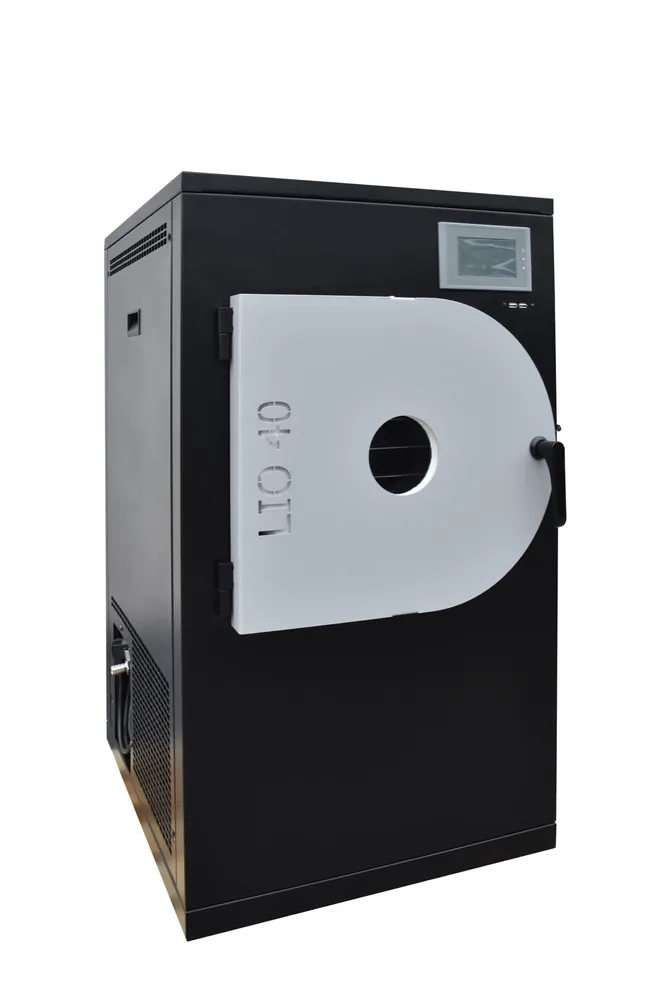
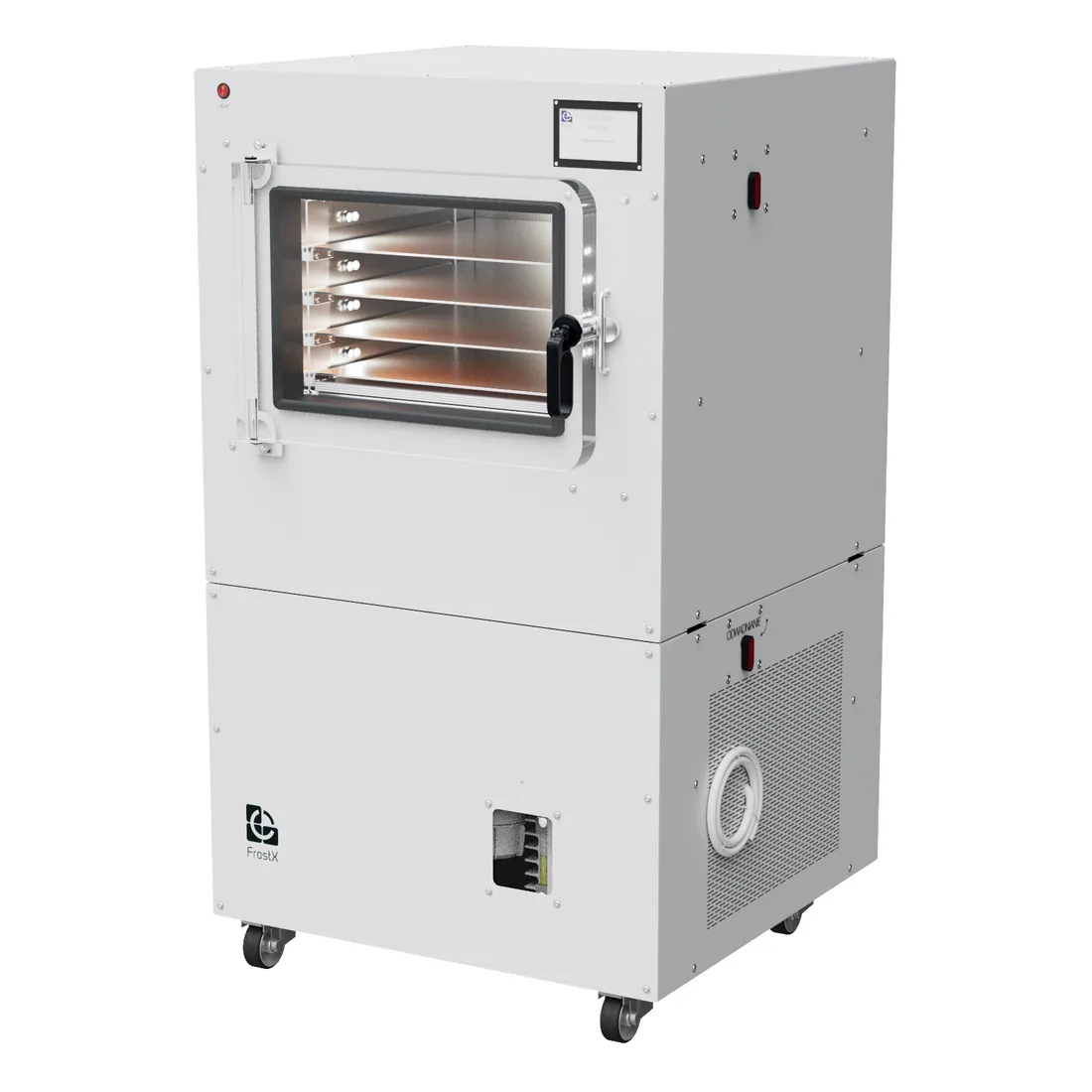
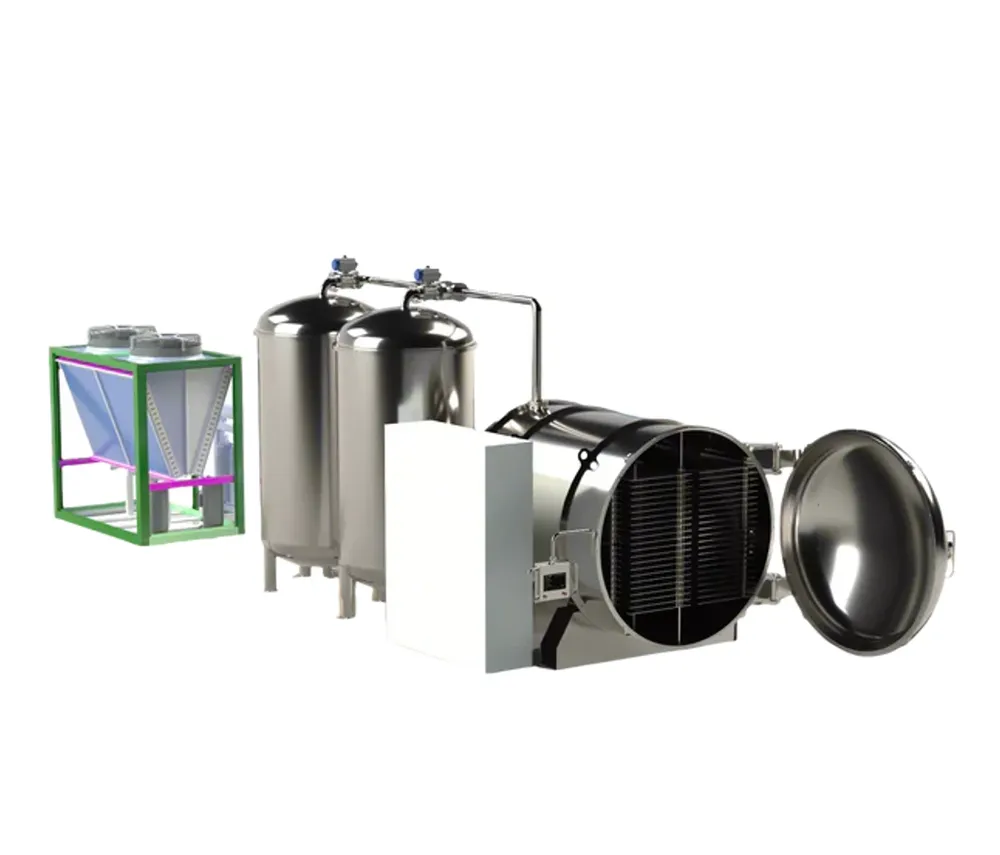
Running cost is average energy consumption across the models in each band. FrostX machines are listed and sold as normal, but are excluded from the energy figures until the manufacturer supplies an average consumption value.
What you can produce
| Product | Notes |
|---|---|
| Single-ingredient treats | Liver, heart, lung, chicken breast, egg yolk. The simplest entry product, and typically the highest gross margin per kg. |
| Fish and seafood | Whole sardines, salmon trim. High-value product, and the most oxidation-sensitive thing you will run. Plan packaging around it. |
| Organ and offal | Dries more slowly than muscle meat and needs its own validated cycle. Turns low-value material into premium SKUs. |
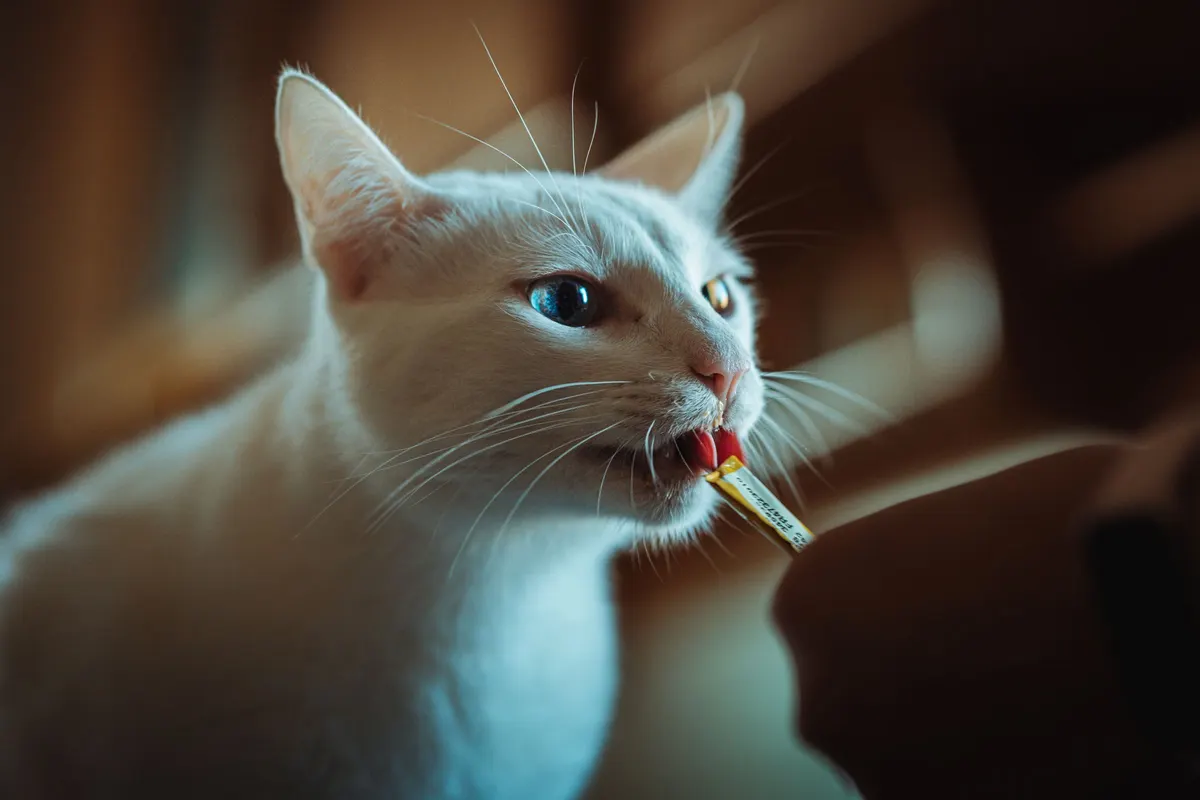
| Meal toppers | Small pieces or crumble, sold as a mixer over kibble. One of the fastest-growing formats in the category. |
| Complete diets | Formulated raw, freeze-dried into nuggets, or meat plus a dried side such as rice or buckwheat flakes, rehydrated at feeding. Higher formulation and compliance burden, higher ticket price. |
| Small-animal, bird and reptile | Underserved segments with almost no premium supply in Iberia. |
The four things that decide whether this works
Most equipment pages list benefits. These are the constraints that set your cost per kg, and they are worth putting to any supplier before you commit.
Fat slows everything down
Fat does not freeze the way water does. High-fat cuts dry more slowly, risk case-hardening (a dry crust over a moist core) and carry a shorter shelf life once dried. Lean liver, heart and lung behave well. Fatty trim and skin-on cuts do not. Validate a separate cycle for each format.
Freeze-drying is not a kill step
Freeze-drying preserves what is in the product, good and bad. It lowers water activity so bacteria cannot grow, but it does not eliminate what was already there. Pathogen reduction inside the chamber is achievable under specific validated conditions. It is not automatic, and it is exactly what your competent authority will want to see documented. Your control point is water activity, tested every batch, not a weight-loss moisture reading.
Oxidation sets the shelf life, not moisture
A correctly dried product holds its low water activity. What fails first is the fat. Freeze-drying preserves the oxidisable substrates along with everything else, so fatty and fish-based products need an antioxidant approach designed for a low-moisture matrix, oxygen-limiting packaging, and sealing straight out of the chamber. Strategies borrowed from kibble do not transfer.
It is a batch process and you cannot rush it
You can speed up an extruder. You cannot speed up sublimation. Throughput comes from shelf area, condenser capacity and how well you load the trays. Overloading a tray to squeeze in extra kilos usually costs more hours than the kilos are worth.
Approval: three things to know before you buy
Almost no equipment vendor covers this. Start it early, because it takes longer than the machine does.
You need an approved establishment, not just a registration
Manufacturing pet food sits under Article 24(1)(e) of Regulation (EC) 1069/2009, which requires approval and an on-site inspection before you may produce. There is no artisan or small-batch exemption anywhere in the EU. You will also need a feed-business registration under Regulation (EC) 183/2005: two filings, not one.
Your product is "processed pet food", not "raw"
In EU law raw pet food means material preserved only by chilling or freezing. Drying is a preserving process, so "freeze-dried raw" is legally processed pet food, with tighter microbiological limits.
Drying is an authorised route, and it hinges on your process
Annex XIII of Regulation (EU) 142/2011 allows "a treatment such as drying or fermentation" where the competent authority authorises it and the product poses no unacceptable risk. You apply nationally, with a validated process. That validation is the real work, which is why repeatable cycle control, a documented drying endpoint and batch records matter commercially, not just technically.
Where to apply
— SANDACH authorisation, filed with your Comunidad Autónoma, not with MAPA. Establishment type: Fábrica de Alimentos para Animales de Compañía. Plus a SILUM feed registration.
— registo e aprovação with DGAV, which publishes a dedicated Unidade de Petfood page setting out the requirements including the drying route.
Orientation, not legal advice. Verified against consolidated EU texts as at 29 October 2025 and national sources in July 2026. Confirm your case with your competent authority before investing.
Yield: the number to plan around
What this looks like in production
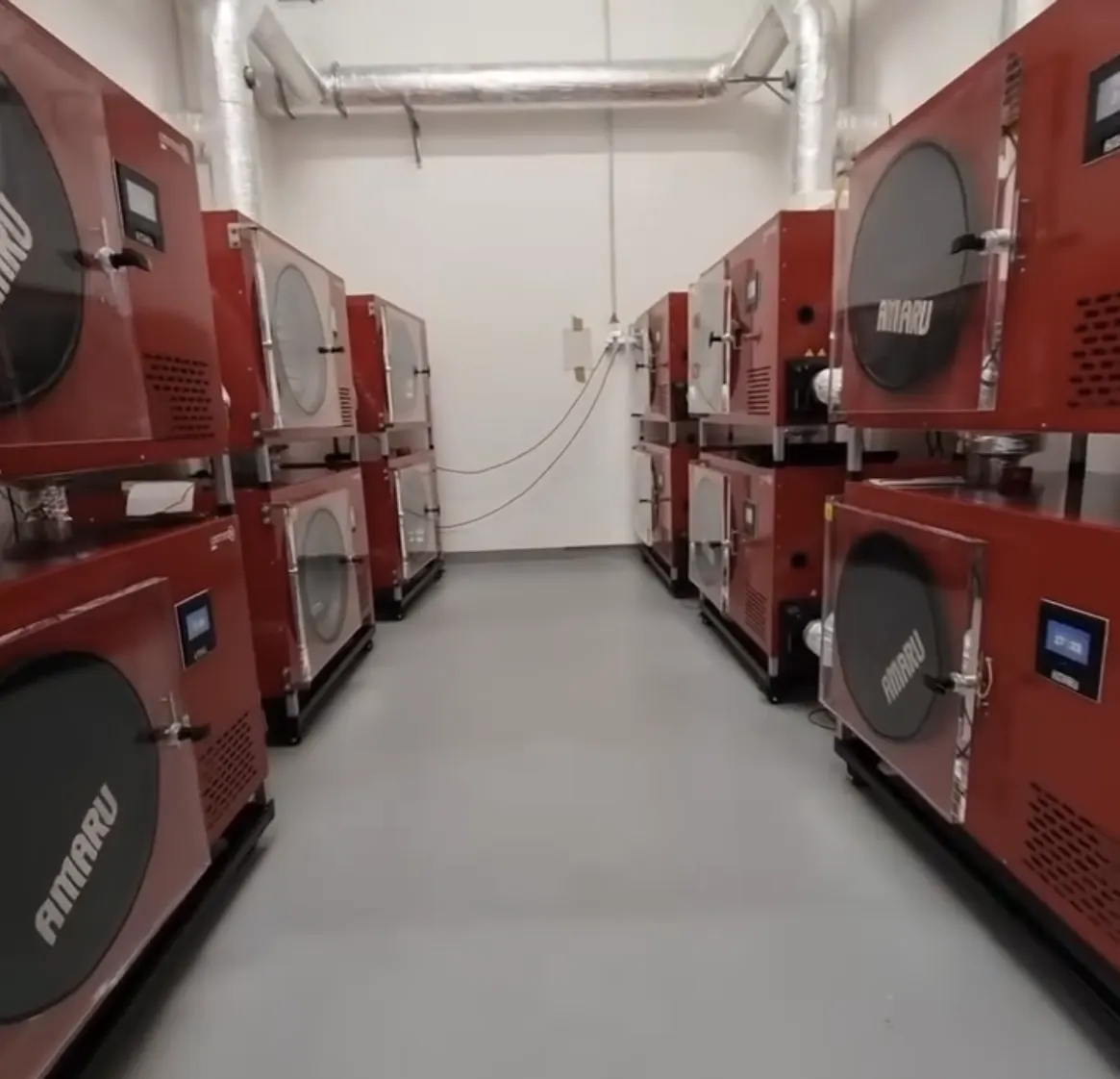
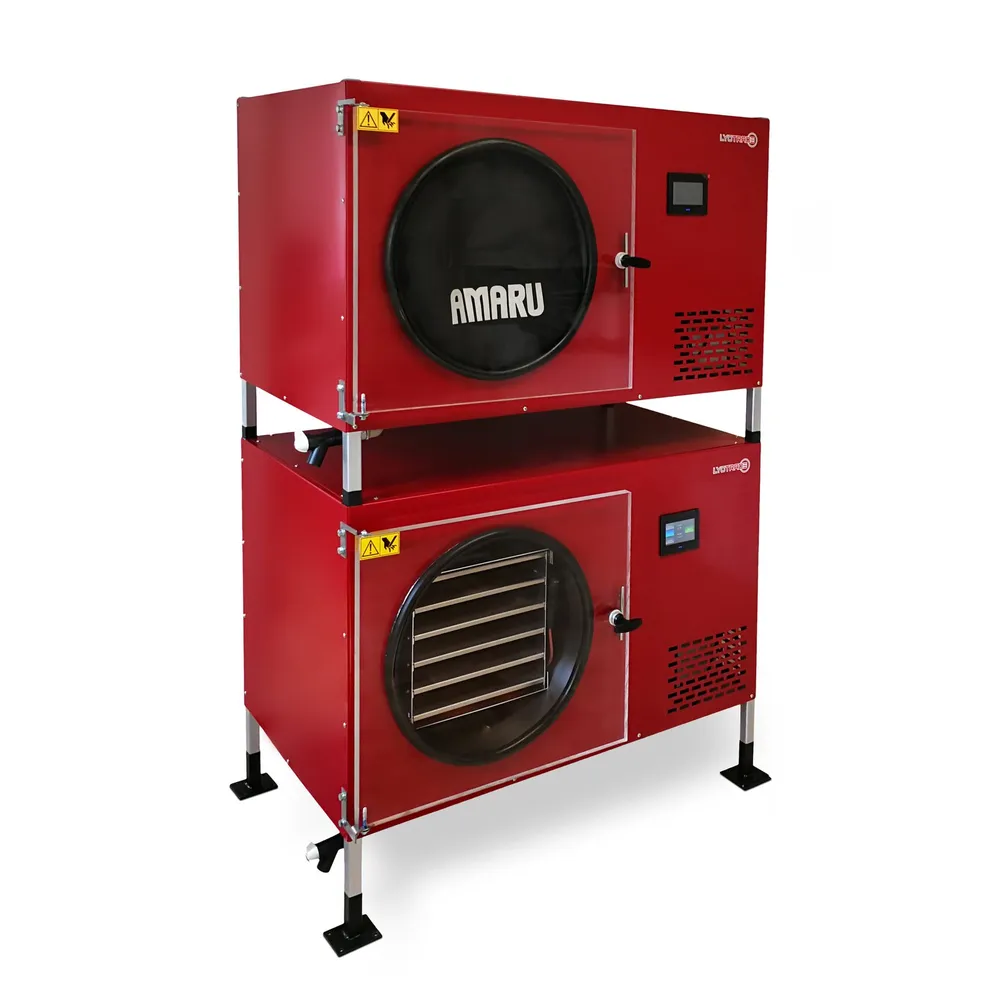
Yoggies, one of the larger pet nutrition brands in Central Europe, runs 12 AMARU units producing a complete freeze-dried BARF range: meat plus a dried side, rehydrated with water at feeding. Their 370 g complete meal retails at 699 CZK, roughly €78 per kilo. The units are stacked in pairs to halve the floor area, which answers the constraint most producers hit second: floor space rather than capital.
Single-ingredient treats, made locally in small batches.
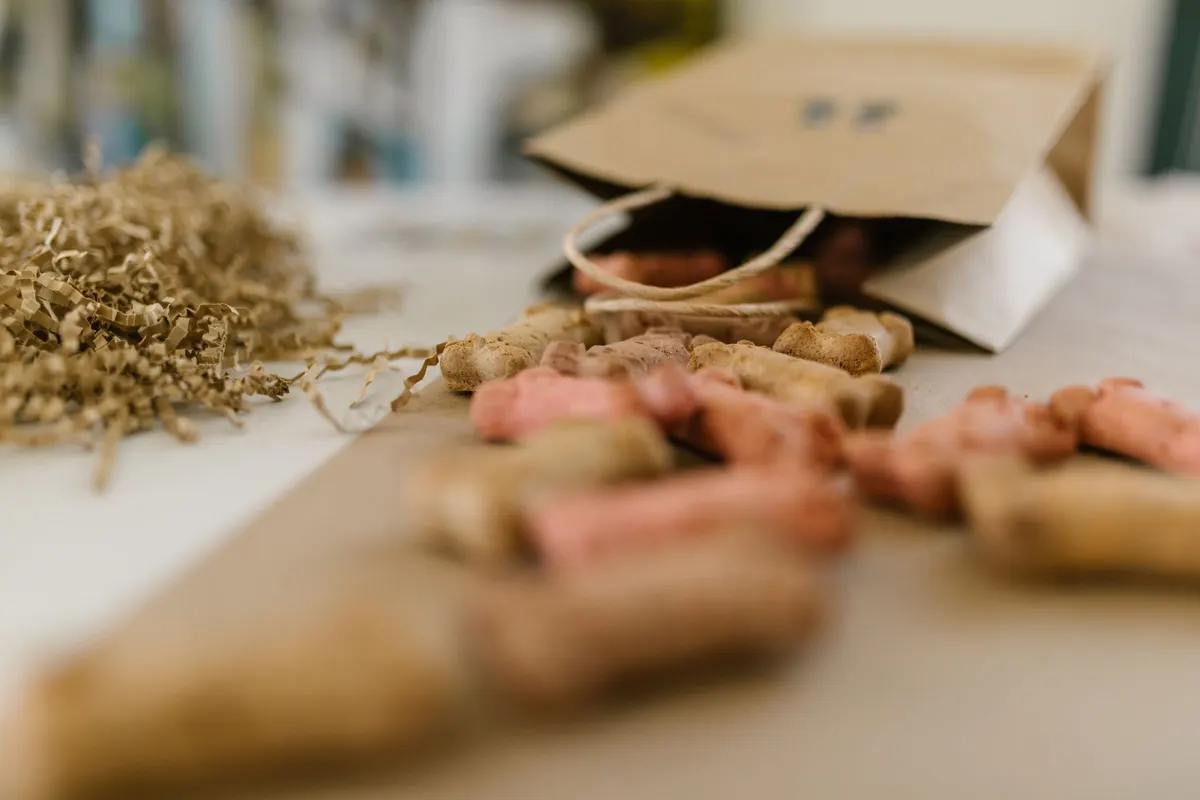
A small producer in Luxembourg makes hand-cut, single-ingredient freeze-dried snacks (sardines, chicken hearts, beef liver, beef lung and egg yolks) from locally sourced material, on one light-commercial machine. They state a shelf life of up to two years unopened, and one month after opening with the pouch resealed. It shows how narrow a range needs to be to work commercially: five materials, no formulation, no additives.
The gap between those two operations is roughly an order of magnitude in capital. Both are profitable.
Frequently asked questions
Does freeze-drying keep pet food raw?
Nutritionally, yes: there is no cooking step, so protein, fat profile and heat-sensitive nutrients stay close to the fresh state. Legally in the EU, no: Regulation (EU) 142/2011 defines raw pet food as material preserved only by chilling or freezing, so a freeze-dried product is processed pet food and meets a tighter microbiological standard.
Does freeze-drying kill bacteria?
No. It preserves what is present and lowers water activity so microorganisms cannot grow. Pathogen reduction in the chamber is achievable under specific validated conditions, but it is not automatic. Your raw material sourcing, hygiene and water-activity control are the safety system.
Is freeze-dried pet food legal to manufacture in the EU?
Yes. Regulation (EU) 142/2011 provides for a treatment such as drying where your competent authority authorises it and the product poses no unacceptable risk. You apply for that authorisation with a validated process. You also need approval of the establishment itself under Article 24(1)(e) of Regulation (EC) 1069/2009, and a feed-business registration.
How long does freeze-dried pet food last?
Producers in this category commonly state up to two years unopened in barrier packaging, and around a month after opening if the pouch is resealed. Lean protein holds up well. Fat is the limiting factor, and packaging that excludes oxygen matters more than the drying itself.
How much raw material do I need per kilo of finished product?
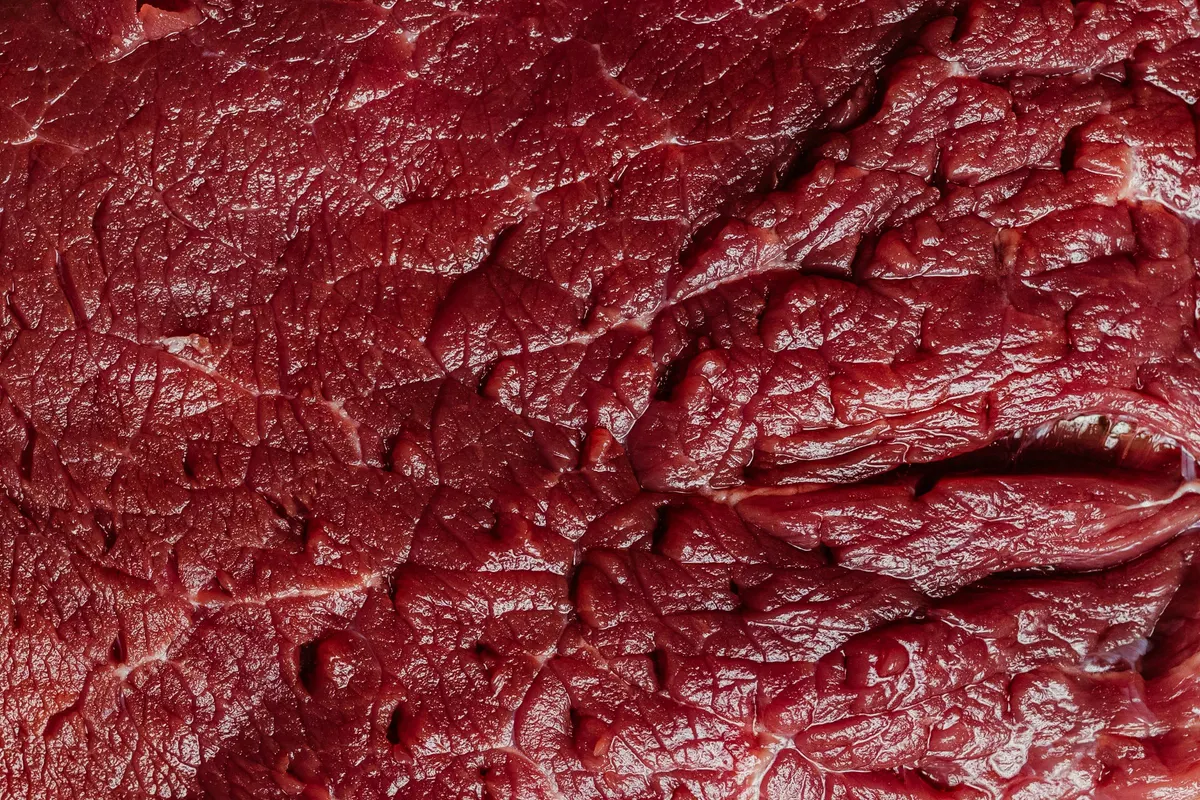
Roughly 3.4 kg of beef liver, 3.8 kg of chicken breast or heart, 4.3 kg of chicken liver, or 6.3 kg of tripe, based on published water content.
How long is a cycle?
It depends on the product, load thickness, fat content and target endpoint, so any supplier quoting a single number is guessing. Send us your product and volumes and we will work through a realistic cycle plan, or run a validation cycle on your own material.
What does a commercial freeze-dryer cost?
Compact commercial machines start at €4.950. A first production line runs from €8.950. Established production in the up-to-50 kg band starts at €13.950. Factory-scale units are quoted per project. All list prices are on the product pages and updated live.
What does it cost to run?
Between about 1,1 and 2,5 kWh per hour for machines up to 30 kg per batch, and 4 kWh per hour for a 130 kg industrial unit. At €0,18/kWh that is roughly €0,20–0,45 an hour. Raw material and cycle length dominate your cost per kilo, not electricity.
Can I start small and scale later?
Yes, and most producers do. The usual path is one machine to prove the product, then adding units in the same tier (several of the commercial models stack in pairs to save floor space) before stepping up a tier. Tell us the growth curve you expect and we will size for it.
Send us your product and your volumes.
Tell us what you want to dry, how much per week, and where you are. We will size the machine, run the numbers, and tell you plainly if freeze-drying is the wrong answer for your product. If you want certainty before you commit, we can run a validation cycle on your own material and give you measured yield and cycle figures.