
Freeze-Dryers for Soups, Broths and Stocks
A stock is water with a small quantity of dissolved solids in it. Rather than estimate what that costs you, we measured it: five documented batches of unsalted beef broth, 14,5 litres in and 932 g out. A weighted yield of 6,43%, or about 15,6 kg of broth for every kilogram of finished product.
Capacity in this category is quoted as fresh load per batch, ours and everybody else's. At that measured yield a machine rated up to 50 kg returns roughly 3,2 kg of finished product per cycle from thin broth. That is arithmetic rather than a defect, and it is the number that should decide which tier you buy.
The answer is not simply a bigger freeze-dryer. Remove most of the water somewhere cheaper first and keep the freeze-dryer for the last step, where the aroma, the gelatine and the flavour are at risk. Feed the same machine a 40% solids concentrate instead of thin broth and it returns roughly six times as much.
In short
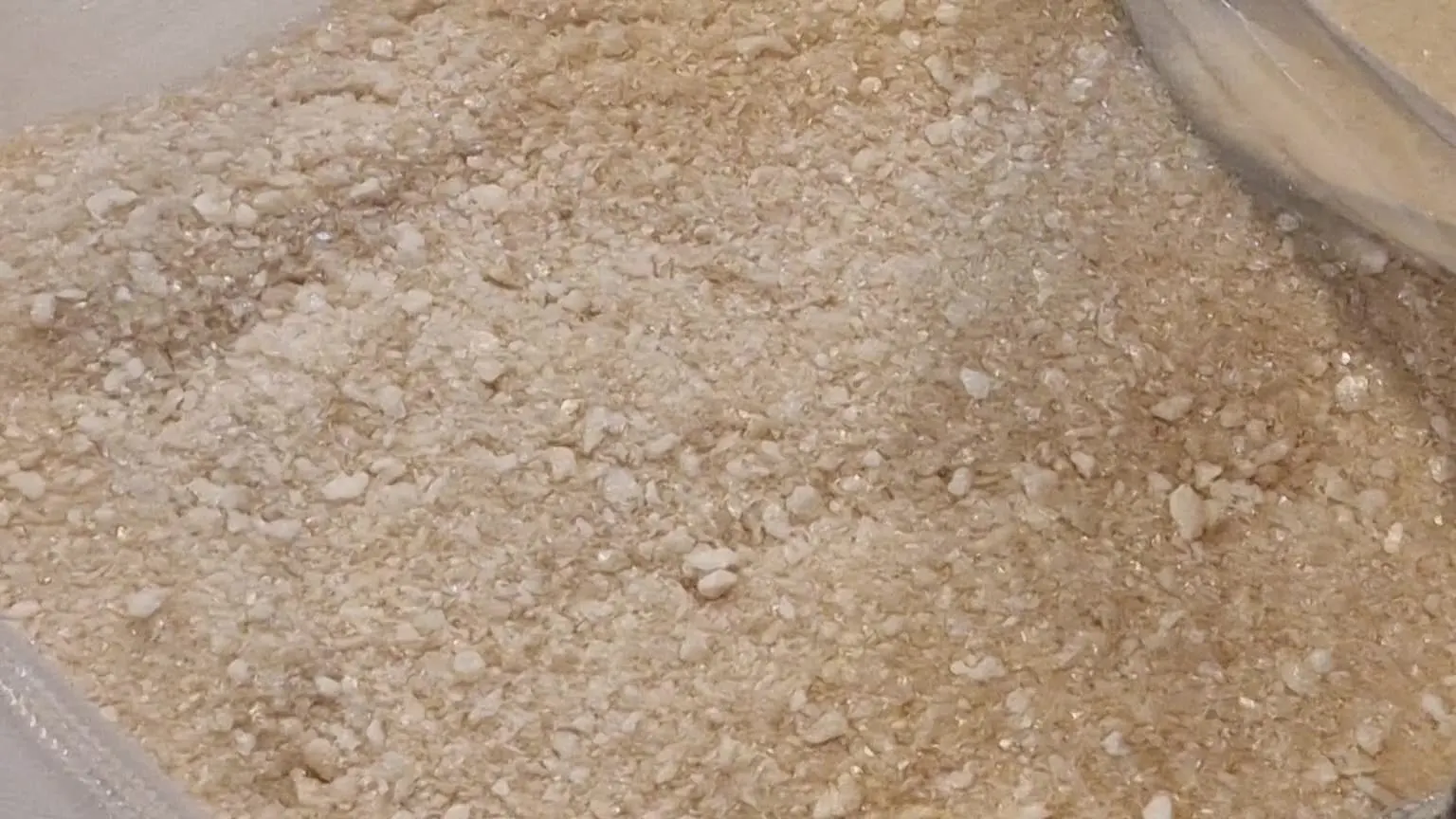
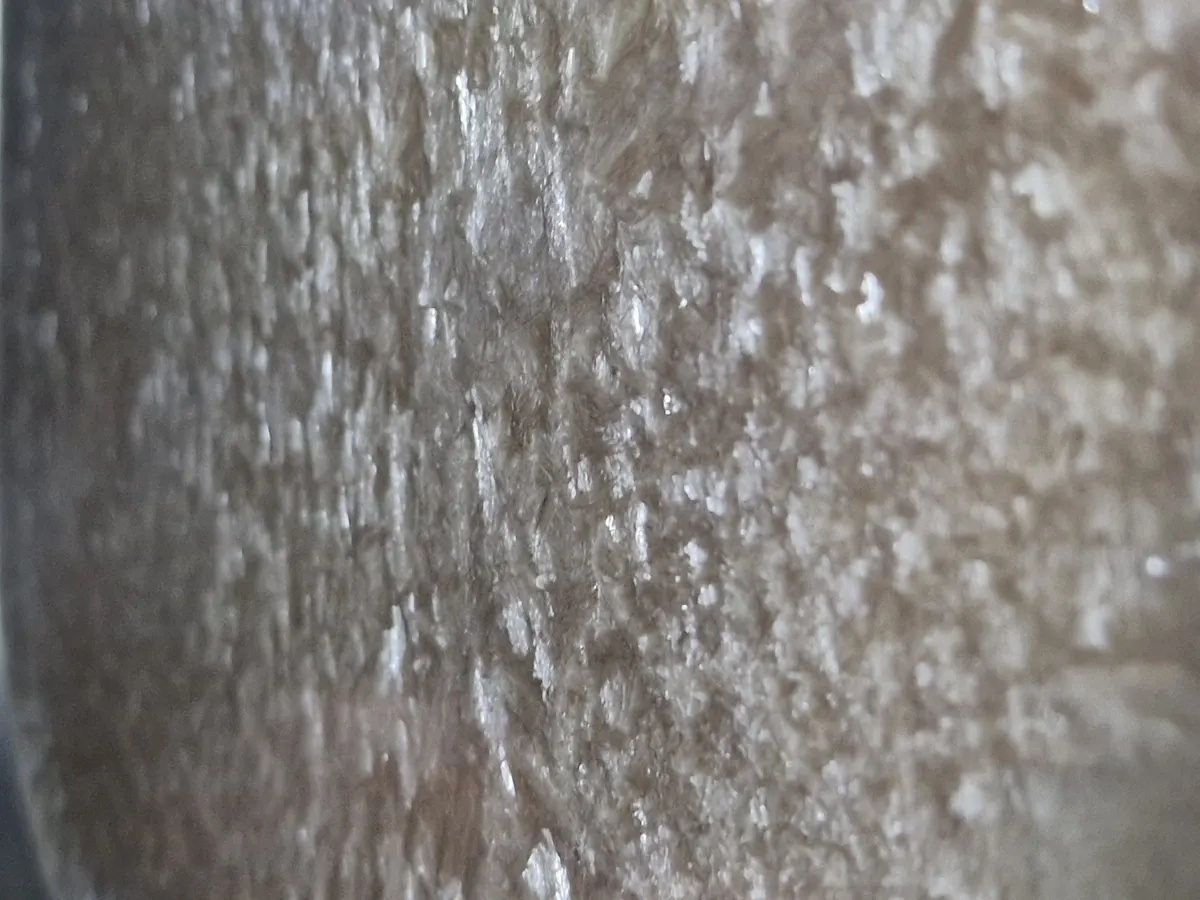
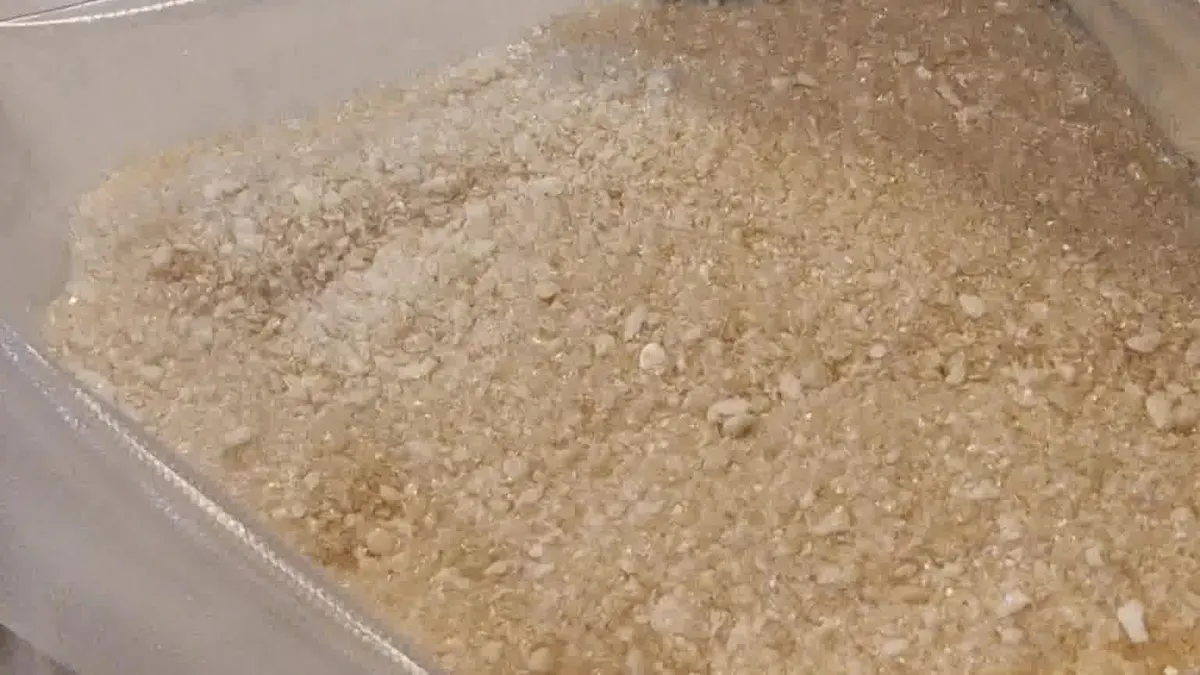
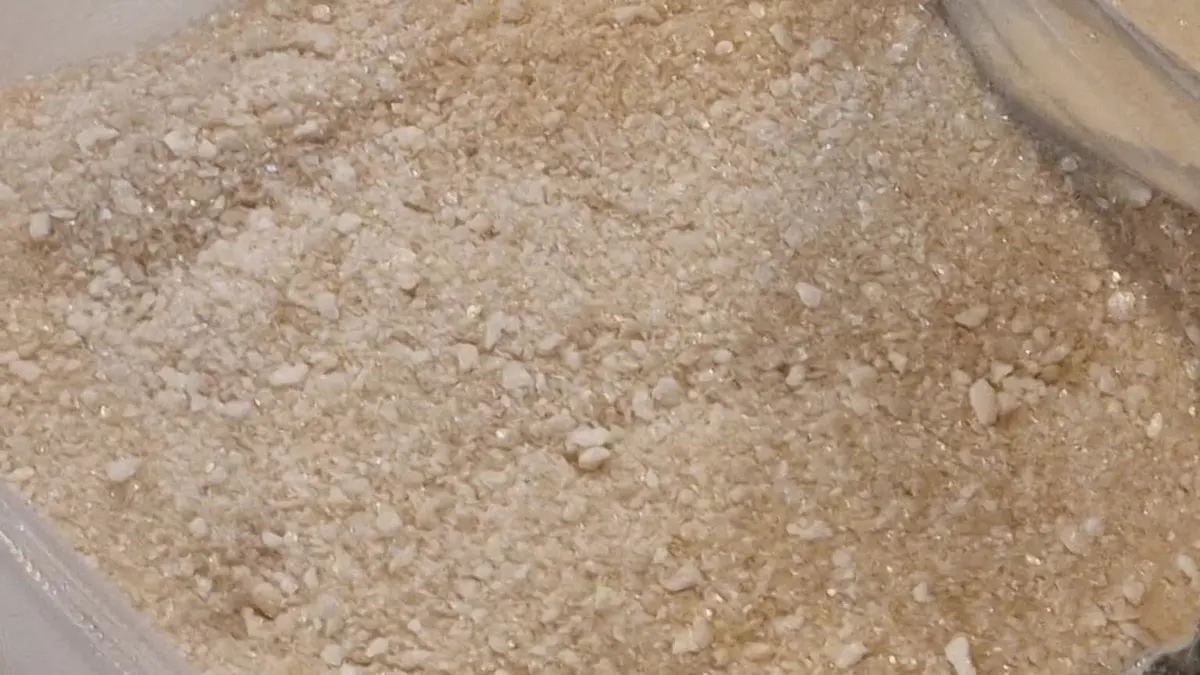
Crushed broth, straight off the tray
We ran this on our own material first. Send us 2 kg and we will run yours.
Published water content gets you a plan. Your own liquid gets you a number, and here the gap between the two is wide enough to change which machine you should buy.
We put five batches of beef broth through a compact machine, weighed every tray in and out, and published the result on this page, including what we failed to measure. Send us 2 kg of the liquid you intend to sell and we will do the same for you: measured yield, a loading plan for your layer depth, and a reconstitution ratio worked by mass balance.
If you are weighing up a concentration step, send the same stock before and after it. The difference between those two results is the whole business case, and no published table can supply it.
Which freeze-dryer for your scale
Capacity is quoted as fresh load per batch, which means what goes in wet. On thin stock the gap between that and finished product out is the largest on this site, so convert before you compare anything. Prices are ex-VAT list prices, pulled live from the catalogue.
| Stage | Fresh load per batch | Running cost | From | Representative models |
|---|---|---|---|---|
| Compact commercialR&D, recipe development, a chef brand testing one product | Up to 10 kg | 0,9–1,4 kWh/h | €4.950 | |
| Light commercialfirst production line, premium bone-broth or chef brand | Up to 18 kg | 1,13–2,46 kWh/h | €8.950 | |
| Commercialestablished production, ingredient or foodservice supplier | Up to 50 kg | 2,25–3,59 kWh/h | €13.950 | |
| Industrialfactory scale, contract drying | Up to 600 kg | 4–13 kWh/h | €145.480 |
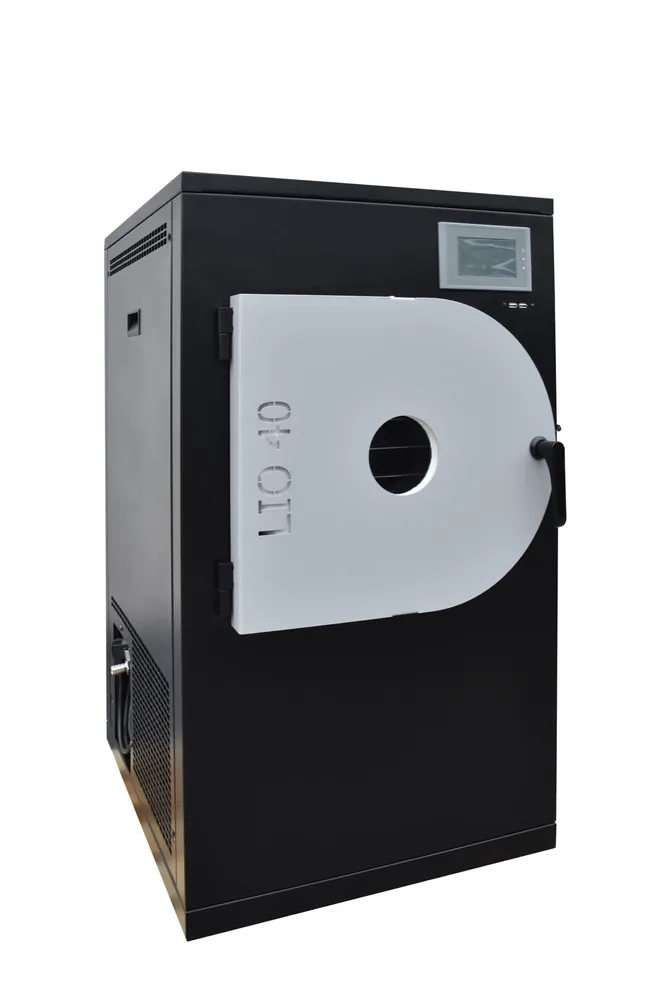
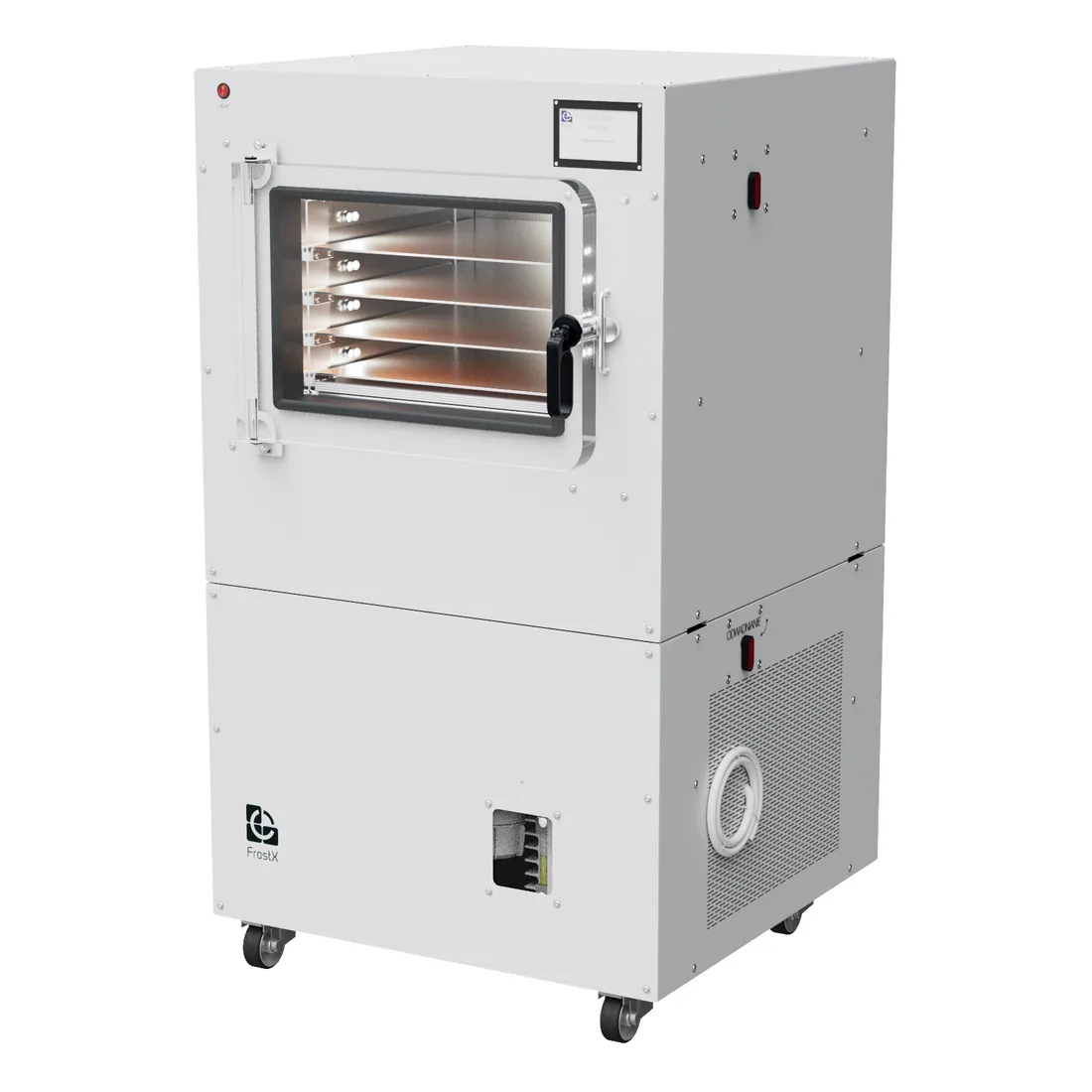
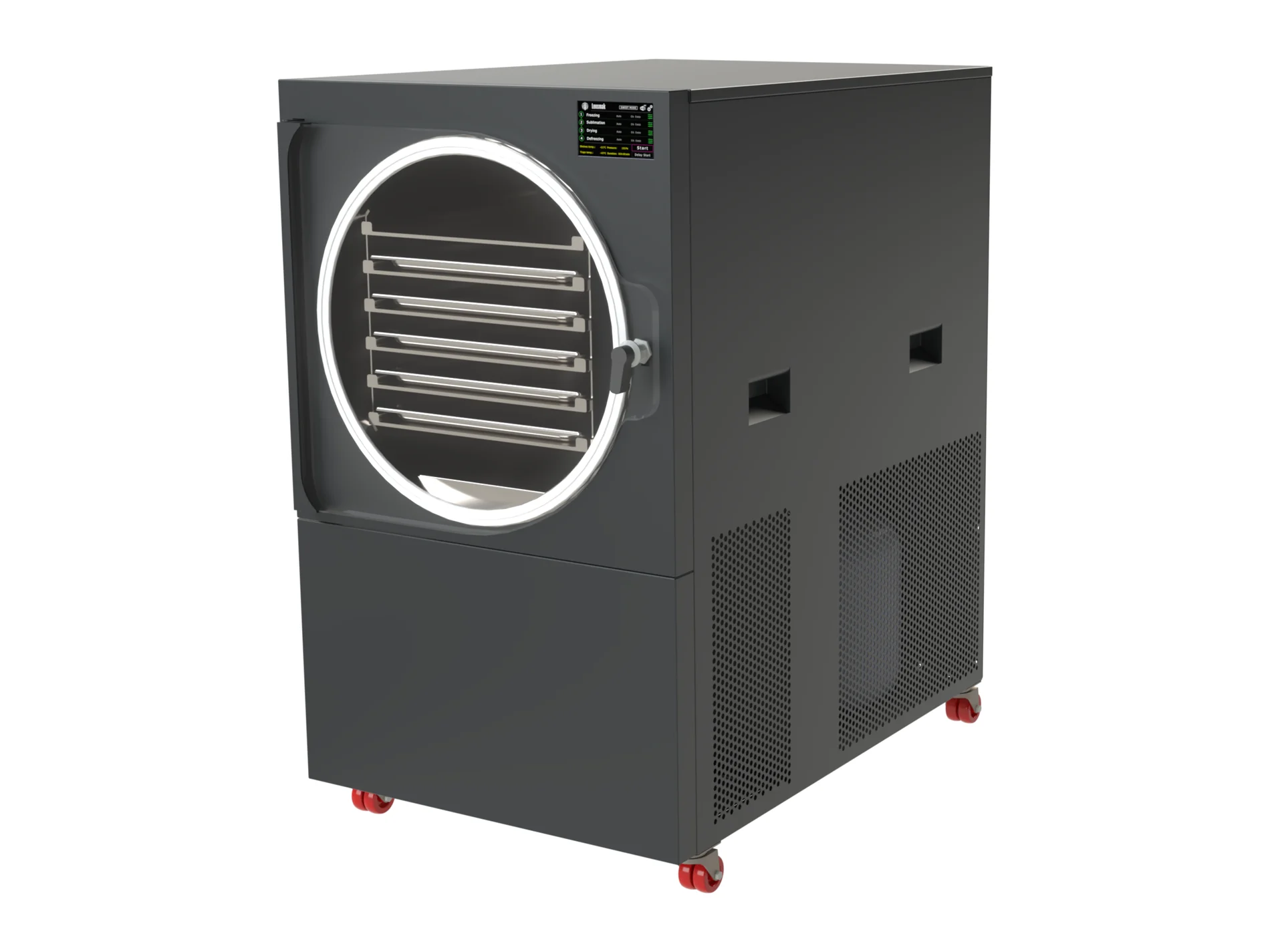
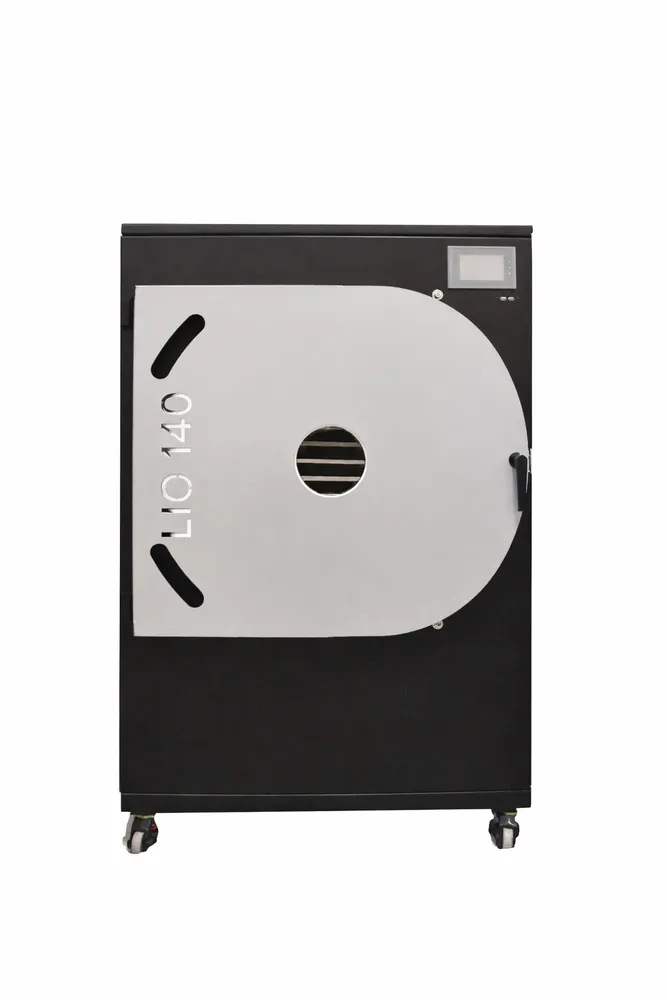
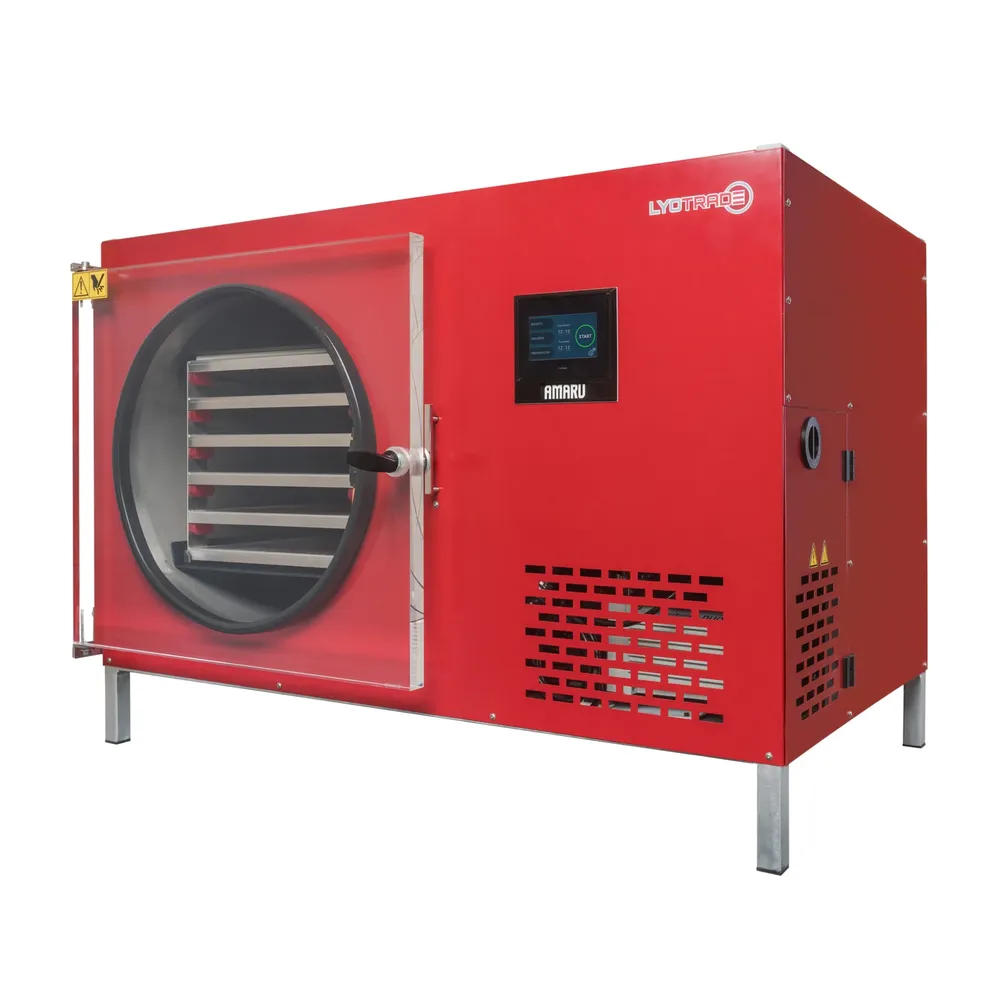
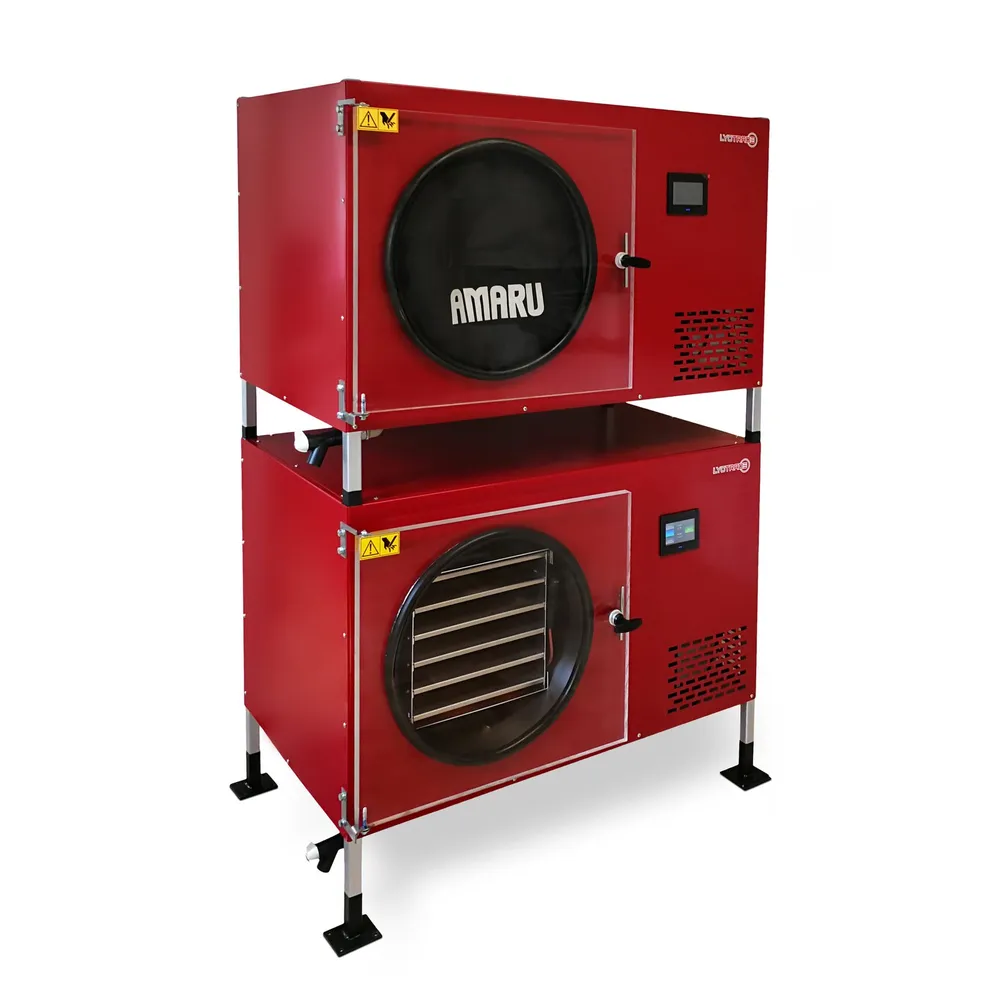
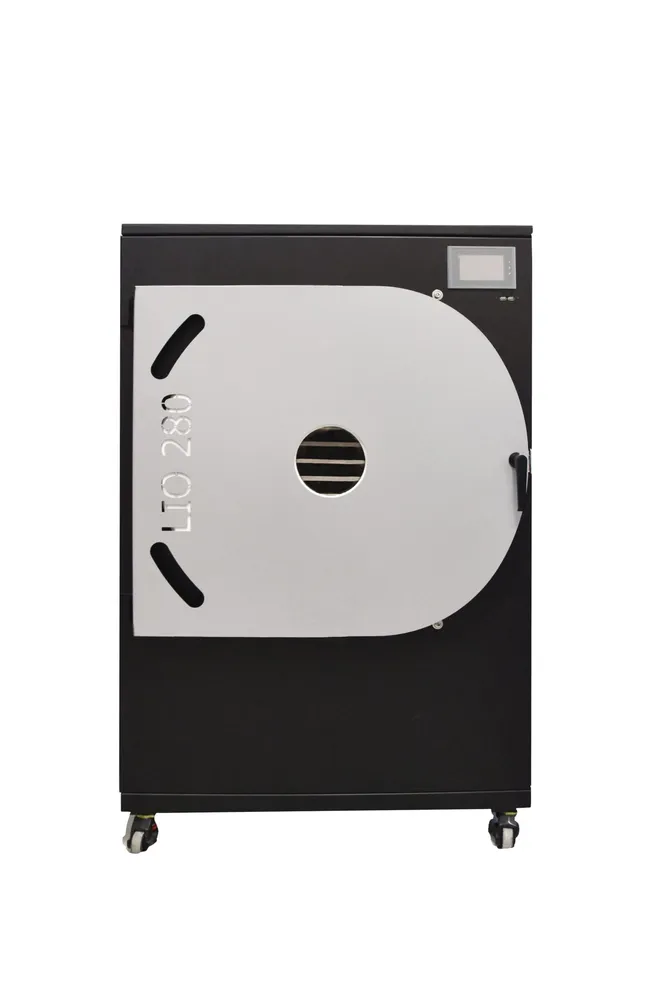
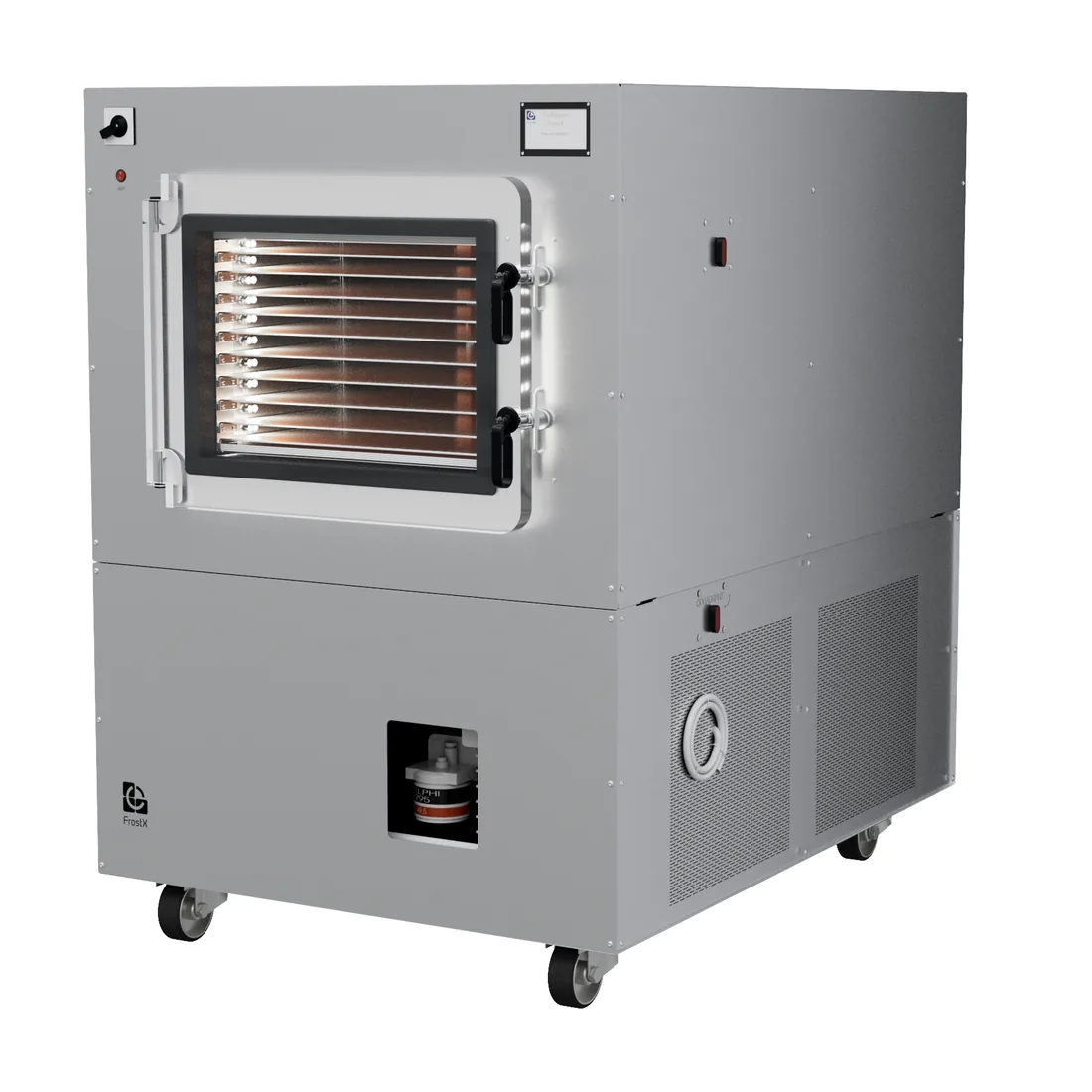
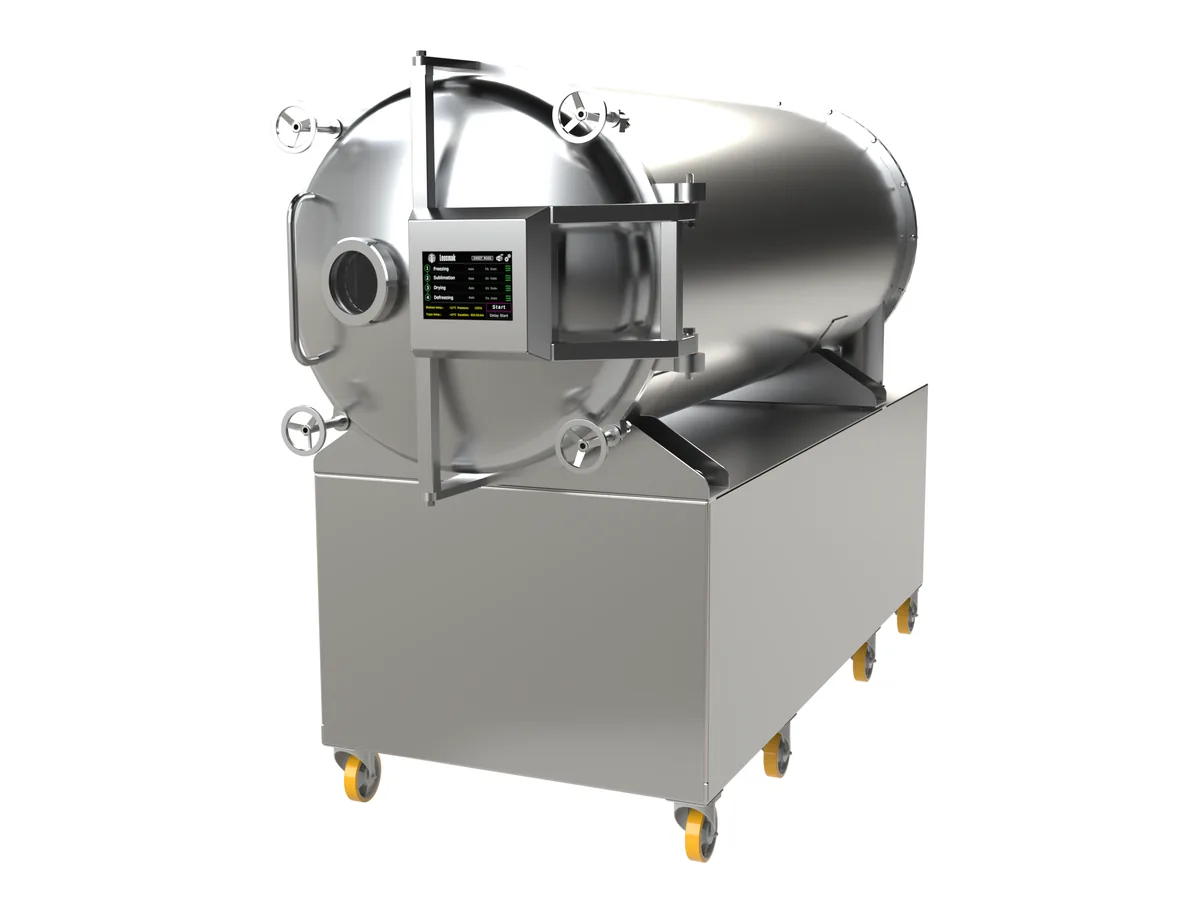
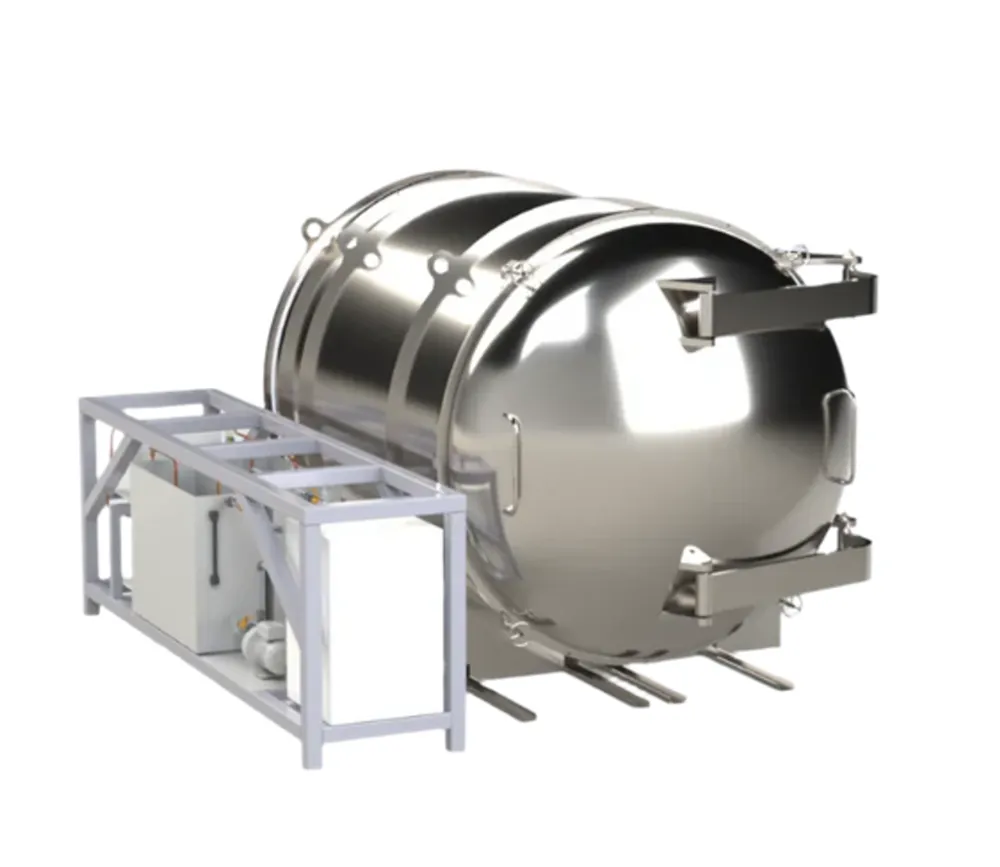
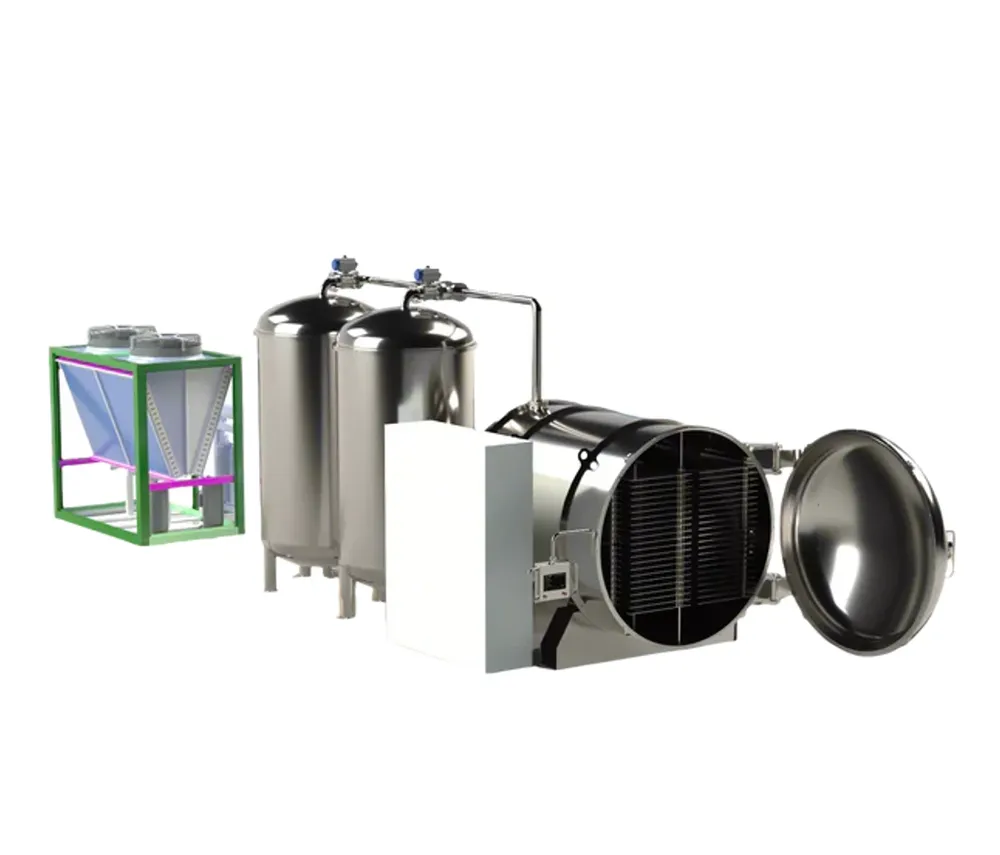
Read this table as finished product before you read it as capacity. At 6,43% on thin broth, up to 10 kg is about 640 g a cycle, up to 18 kg about 1,2 kg, up to 50 kg about 3,2 kg and up to 600 kg about 38,6 kg, and at 40% solids each of those rises roughly six-fold. Running cost is average energy consumption across each band. Three things to ask on a liquid specifically. Whether the trays quoted suit liquids at all, with a raised lip and a true flat base. Condenser ice capacity per cycle as a separate number from rated load, because a 30 kg load of 8% solids stock puts roughly 27 to 28 kg of water onto the condenser as ice. And the shelf gap, approximately 30 mm on AMARU, 28 mm on LEO and 50 mm on LIO, because it decides how thin you can spread the slab.
Yield, the number that decides everything else
Freeze-drying removes water, and here the input is almost entirely water, so the ratio between what you load and what you sell is the worst of any category on this site. Plan around this number and the rest of the project sizes itself. The beef-broth figure is measured. The rest are published water contents from USDA FoodData Central, SR Legacy, with the record ID against each line, and fresh input calculated on a dry-solids basis.
How to use this table. Take the finished kilograms you need to sell in a week, multiply by the fresh input for your liquid, and you have the fresh load per week. Divide by the cycles you can run and you have the load per batch, which is the number the tier table is quoted in. Working the other way, at 6,43% a machine rated up to 10 kg returns roughly 640 g of finished product a cycle, up to 18 kg about 1,2 kg, up to 50 kg about 3,2 kg and up to 600 kg about 38,6 kg. Concentration is the biggest lever you have. Take the same feed from 8% to 40% solids upstream and each of those figures rises about six-fold, from identical shelf area and an identical cycle. That is worth more than any capacity upgrade you can buy at the same price. Reconstitution, by mass balance. Replace the water that was removed, not the volume you started with: 100 g of finished broth plus about 1,46 litres of water returns roughly 1,56 kg at original strength. Your ratio moves with your solids content, so measure it on your own liquid before you print it on a pack. Treat 6,43% as a good working figure for a thin unsalted beef broth. It carries no residual-moisture or water-activity measurement, so use it to size a machine rather than to set a shelf life. What the finished product is worth is on our freeze-dried price reference.
| Material | Water content | Fresh input per 1 kg finished |
|---|---|---|
| Beef broth, unsalted | ~93,6% mass removed | ~15,6 kg |
| Beef broth, reduced sodium, ready to serve (FDC 172889) | ~98,0% | ~50,0 kg |
| Chicken broth, ready to serve (FDC 174536) | ~97,8% | ~45,5 kg |
| Fish stock, home-prepared (FDC 172885) | ~96,6% | ~29,4 kg |
| Beef stock, home-prepared (FDC 172883) | ~95,9% | ~24,4 kg |
| Chicken stock, home-prepared (FDC 172884) | ~92,2% | ~12,8 kg |
| Stock concentrated to 25% solids, a target you set | ~75% | ~4,0 kg |
| Stock concentrated to 40% solids, a target you set | ~60% | ~2,5 kg |
The four things that decide whether this works
These four constraints set your cost per kilogram, and two of them will change what you buy. Get them right before you choose a machine rather than after.
Capacity is quoted wet, so translate it before you choose a tier
A freeze-dryer rated up to 50 kg is rated on the fresh load it holds. At our measured 6,43% that load is about 3,2 kg of finished product. Sizing from the badge on the machine rather than from the finished kilograms you need to sell is the mistake that ends in disappointment here, and it is correctable. Work backwards. Decide the finished kilograms you need per week, divide by the yield of the liquid you intend to run, and you have the fresh load per cycle, which is the number the tier table is quoted in. Run the same calculation on your concentrate if you have one: it moves the answer by roughly a factor of six, and it will often move you down a tier rather than up.
Pre-concentration is usually mandatory, and the freeze-dryer is one machine in a line
A chicken stock at 8% solids needs 12,8 kg per finished kilogram. At 25% solids it needs 4 kg; at 40%, 2,5 kg. On a 30 kg load that is the difference between roughly 2,3 kg out and roughly 12 kg, from the same chamber, the same cycle and the same electricity bill. Our trial puts a number on it: a 3,0 litre load of thin broth returned about 193 g, where the same load at 40% solids would return roughly 1,2 kg. The routes are established practice: reduction in a kettle, falling-film or multi-effect vacuum evaporation, reverse osmosis, and freeze concentration, in ascending order of cost and gentleness. You still freeze-dry the last stage, because the last of the water is where the damage happens, to the volatile aroma that makes a stock taste of what it was made from and to the gelatine that gives a bone broth its body. So budget for the concentration step, the blast freezer, milling or compression, barrier packaging and water-activity testing. The freeze-dryer is often less than half the capital requirement here.
Liquid handling is an equipment constraint, and layer depth governs everything
Broth is poured into trays and frozen into a shallow slab, and that step carries constraints the generic capacity ladder ignores. Layer depth is the master variable. Vapour escapes upward through the already-dried layer above it, so resistance rises with thickness. A thin slab dries faster and more evenly. A thick one gives you long cycles, uneven residual moisture and centres that never reach the endpoint. Trays matter before capacity does: one with a raised lip and a true flat base holds a poured liquid, one designed for sliced fruit may not, and the shelf gap decides how many of them you can run. The machine itself has to sit level, because a slab that set at an angle dries unevenly from one end of the tray to the other.
Fat does not sublimate, and salt is much of what is left
Sublimation removes ice. It does nothing to fat, which separates, coats the surface of the drying slab and obstructs vapour escape. What comes out clumps, will not flow, and carries the shortest shelf life of anything you could make here, because fat oxidation rather than moisture is what fails first in a porous material. The proportions are worse than the wet label suggests. USDA's chicken-stock record is 1,20 g of fat within 7,8 g of total solids, roughly 15% on a dry basis. Fish stock is about 24%, beef stock about 2%. Skimming or separating upstream is normally necessary, and it belongs before the concentration step. In a salted broth much of what remains is salt and ash, which pulls moisture out of the room air between the chamber and the pouch. Package straight out of the chamber into a barrier. Water activity, measured on your own bench meter every batch, is the release criterion; a weight-loss reading is not.
What applies before you sell
Two questions decide the compliance cost of this project. The first is easy: every food business registers and runs HACCP. The second is heavier and should be settled before you spend money, because an approved establishment under Regulation (EC) 853/2004 involves an on-site visit and an approval number on your pack. It turns on what animal-origin material passes through your hands, not on whether the finished product contains meat. We sell equipment rather than regulatory advice, but a machine whose output you cannot lawfully sell is worthless, so here is the orientation with the article numbers.
Everyone registers and runs HACCP
Regulation (EC) 852/2004 Article 6(2) requires every food business operator to notify the competent authority of each establishment under its control, so that it may be registered. Article 5 requires a permanent procedure based on HACCP principles, and Article 4 with Annex II sets the general hygiene requirements. For a small operation this is the whole burden. For a meat or fish stock producer it is the floor rather than the ceiling.
Article 1(2), the composite carve-out, and what it does not cover
Regulation (EC) 853/2004 Article 1(2) provides that, unless expressly indicated to the contrary, the Regulation does not apply to food containing both products of plant origin and processed products of animal origin, although those processed products must themselves be obtained and handled in accordance with it. It cuts both ways. It helps you if you buy in an already-processed animal ingredient from an approved supplier and blend it with vegetables, herbs and salt. It does not help you if you are the one handling the raw material. The test is what walks through your goods-in door.
If you handle raw meat or bone yourself, approval under Article 4(2)
Article 4(2) provides that establishments handling products of animal origin for which Annex III lays down requirements shall not operate unless the competent authority has approved them, with narrow exceptions for primary production, transport, ambient storage and certain retail. Article 4(3)(a) requires approval to follow an on-site visit. Meat products are defined at Annex I point 7.1 and their requirements sit in Annex III Section VI; a fishery stock falls to be assessed under Section VIII. Where approval applies, so does the identification mark at Annex II Section I. Start this before you order a machine. It takes longer than delivery does.
Freeze-drying is not a kill step, and labelling has a salt trap
Sublimation lowers water activity so that organisms cannot grow, and eliminates nothing that was already there, so your control points are water activity tested every batch on your own meter and the criteria in Regulation (EC) 2073/2005. On the label, Regulation (EU) 1169/2011 brings three provisions that bite here: instructions for use under Article 9(1)(j) for a product the consumer reconstitutes, QUID under Article 22 and Annex VIII for any ingredient you name or picture, and salt calculated as sodium × 2,5 under Annex I point 11, which drying concentrates into a fraction of the original weight. Article 7(1)(c) catches a no-preservatives flash that implies a characteristic all similar foods possess, and Regulation (EC) 1924/2006 limits health claims to the EU authorised list.
Where to apply
File through your Comunidad Autónoma, which feeds the RGSEAA governed by Real Decreto 191/2011; AESAN maintains the national register. A meat or bone stock producer is normally classified under Clave 10, Carnes y derivados, and a vegetable broth, instant soup or blended base under Clave 26, Comidas preparadas y otros ingredientes y productos alimenticios. Confirm the clave and activity code before you file, because the clave determines whether the entry is a registration or an approval carrying an EU number.
The classification follows the Article 1(2) analysis above and it is made by the autonomic authority, not by you. Put the question in writing and describe exactly what raw material enters your premises: raw bones and carcass trim, or a bought-in processed concentrate. The two answers differ by an on-site inspection, an approval number and an identification mark on every pack.
ASAE is the food-safety enforcement and inspection authority and handles the general registration route. DGAV is the competent authority where an establishment handling products of animal origin needs approval under Regulation (EC) 853/2004. It carries out the on-site visit, issues a Número de Controlo Veterinário and lists approved establishments publicly.
Orientation, not legal advice, and accurate as checked on 3 August 2026 against Regulations (EC) 852/2004, 853/2004, 2073/2005 and 1924/2006 and Regulation (EU) 1169/2011, plus AESAN's RGSEAA guidance and DGAV's published approval route. Get the classification decision in writing before you commit capital. It is the item that most often delays a project past the equipment lead time, and the one a machine supplier cannot resolve for you.
What you can produce
A Barcelona producer running beef broth on a LEO-010L
The LEO-010L is a 15 kg unit at €17.180 with seven GN 1/1 trays over 1,3 m² of shelf, 28 mm between shelves and an 18 kg ice condenser. It freezes in the chamber and washes down, which is what makes it workable on a liquid: the broth is poured into the trays where they will dry, and nothing has to be carried frozen from one room to another.
Poured to about 12 mm, a GN 1/1 tray holds roughly 2 litres, so a full rack is about 14,4 litres a cycle, inside both the 15 kg rated load and the 18 kg the condenser can take as ice. At the measured 6,43% that returns about 0,9 kg of finished broth per cycle, or roughly 3,7 kg a week at four cycles.
That is the number to plan a price list around, and it is also the argument for the concentration step. Feed the same seven trays a 40% solids reduction instead of thin broth and the same rack returns about 5,8 kg a cycle, close to 23 kg a week, from the same shelf area and the same electricity. On this machine the cheapest capacity is bought upstream of it.
Layer depth is what they tune. Thinner than 12 mm costs them volume per cycle; thicker slows the cycle and leaves the centre wet. The machine sits level and the trays have a true flat base, which on a liquid matters more than any specification difference between platforms.
A fond producer supplying fine-dining kitchens
The clearest premium case in this category is a reduced veal, beef or fish fond dried into a powder or a pressed disc and sold to kitchens that already make their own. What they buy is consistency and time: the same depth of flavour every service, held at ambient, with none of the freezer space or the two-day reduction that producing it in-house costs them.
It works commercially because the reduction a kitchen already does IS the pre-concentration this process needs. A fond that has been taken down for hours arrives at the tray far above 8% solids, which lifts the yield out of the punishing end of the table and puts several kilograms of finished product into a single rack rather than a few hundred grams.
Freeze-dried grass-fed bone broth sells in the EU at roughly €80 to €110 a kilogram at retail, and a chef-grade fond concentrate sits in the same band because it is bought on flavour rather than on price per kilogram. Sublimation is why: the volatile aroma that makes a fond taste of what it was made from, and the gelatine that gives it body, are exactly what a hot final drying step takes out. Skim the fat properly, keep the ingredient list to one line, and the product sells itself in a tasting.
Frequently asked questions
How much stock do I need per kilogram of finished product?
We measured 15,6 kg of unsalted beef broth per finished kilogram across five batches. From USDA published water content, home-style chicken stock is about 12,8 kg, beef stock about 24,4 kg, fish stock about 29,4 kg and a thin ready-to-serve broth up to 50 kg. Concentrate to 25% solids first and it falls to about 4 kg; at 40% solids, about 2,5 kg. In machine terms, a unit rated up to 30 kg of fresh load gives roughly 2,3 kg of finished product from chicken stock and under 1 kg from the thinnest broths. This figure, and not the rated capacity, is what you plan around.
How much water do I add to reconstitute it?
Work it by mass balance and replace the water that was removed, rather than the volume you started with. At our measured 6,43% yield, 100 g of finished product plus about 1,46 litres of water returns roughly 1,56 kg of broth at its original strength. For smaller quantities, 32,1 g plus 468 ml gives half a litre equivalent and 64,3 g plus 936 ml gives one litre. Adding back the same nominal volume you started with leaves the broth slightly weaker, because it puts back more water than the cycle took out. These ratios come from our own trial and yours will differ with your solids content.
Do I have to concentrate the stock before freeze-drying it?
In almost every commercial case, yes. Remove the bulk of the water in a cheaper unit operation, whether reduction, falling-film or multi-effect vacuum evaporation, reverse osmosis or freeze concentration, and keep the freeze-dryer for the final step. Going from 8% solids to 40% multiplies the finished output of the same machine, the same chamber time and the same electricity by roughly six. You still freeze-dry the last stage, because that is where the aroma compounds, the gelatine and the heat-sensitive components are at risk.
Can I put liquid straight into the chamber?
Yes, but pour it into trays directly. The freeze-dryer has to sit level, and the trays need a lip and a true flat base that suit liquids, because some trays supplied for sliced solids do not. Layer depth governs cycle length and evenness, because vapour has to escape upward through the dried layer above it.
What do I do about the fat, and why does the product cake after packing?
Two different problems. Skim or separate the fat upstream, before concentration: it does not sublimate, it coats the drying surface and obstructs vapour escape, and fat oxidation rather than moisture is what ends the shelf life of a porous product. USDA's chicken-stock record is 1,20 g of fat within 7,8 g of total solids, roughly 15% on a dry basis, and fish stock is around 24%. Caking is usually the salt: in a salted broth much of what remains after drying is salt and ash, which pulls moisture out of the room air between the chamber and the pouch. Seal straight out of the chamber into a moisture-barrier pack, control humidity where you pack, and use water activity measured on your own bench meter every batch as the release criterion.
Do I need an approved establishment, or just a registration?
Every food business registers under Article 6(2) of Regulation (EC) 852/2004 and runs HACCP under Article 5. Whether you also need approval under Regulation (EC) 853/2004 depends on what animal-origin material you handle, not on whether the product contains meat. Article 1(2) says the Regulation does not apply to food containing both products of plant origin and processed products of animal origin, so a soup base blended from a bought-in, already-approved concentrate sits outside it. Simmering raw bones, carcass trim or fish frames yourself does not: that is producing a product of animal origin, and Article 4(2) says such establishments may not operate unless the competent authority has approved them. Get the classification in writing before you order equipment.
How long is a cycle, what does a machine cost, and what does it cost to run?
Cycle length depends on the solids content of the feed, the depth of the frozen layer, the fat content and the endpoint you are drying to, so a supplier quoting a single number is guessing. Send us 2 kg and we will measure it on your material. On price, compact machines start at €4.950 for up to 10 kg of fresh load, a first production line at €8.950 for up to 18 kg, established production at €13.950 in the up-to-50 kg band, and factory-scale units at €145.480 reaching up to 600 kg, all ex-VAT. On energy, roughly 0,9 to 1,4 kWh per hour for compact machines and 4 to 13 for industrial, with FrostX excluded until the manufacturer supplies an average figure. Electricity is rarely what decides your cost per kilogram here. The volume of water you ask the machine to remove is.
Send us your recipe, your solids content and your volumes.
Tell us what the liquid is, whether it is already reduced or concentrated, how many finished kilograms a week you need to sell, and where you are. We will convert your finished-weight target into fresh load properly, size the machine against the live catalogue, and quote it.
If you want certainty before you commit, send 2 kg of your stock and 2 kg of the same stock concentrated, and we will run both and give you measured figures for each. What the finished product is worth is on our freeze-dried price reference.