
Freeze-Drying for Nutraceuticals & Supplements
Nutraceuticals are sold on their actives: live probiotics, enzymes, vitamins and plant extracts that lose potency under heat and moisture. Conventional drying can degrade exactly what the consumer is paying for, eroding both label claims and efficacy.
Freeze-drying removes water at low temperature without a hot phase, so heat-sensitive actives survive the process. For supplement brands and contract manufacturers, it is the method behind high-viability probiotic powders and stable botanical concentrates that hold their claimed strength through to the expiry date.
Why freeze-drying
Potency preserved
Low-temperature drying with no hot phase protects probiotics, enzymes, vitamins and botanical actives, so the finished supplement delivers the strength stated on the label.
Long, stable shelf life
Driving water activity down halts the reactions that degrade actives, giving a dry powder that holds its claimed potency for years at ambient or cool storage.
Easy to formulate and fill
The dry, friable cake mills into a free-flowing powder that blends cleanly and fills into capsules, tablets or sachets without added moisture.
Why freeze-dry nutraceuticals & supplements
Freeze-drying freezes the material and sublimates the ice away under vacuum, removing roughly 95-98% of the water while keeping the product cold. That matters for nutraceuticals because heat and water are the two main drivers of active degradation: low-temperature drying keeps probiotic viability high and protects thermolabile vitamins, enzymes and botanical compounds.
The dry, low-moisture powder is also far more stable in storage. With water activity driven down, the actives stay put, the format is easy to mill, blend and fill into capsules or sachets, and shelf life is measured in years rather than months.
What to consider
Potency is the governing variable, so formulation and process are designed around protecting the active: cryoprotectants and excipients are often added to shield probiotics and proteins through freezing and drying, and the cycle is tuned to keep the product below temperatures that would damage it. For supplements aimed at regulated markets, documentation and process control are part of the specification.
- Active type and its heat and moisture sensitivity, which drive cycle design
- Cryoprotectants and excipients to protect viability and structure
- Target residual moisture and water activity for active stability
- Downstream handling: milling, blending and capsule or sachet filling
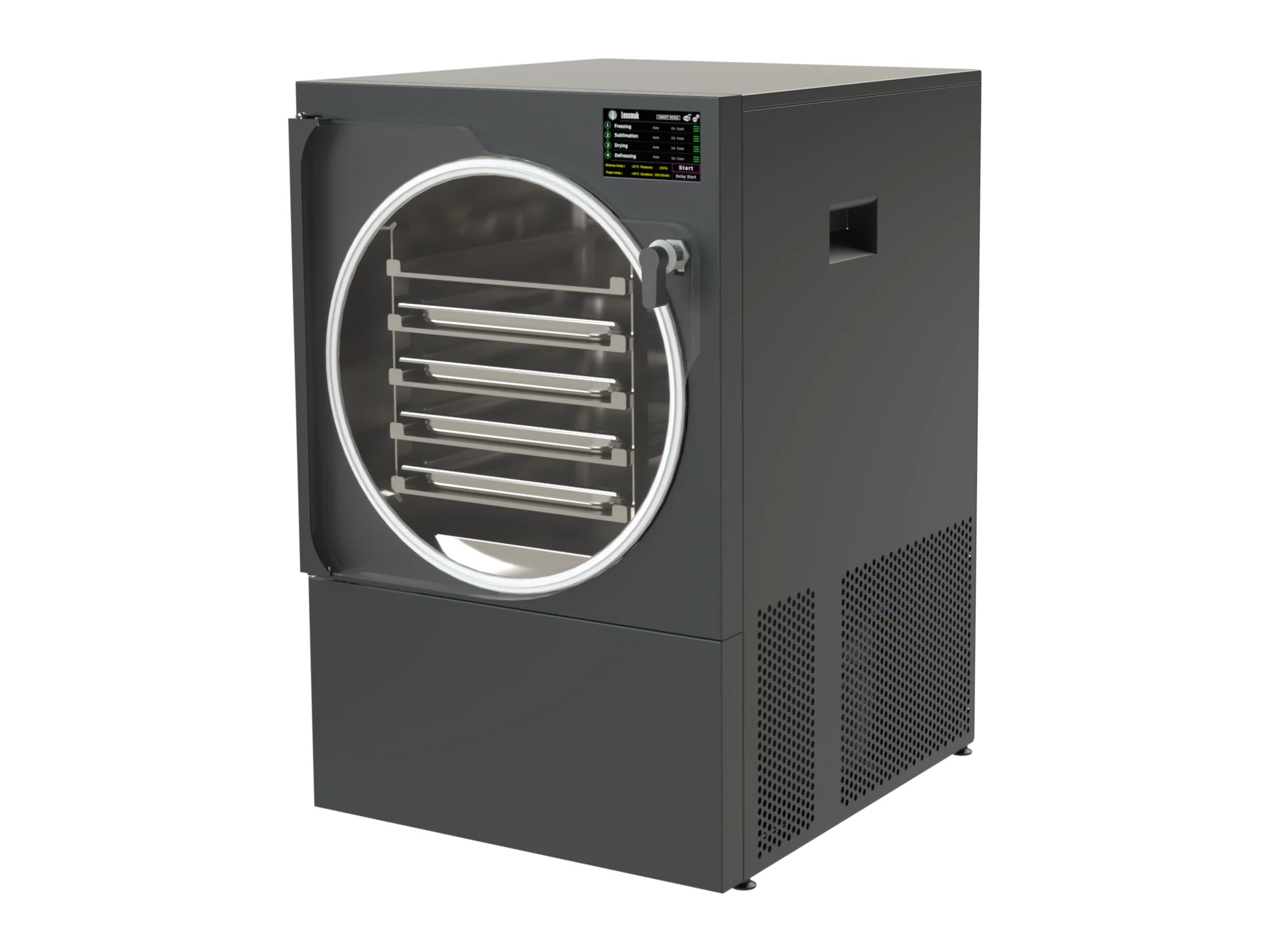
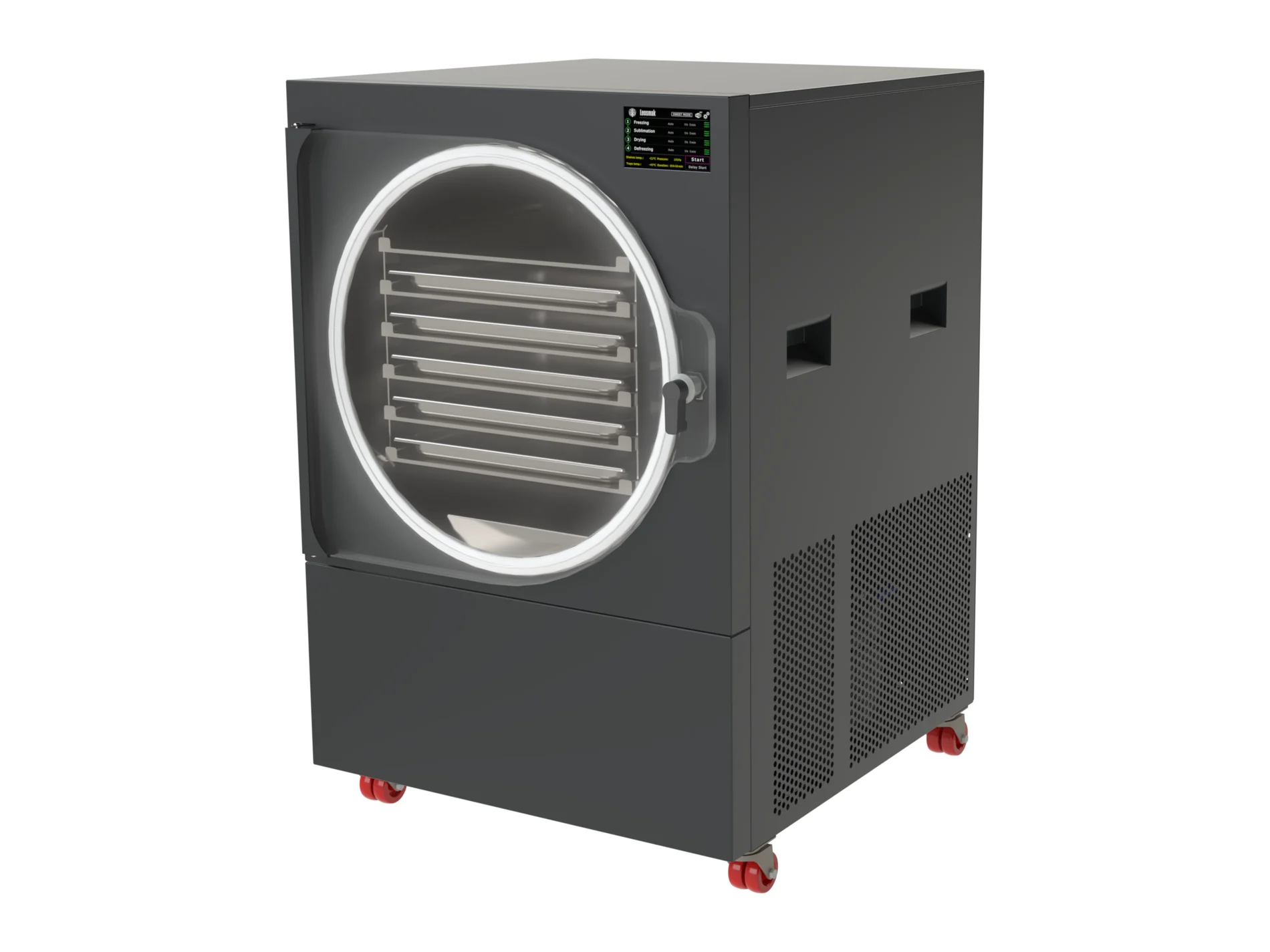
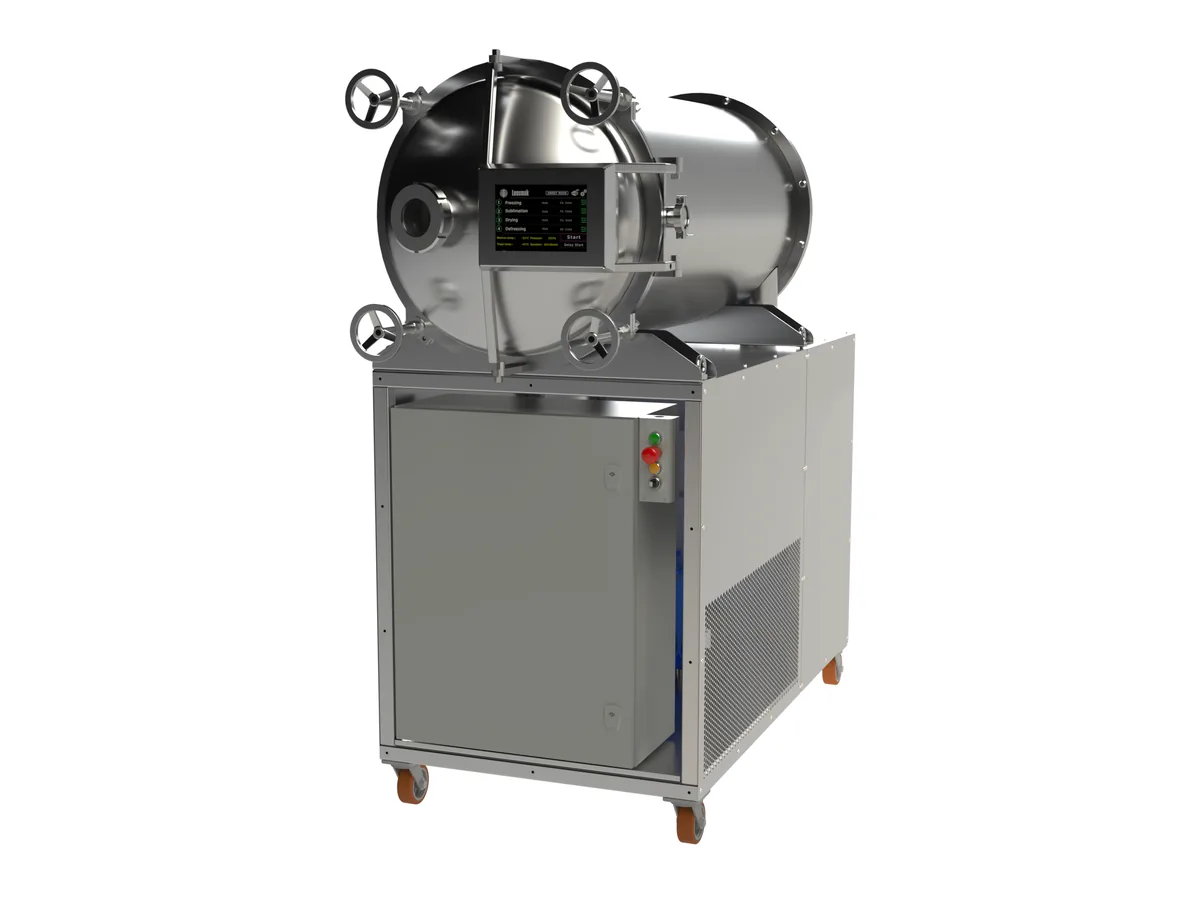
Recommended equipment
Not sure which model? Tell us your volume and we'll size it.
Frequently asked questions
Does freeze-drying keep probiotics alive?
Yes. Freeze-drying is the standard method for high-viability probiotic powders because the low-temperature process, usually with cryoprotectants, lets a large fraction of the live cultures survive drying and storage.
Why not just oven- or spray-dry supplements?
Heat-based drying degrades thermolabile actives such as probiotics, enzymes and many vitamins. Freeze-drying removes water without a hot phase, preserving far more of the potency that defines the product.
Is freeze-drying suitable for regulated supplement production?
Yes. The process is well established in pharmaceutical and nutraceutical manufacturing and supports the documentation and process control that regulated markets require, though qualification depends on the specific equipment and facility.