
Freeze-Drying for Hemp
For industrial hemp processors, the value of the crop is concentrated in compounds that are easily lost to heat, oxygen and time. How the biomass is dried after harvest is one of the biggest factors in the quality and consistency of the material that reaches the next stage.
Freeze-drying removes moisture by sublimation at low temperature, taking the material to a stable target without the high heat of conventional drying. That gentleness is what helps preserve cannabinoids and the volatile terpenes that define aroma and grade.
Why freeze-drying
Compound preservation
Low-temperature processing protects cannabinoids and volatile terpenes that high-heat drying drives off, helping hold the grade of the material.
Controlled moisture
Drying to a defined, repeatable residual moisture gives stable storage and a consistent feedstock for downstream processing.
Reduced spoilage risk
Quickly taking biomass below the moisture level where mould develops protects yield from a high-value, perishable harvest.
Why freeze-dry hemp
Conventional hot-air drying is fast but harsh: elevated temperatures drive off volatile terpenes and can degrade cannabinoids, while slow ambient drying leaves the crop exposed to mould and uneven results. Both trade quality for time.
Freeze-drying processes the material at low temperature, so it holds onto the compounds and aroma that determine the grade of the finished biomass or flower. It also dries to a controlled, repeatable moisture level, which matters for storage stability and for any downstream extraction.
What to consider
Freshly harvested hemp carries a high water load and is bulky, so loading density per tray and total batch volume drive both cycle time and how much crop you can move per run. Sizing the equipment to your harvest window is the key decision.
Validate cycles for the material you actually process, and define a clear residual-moisture target so each batch is stable and consistent.
- Moisture target: dry to a defined, repeatable residual moisture for safe storage and consistent downstream processing.
- Compound preservation: keep temperatures low throughout to protect cannabinoids and volatile terpenes.
- Batch volume: match shelf area and condenser capacity to your harvest throughput and seasonal peaks.
- Material handling: account for the bulk and high initial water content of fresh biomass when planning loads.
Recommended equipment
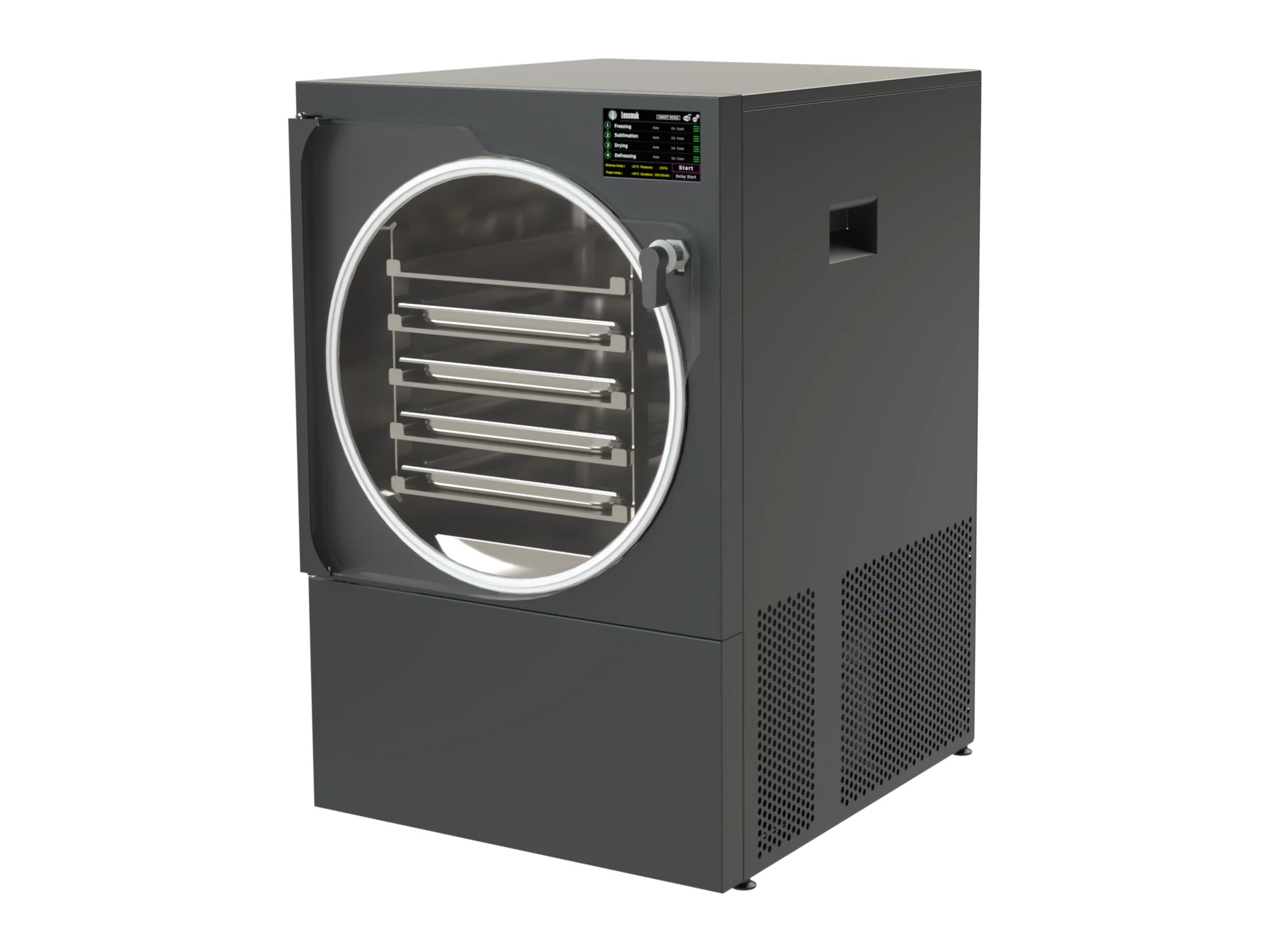
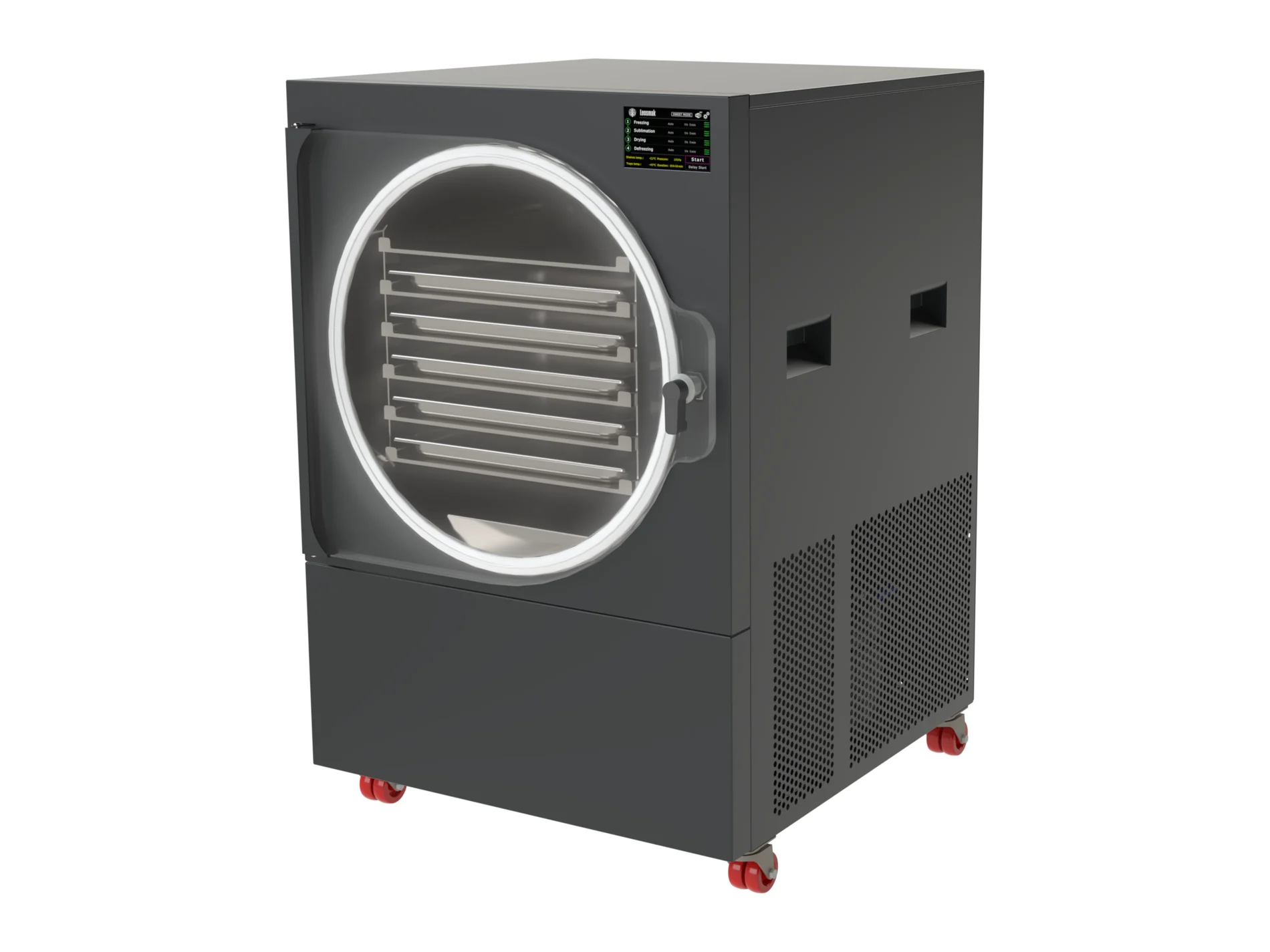
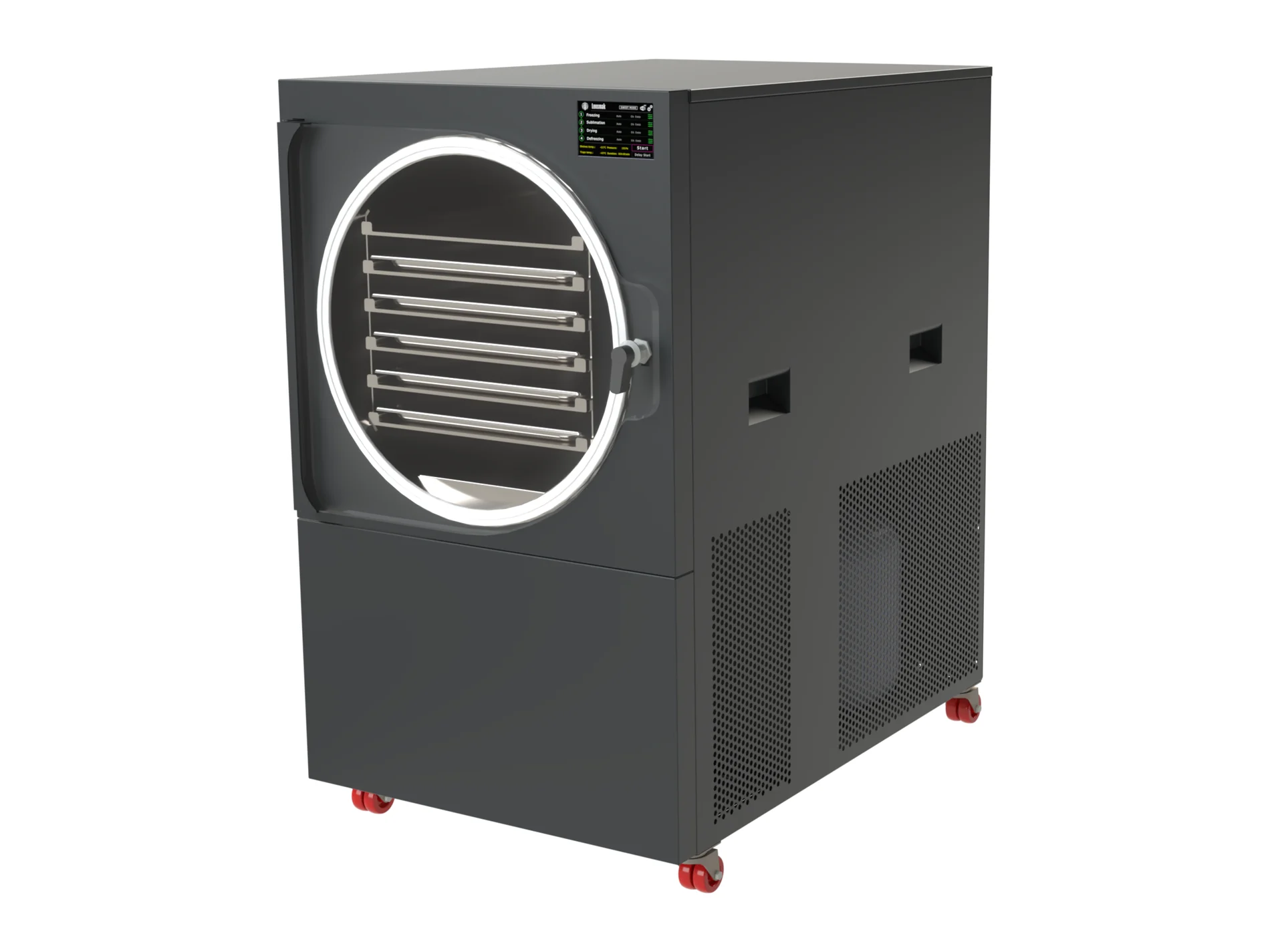
Not sure which model? Tell us your volume and we'll size it.
Frequently asked questions
Does freeze-drying preserve cannabinoids and terpenes in hemp?
Freeze-drying works at low temperature and removes water by sublimation, which avoids the high heat that drives off volatile terpenes and can degrade cannabinoids. That is why it is used to help preserve the compound and aroma profile of hemp.
How is freeze-drying better than hot-air drying for hemp?
Hot-air drying is fast but its elevated temperatures can strip terpenes and degrade compounds. Freeze-drying keeps the material cold throughout and dries to a controlled, repeatable moisture level, trading raw speed for better-preserved, more consistent material.
What moisture level should hemp be dried to?
Hemp is typically dried to a low, stable residual moisture suitable for safe storage and downstream processing. The exact target depends on the material and your process, so cycles should be validated against it.